Official Definition
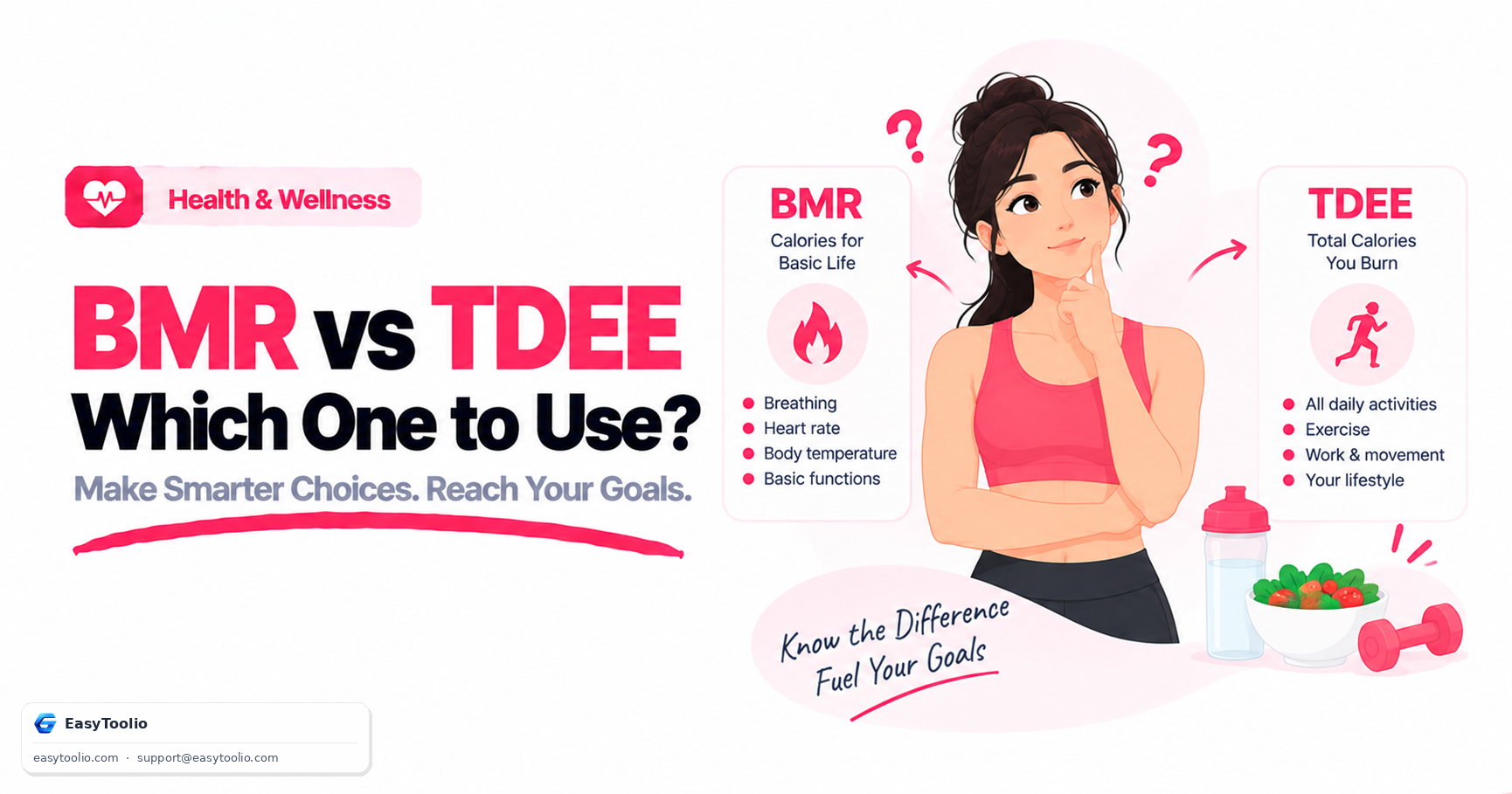
Total Daily Energy Expenditure (TDEE) is the total number of calories your body burns in a full day, combining your resting metabolism with the energy used for daily activity, exercise, and digestion.
Detailed Explanation
In-Depth Guide
Key Takeaway
While Basal Metabolic Rate (BMR) tells you how many calories your body burns at complete rest, very few people spend their entire day resting. Total Daily Energy Expenditure (TDEE) builds on BMR by adding in everything else that burns energy: walking, working, exercising, fidgeting, and even digesting food. TDEE is calculated by taking your BMR and multiplying it by an "activity multiplier" that reflects how active your lifestyle is — ranging from sedentary to extra active.
The more active you are, the larger the gap between your BMR and your TDEE. TDEE matters because it's the number that actually determines whether you gain, lose, or maintain weight — not BMR alone. Eating roughly the same as your TDEE keeps your weight stable; eating consistently below it creates the deficit needed for weight loss; eating above it supports weight gain or muscle building.
This is why TDEE is the backbone of most diet and fitness planning: it turns an abstract idea like "eat less to lose weight" into a concrete daily calorie target you can plan meals around. Like BMR, TDEE is an estimate rather than an exact figure — actual burn varies day to day with stress, sleep, and activity tracking accuracy — so it's best used as a reference point you adjust based on how your real-world weight changes over a few weeks.