Buying a domain name feels like a five-minute task until you realize it's one of the few branding decisions that's genuinely difficult to undo. Once people start linking to your site, printing your URL on business cards, and typing it from memory, switching domains later means rebuilding SEO rankings, redirecting old links, and re-training your audience. It's worth getting right before you check out.
Rule 1: Prioritize .com When You Can
Despite the explosion of alternative extensions like .io, .co, and .ai, .com remains the extension people type by default when they're not sure of your exact URL. If your ideal name is available on a newer extension but not .com, weigh whether the brand fit is strong enough to justify people occasionally landing on the wrong site, or whether a slightly modified name that secures the .com is the safer long-term bet.
Rule 2: Keep It Short and Easy to Spell
Every extra syllable or unusual spelling is a chance for someone to mistype your URL or forget it entirely. If you have to explain "that's with two Rs" or "no, it's spelled with a K" every time you give out your website, the name is working against you. Say your domain candidate out loud to someone else and have them try to type it without seeing it spelled — if they get it wrong, keep iterating.
Rule 3: Avoid Hyphens and Numbers
Hyphens and numbers create ambiguity. "get-fit-now.com" is easy to accidentally type as "getfitnow.com" or "get-fit-now-4.com," and competitors or scammers can register the hyphen-free version to capture your traffic. Numbers have the same problem — is it spelled out ("four") or numeric ("4")? Both issues are avoidable by choosing a name that works cleanly without either.
Rule 4: Make Sure It's Easy to Say Out Loud
Your domain will get shared verbally far more than you expect — in podcasts, videos, conversations, and word-of-mouth referrals. A name that looks fine written down but is confusing when spoken (unusual letter combinations, silent letters, words that sound like other words) will lose potential visitors who can't figure out how to type what they heard.
Rule 5: Check Trademark and Brand Conflicts First
Before you get attached to a name, search your country's trademark database and do a general web search for the exact name plus your industry. Registering a domain that infringes on an existing trademark can force a costly rebrand later, even if the domain itself was technically available to purchase.
Rule 6: Think About Future Growth
A domain name tightly scoped to your first product can become a limitation if you expand. A company called "NewYorkPizzaDelivery.com" will struggle to rebrand naturally if it later expands beyond New York or beyond pizza. Choosing a name with a little more room to grow avoids locking your brand identity to a single moment in your business's life.
Rule 7: Verify Social Handle Availability Too
Your domain and your social media handles don't have to match exactly, but consistency makes you dramatically easier to find and builds trust. Before finalizing a domain, do a quick check that the same or a close variant of the name is available on the social platforms relevant to your audience.
Worked Example
Suppose you're launching a subscription box for home baking supplies. "TheBestBakingBoxCompany.com" technically works but is long, hard to say quickly, and awkward to type. Applying the rules above, you might land on "CrumbCrate.com" — short, easy to spell, no hyphens or numbers, pronounceable, and vague enough about geography or product scope to support future growth into adjacent kitchen categories. If a tool like Toolio's Domain Name Generator surfaces "CrumbCrate" as an available option, checking it against these seven rules takes under a minute and confirms it's a solid long-term choice.
Frequently Asked Questions
Q: Is it worth buying multiple domain extensions for the same name? A: Often yes, at least defensively. Buying the .com along with the most likely alternative extension (like .net or your country-specific TLD) prevents competitors or squatters from confusing your customers, though it's not necessary to buy every extension that exists.
Q: Should I choose a domain based purely on SEO keywords? A: Keyword-stuffed domains (like "best-cheap-shoes-online.com") were once popular for SEO but carry little ranking benefit today and often look untrustworthy to visitors. A clean, brandable name paired with good content performs better long term.
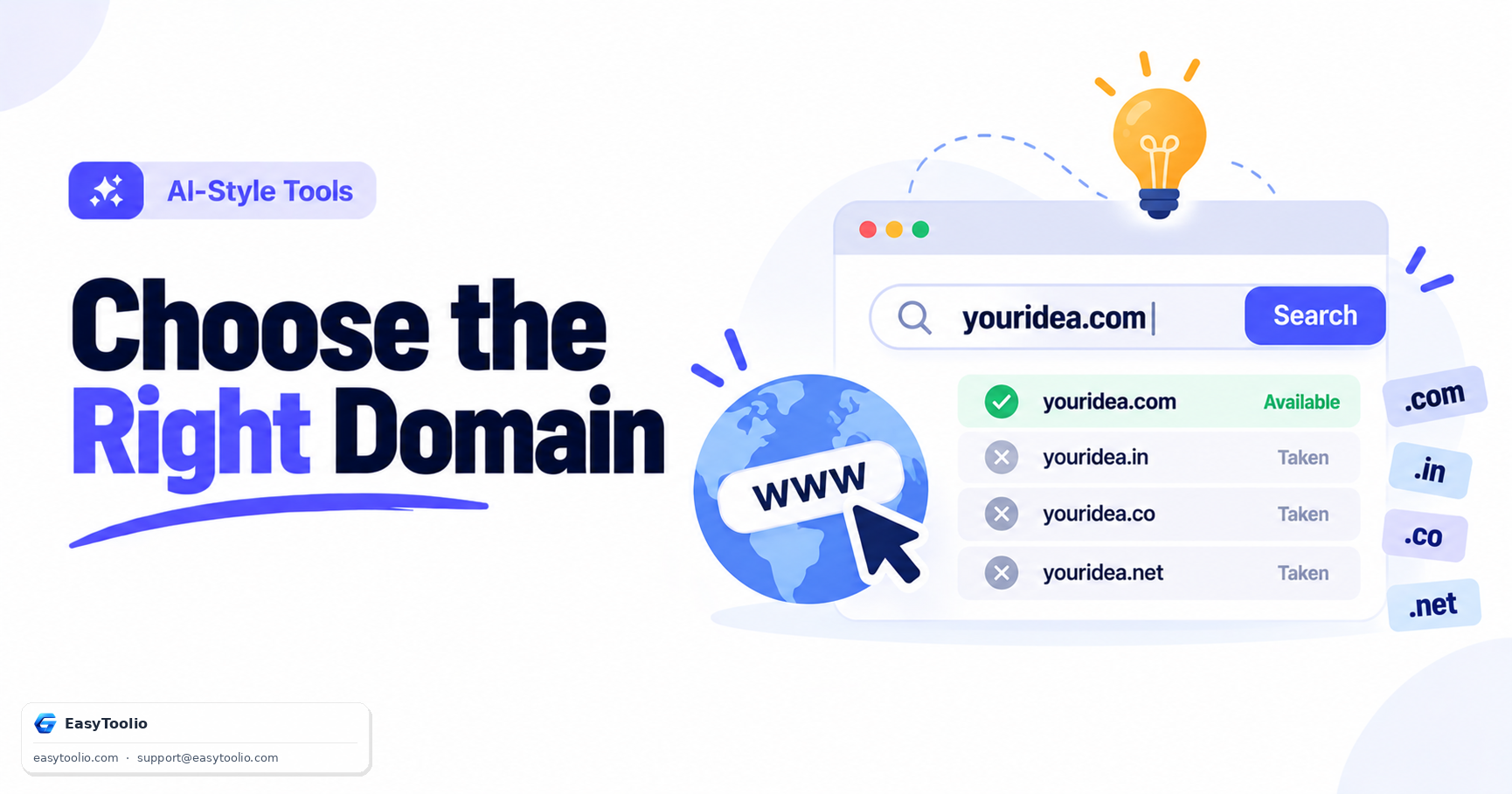
Q: How do I know if a domain name is truly available or already reserved by someone? A: Check availability directly through a domain registrar's search tool, since third-party name generators may show a name as an idea without confirming real-time registration status. Always verify on the registrar before you commit to a name in your branding.