Picking a name for your startup feels deceptively simple until you actually try to do it. Every option that sounds catchy is either already trademarked, has no available domain, or doesn't survive a five-second gut check from a potential customer. A structured naming framework won't make the process instant, but it will stop you from going in circles for weeks.
Step 1: Define What the Name Needs to Do
Before brainstorming a single word, get clear on the job the name has to perform. Does it need to describe what you do literally (like "GeneralElectric"), evoke a feeling or benefit (like "Nike"), or simply be short and brandable enough to build meaning into over time (like "Google")? Write down three or four adjectives that describe the brand personality you're going for — playful, premium, technical, trustworthy — since this will filter out names that sound good but don't fit.
Step 2: Brainstorm Wide Before Narrowing
Generate volume before judging quality. Useful brainstorming angles include:
- Literal descriptors combined with modifiers (SwiftShip, CloudDesk)
- Metaphors related to your industry's core benefit (Anchor for stability, Spark for creativity)
- Invented or blended words that combine two relevant terms (Instagram = "instant" + "telegram")
- Foreign language words that translate to something relevant and sound pleasant in English
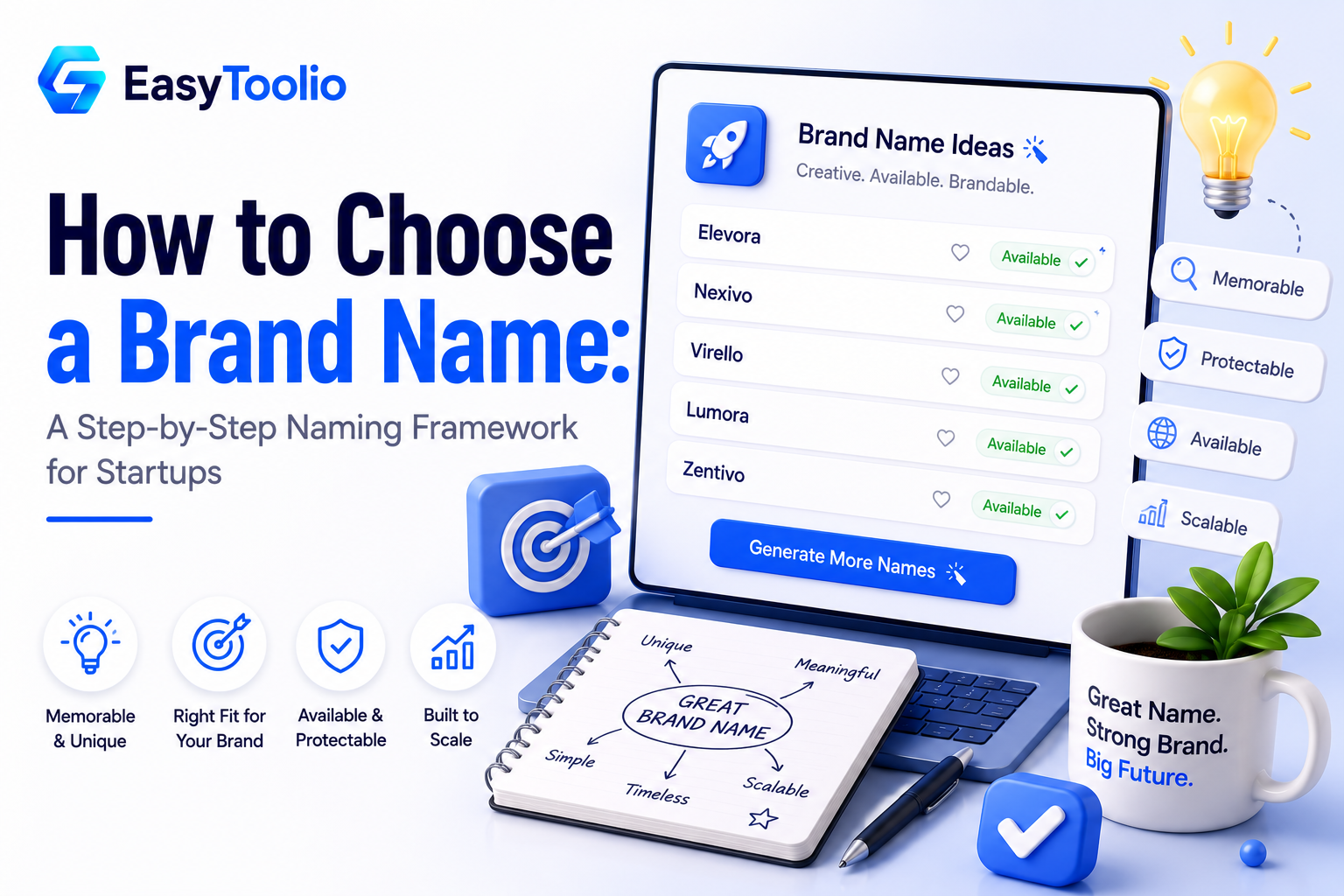
If brainstorming from scratch feels slow, a tool like Toolio's Brand Name Generator or Startup Name Generator can produce dozens of relevant options in seconds based on your industry and keywords, giving you a much larger pool to filter through than you'd generate manually in the same time.
Step 3: Apply the Filters
Run every candidate through this checklist before falling in love with it:
- Easy to say and spell. If you have to repeat it or spell it out loud on a phone call, that's friction that compounds over thousands of customer interactions.
- Available as a domain. A
.comis still the gold standard for credibility; if it's taken, decide whether a different TLD or a modified name is acceptable. - Not trademarked in your category. A quick search on your country's trademark database can save you a painful rebrand later.
- Free on the social platforms you need. Even if you don't need every platform today, a name with zero availability anywhere is a red flag for future conflicts.
- Doesn't carry unintended meaning. Check translations and slang in markets you plan to operate in — plenty of brands have had to explain away an awkward meaning in another language.
- Room to grow. A name too narrowly tied to your first product can box you in if you pivot or expand your offering later.
Worked Example
Imagine you're building a subscription meal-planning app for busy parents. Your brand personality words might be: fast, warm, reliable, simple. Brainstorming around those themes could produce candidates like "QuickPlate," "HomeFeast," "MealMinder," and "SimmerBox." Running them through the filter checklist, "QuickPlate" might fail because a similar-sounding food delivery brand already exists in your market, while "SimmerBox" clears the domain, trademark, and social handle checks and evokes warmth without being overly literal — making it the stronger long-term choice even though "QuickPlate" initially sounded catchier.
Step 4: Test It With Real People
Before registering anything, say the name out loud to five people who fit your target customer profile without any context, then ask what they think the company does. If the guesses are wildly off from your actual business, that's useful signal — not necessarily a dealbreaker, but worth weighing against how much brand-building effort you're willing to invest in teaching people what the name means.
Frequently Asked Questions
Q: Should I prioritize a perfect domain name over a name I love?
A: Not necessarily. A strong .com is valuable, but plenty of successful companies use a slightly modified domain (adding "get," "try," or "hq") when the exact match isn't available. Prioritize trademark availability and memorability first, domain convenience second.
Q: How many name candidates should I generate before deciding? A: Aim for at least 20-30 raw candidates before filtering, since most will get eliminated by domain or trademark conflicts. A generator tool can help you reach that volume quickly instead of staring at a blank page.
Q: Is it risky to pick a made-up word with no inherent meaning? A: It's a valid strategy used by many major brands, but it means the name carries zero built-in meaning and you'll need to invest more in marketing to build brand recognition from scratch. It works well if you're playing a long game and want maximum trademark flexibility.