Notification
Go to Home All Tools Compare Glossary Blog Contact
Be the first to rate
Embeddable
Health & Wellness

BMI Calculator

Calculate your Body Mass Index (BMI) using height and weight. Supports metric and imperial systems, visual charts, and history tracking.

Secure & Private

All calculations are performed locally on your device. No personal health data is sent to any server.

Uses WHO Asian-Pacific BMI Cutoffs (23 / 27.5)

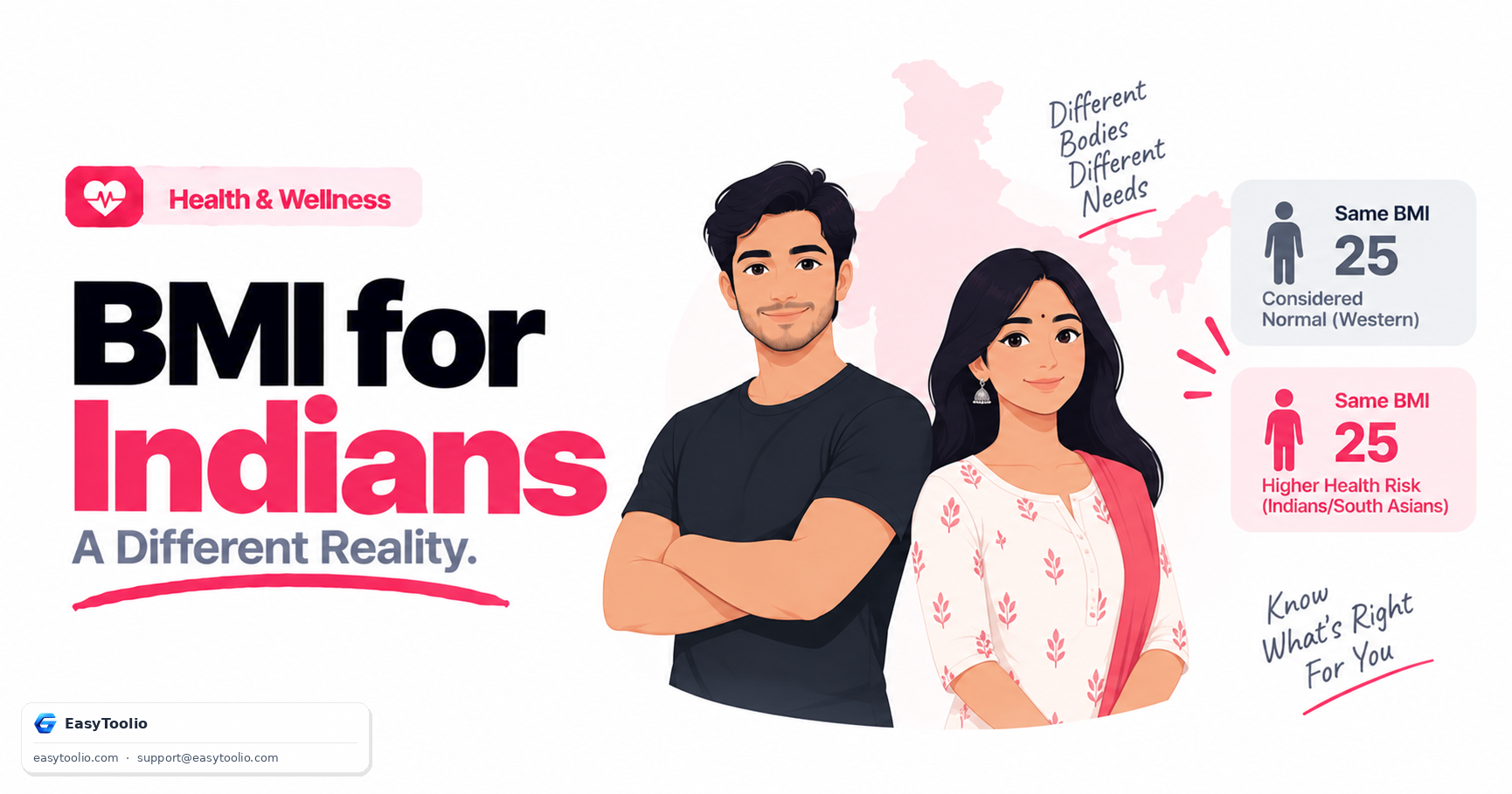
This calculator applies the WHO Asian-Pacific thresholds recommended for South Asian populations. Overweight starts at BMI 23, Obese at BMI 27.5 — lower than Western standards.

Physical Parameters

cm
kg
Affects recommendations for children and elderly.
Biological Gender
Used for body composition context.

Example Presets

Load representative profiles to see BMI categories in action:

BMI Result

Awaiting Parameters

Enter your weight, height, and age above to compute your Body Mass Index.

BMI Categories

WHO Asian-Pacific cutoffs are used in this calculator, specifically recommended for Indian and South Asian populations. These differ from Western standards where overweight begins at 25 and obesity at 30.

Underweight

< 18.5

Low body fat or muscle mass. Risk of nutrient deficiencies, osteoporosis, and weak immune system.

Normal Weight

18.5 – 22.9

Optimal range for South Asians. Lowest risk of weight-related chronic disease.

Overweight

23.0 – 27.4

Increased risk of type 2 diabetes and cardiovascular disease in South Asians at this range.

Obese

≥ 27.5

High risk of diabetes, hypertension, heart disease, and metabolic syndrome. Medical advice recommended.

Western vs. Asian-Pacific BMI Thresholds

Category WHO Standard (Western) WHO Asian-Pacific
Underweight < 18.5 < 18.5
Normal 18.5 – 24.9 18.5 – 22.9 ✓
Overweight 25.0 – 29.9 23.0 – 27.4 ✓
Obese ≥ 30.0 ≥ 27.5 ✓

BMI Formula

BMI is calculated by dividing your weight by the square of your height. The formula is the same worldwide — only the classification thresholds differ.

Metric Formula (kg / m²)

BMI = weight (kg) ÷ height (m)²

Example 1: Height 170 cm (1.70 m), Weight 70 kg

BMI = 70 ÷ (1.70 × 1.70) = 70 ÷ 2.89 = 24.2 → Overweight (Asian)

Example 2: Height 165 cm (1.65 m), Weight 60 kg

BMI = 60 ÷ (1.65 × 1.65) = 60 ÷ 2.72 = 22.0 → Normal Weight

Imperial Formula (lbs / in²)

BMI = [weight (lbs) ÷ height (in)²] × 703

Example 1: Height 5'7" (67 in), Weight 154 lbs

BMI = [154 ÷ (67 × 67)] × 703 = 24.1 → Overweight (Asian)

Example 2: Height 5'11" (71 in), Weight 198 lbs

BMI = [198 ÷ (71 × 71)] × 703 = 27.6 → Obese (Asian)

BMI for Indians & South Asians

South Asians — including Indians, Pakistanis, Bangladeshis, and Sri Lankans — have a higher body fat percentage at the same BMI compared to Western populations. This means health risks appear at lower BMI values.

Why Different Thresholds?

Research shows South Asians have higher visceral (abdominal) fat at lower BMI levels. At BMI 23, an Indian person has the same cardiovascular risk as a European at BMI 25. This is due to genetic differences in fat distribution — more central fat storage for the same total body weight.

Health Risks at Lower BMI

Type 2 diabetes in South Asians often appears at BMI 22–24 — 2–4 units lower than in European populations. Hypertension and insulin resistance also develop earlier. The WHO Expert Consultation (2004) confirmed that action points for public health should be lower for Asian populations.

Healthy BMI Range for Indians

The optimal BMI range for Indians and South Asians is 18.5–22.9. A BMI of 23 or above warrants lifestyle changes. At 27.5 or above, medical consultation is strongly advised. Waist circumference is also a useful complementary measure — men: <90 cm, women: <80 cm.

Recommended by Medical Bodies

The WHO, Indian Council of Medical Research (ICMR), and the Diabetes Foundation of India all endorse lower BMI cut-offs for South Asians. The National Family Health Survey (NFHS) in India also uses these lower thresholds for population-level health screening.

BMI Limitations

BMI is a useful population-level screening tool, but it has well-known limitations for individual assessment.

Muscle Mass

Athletes and bodybuilders may have a high BMI due to muscle, not fat. A rugby player at 190 cm / 100 kg (BMI 27.7) may have very low body fat. BMI cannot distinguish fat from lean tissue.

Fat Distribution

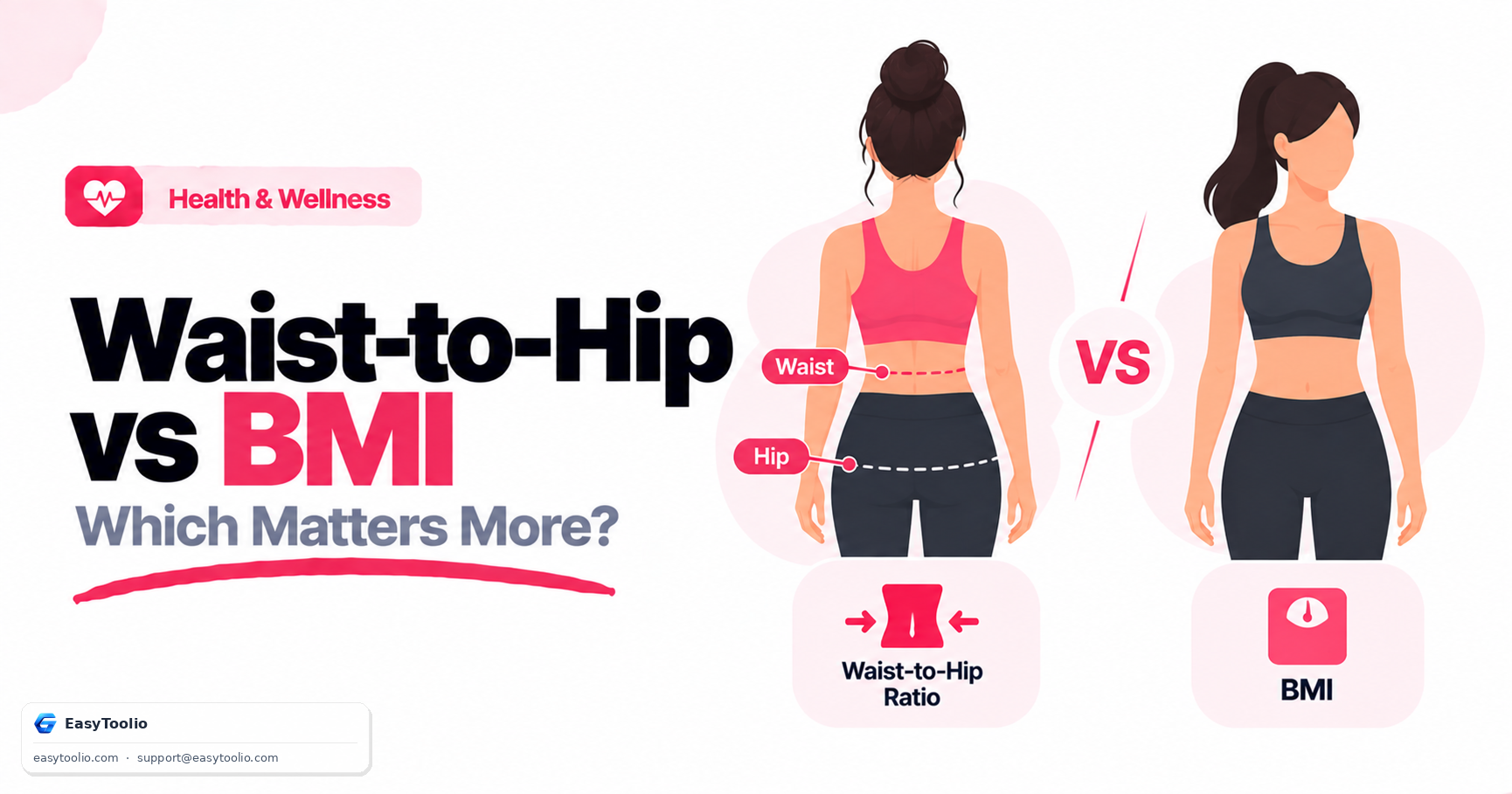
Visceral fat (around organs) is more dangerous than subcutaneous fat. Two people at the same BMI can have very different waist sizes and health risks. Waist-to-height ratio is often a better predictor of metabolic risk.

Age & Gender

Older adults naturally lose muscle and gain fat, so BMI may underestimate risk. Women typically carry more body fat than men at the same BMI. Children require BMI-for-age percentile charts, not adult thresholds.

Better Alternatives to BMI

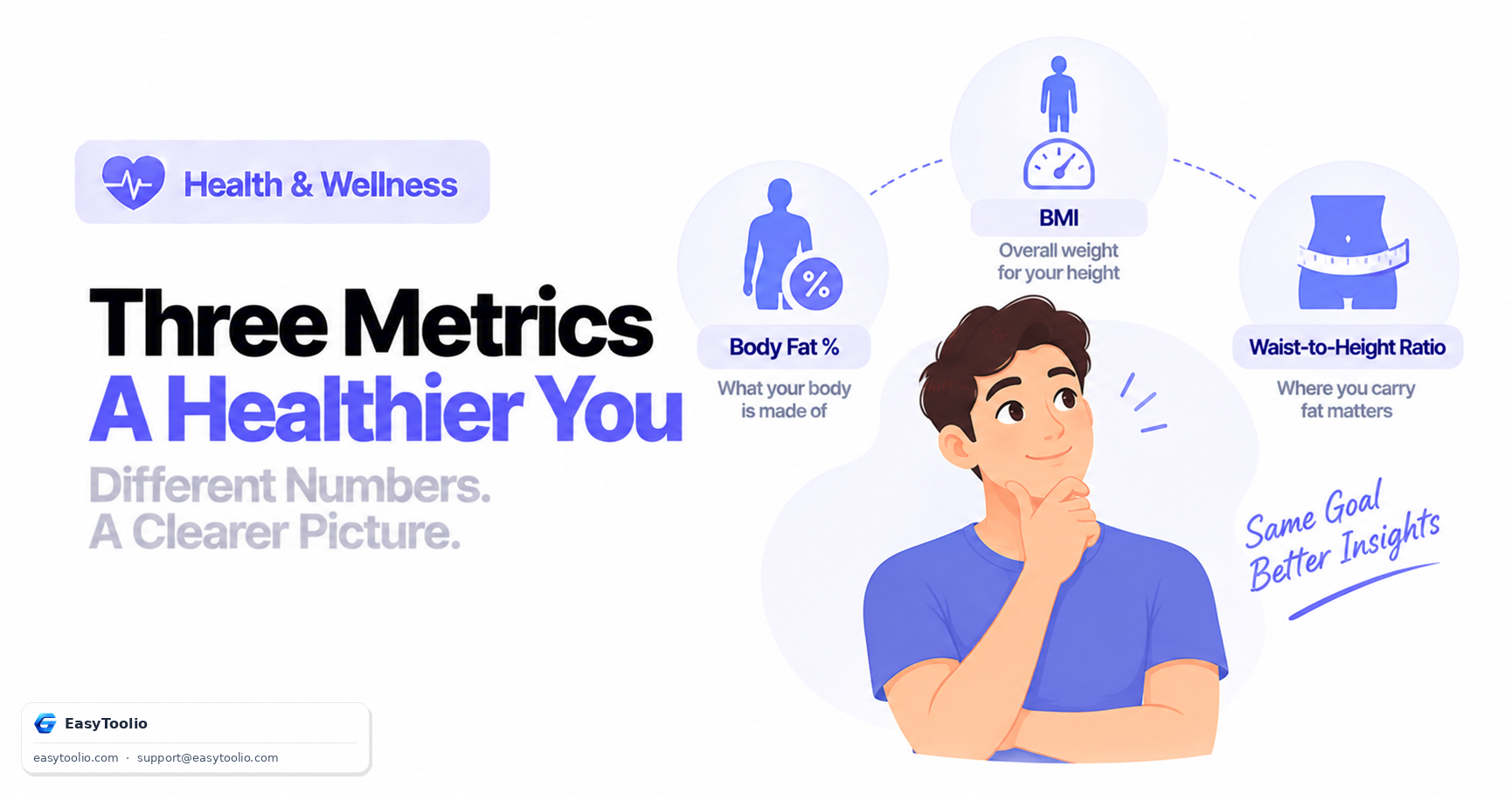
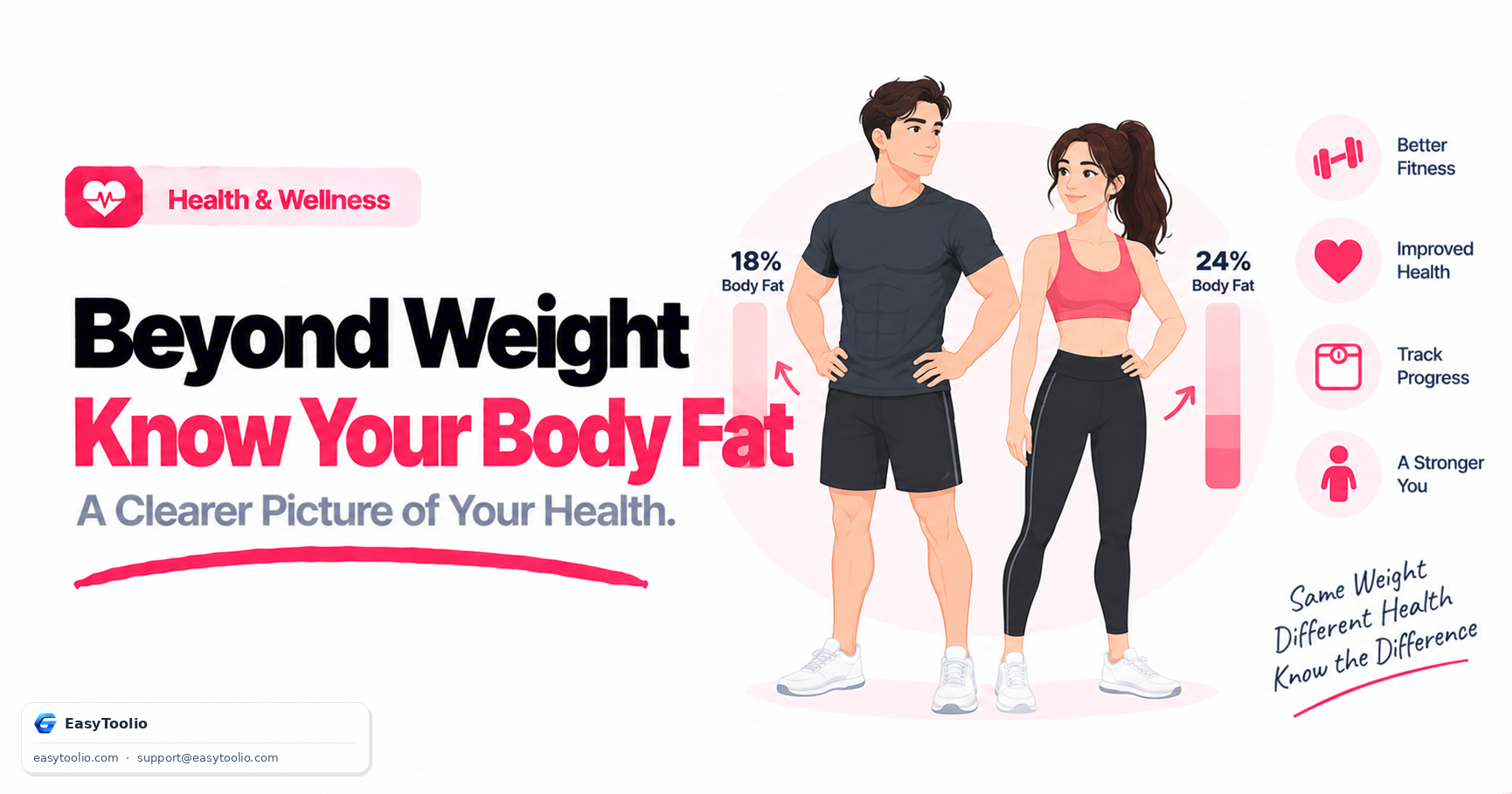
Body Fat %

Directly measures adipose tissue vs lean mass. More accurate for individual health assessment.

Waist-to-Hip Ratio

Measures central fat distribution. Men: <0.9 (healthy), Women: <0.8 (healthy).

Waist-to-Height Ratio

Keep waist <50% of height. Simple, no equipment needed, good predictor of metabolic risk.

Wellness & Health Coach

AI Advisor Health Advisor

Get personalised advice on fitness routines, diet plans, and understanding your BMI results.

Topics this feature will cover:

🥗 Diet & Nutrition 🏃 Fitness Routines 🩺 Understanding My BMI

Be first to access it when it launches.

We'll notify you the moment AI Advisor goes live. One email, no spam.

Practical Application

When to Use the BMI Calculator

Explore the most common real-world scenarios and use cases where this tool delivers maximum efficiency and precision.

Routine Fitness Tracking

Monitor weight status changes during a weight-loss, diet, or muscle-building journey.

Clinical Screening

Get a quick assessment of weight categories (Underweight, Normal, Overweight, Obese) using WHO parameters.

Calorie & Macro Planning

Establish baseline weight status before planning daily energy intakes or configuring macro distributions.

Family Health Records

Keep local, private logs of height/weight profiles for family members within the browser.

Examples & Scenarios

  • Checking whether a recent fitness routine has successfully shifted your weight into the healthy BMI range.
  • Quickly calculating body mass index before consulting a dietitian.
  • Logging seasonal weight fluctuations to identify health patterns.

Pro Tip

Combine your BMI results with the Body Fat and BMR calculators to build a comprehensive picture of your body composition.

FAQs

Frequently Asked Questions

Body Mass Index (BMI) is a numerical measure of a person's weight relative to their height. Calculated as weight (kg) divided by height squared (m²), it is used worldwide as a screening tool to classify weight categories — underweight, normal weight, overweight, and obese. While BMI does not directly measure body fat, it is a practical and widely used first-line health assessment.

BMI is calculated using the formula: BMI = weight (kg) ÷ height (m)². For example, a person who is 170 cm (1.70 m) tall and weighs 70 kg has a BMI of 70 ÷ (1.70 × 1.70) = 24.2. In imperial units, the formula is: BMI = [weight (lbs) ÷ height (in)²] × 703.

For Indians and South Asians, the WHO Asian-Pacific guidelines recommend a Normal BMI range of 18.5 to 22.9. Overweight begins at BMI 23 and Obesity at BMI 27.5 — both significantly lower than the Western thresholds of 25 and 30. This is because South Asians carry more visceral (abdominal) fat at lower BMI levels, which raises metabolic and cardiovascular risk earlier.

Research consistently shows that South Asians develop type 2 diabetes, hypertension, and cardiovascular disease at lower BMI values than Western populations. This is due to genetic differences in body fat distribution — South Asians store more fat centrally (around the abdomen and organs) at the same overall BMI. The WHO Expert Consultation in 2004 endorsed lower action thresholds of 23 (overweight) and 27.5 (obese) for Asian populations.

Yes. Using WHO Asian-Pacific guidelines, a BMI of 24.0 falls in the Overweight category for South Asians (range: 23.0–27.4). Under Western standards, BMI 24.0 would be considered Normal. This is an important distinction — at BMI 24, an Indian person has an elevated risk of developing type 2 diabetes and should consider lifestyle modifications.

For a person 170 cm (1.70 m) tall, the healthy weight range using Asian-Pacific guidelines (BMI 18.5–22.9) is approximately 53.5 kg to 66.1 kg (117.9 lbs to 145.8 lbs). Using Western guidelines (BMI 18.5–24.9), the range would be slightly wider at 53.5 kg to 71.9 kg. The Asian-Pacific range is recommended for Indians and South Asians.

For a person 180 cm (1.80 m) tall, the healthy weight range using Asian-Pacific guidelines (BMI 18.5–22.9) is approximately 59.9 kg to 74.1 kg (132.1 lbs to 163.5 lbs). A weight of 90 kg at this height gives a BMI of 27.8, which falls in the Obese category per Asian-Pacific standards and Overweight under Western standards.

BMI has known limitations. It does not differentiate between muscle mass and body fat — athletes may score as overweight despite very low body fat. It also does not account for fat distribution, bone density, age, or gender. For a more complete picture, combine BMI with body fat percentage measurement and waist circumference. For men, a waist over 90 cm (35 in) and for women over 80 cm (31.5 in) indicates elevated risk independent of BMI.

BMI is a simple weight-to-height ratio and does not directly measure body fat. Body fat percentage tells you what proportion of your total body weight is fat tissue. Two people can have the same BMI but very different body compositions — an athlete with high muscle mass and a sedentary person may both have BMI 26, but the athlete has far less body fat. Body fat percentage is a more accurate measure of health and fitness.

The BMI formula and thresholds are the same for men and women. However, women naturally carry more body fat than men at the same BMI due to hormonal and physiological differences. At BMI 22, women typically have about 28–32% body fat, while men have about 18–22%. This means BMI may slightly underestimate health risk in women with low muscle mass and overestimate it in muscular men.

To reach a healthy BMI of 18.5–22.9, create a moderate calorie deficit of 300–500 kcal per day through a combination of diet and exercise. Focus on reducing refined carbohydrates, added sugars, and processed foods while increasing vegetables, lean proteins, and whole grains. Aim for at least 150 minutes of moderate aerobic exercise per week plus 2 strength training sessions. Losing 0.5–1 kg per week is a safe and sustainable rate.

Yes. A person with a normal BMI (18.5–22.9) can still have high visceral fat, poor cardiovascular fitness, or metabolic risk factors — a condition sometimes called "normal weight obesity" or "skinny fat." Conversely, a person with BMI 24 who exercises regularly and has good metabolic markers may be healthier than the number suggests. Always consider waist circumference, body fat percentage, blood pressure, and blood sugar alongside BMI.

A BMI below 18.5 is classified as Underweight for both Asian and Western standards. Being underweight raises the risk of nutrient deficiencies, anaemia, osteoporosis, impaired immune function, and in women, menstrual irregularities. If you are underweight, focus on gradually increasing calorie intake with nutrient-dense foods — whole grains, legumes, dairy, nuts, and lean meats — and consider resistance training to build muscle mass.

Yes. Adult BMI thresholds do not apply to children and teenagers. For individuals aged 2–19, BMI-for-age percentile charts are used instead. A child is classified as underweight if below the 5th percentile, healthy weight between the 5th and 85th percentile, overweight between the 85th and 95th percentile, and obese at or above the 95th percentile. These charts account for normal changes in body composition during growth.

For most adults, checking BMI every 3–6 months is sufficient to track meaningful changes. Since BMI reflects gradual weight changes, daily or weekly checks are unnecessary and can be misleading due to normal weight fluctuations from water retention and digestion. If you are actively trying to gain or lose weight, monthly checks alongside waist measurements give a better picture of progress.

Articles

Related Guides & Insights

Read our in-depth articles and guides related to this tool to help you make smarter decisions.

Workflow Suggestions

Recommended for Your Workflow

Category Showcase

More from Health & Wellness

Platform Spotlight

Popular Tools on EasyToolio

Embeddable

Embed This Tool

Add the BMI Calculator to blogs, websites, documentation, tutorials, and online resources using a simple responsive iframe. The embed is free, mobile-friendly, and links back to the full EasyToolio tool page for users who want the complete experience.

Can I embed this tool on my website?

Yes, this tool can be embedded using our free iframe embed code. Copy the code below and paste it into your HTML, CMS block, article, documentation page, or tutorial.

Explore More Tools Like BMI Calculator

Get a complete picture of your health with our suite of free calculators — BMR, calories, body fat, ideal weight and more.