Notification
Go to Home All Tools Compare Glossary Blog Contact
Be the first to rate
Health & Wellness

Waist-to-Hip Ratio Calculator

Waist-to-Hip Ratio Calculator

Calculate your Waist-to-Hip Ratio (WHR) to assess abdominal fat distribution and evaluate potential cardiovascular and metabolic risks.

Secure Physical Composition Estimates

Calculations run locally in client-side Javascript. No bodily circumferences or parameters are uploaded to servers.

Body Circumferences

cm
cm
Biological Gender

Example Presets

Load profiles to check calculations and risk factors:

WHR Risk Assessment

Awaiting Parameters

Fill in your physical waist and hip measurements to calculate your fat distribution risk ratio.

Waist-to-Hip Ratio Risk Standard Charts

Standard clinical classifications based on the World Health Organization (WHO) and National Institutes of Health (NIH) metrics.

🙋‍♀️

Women's WHR Standards

Women naturally store more gluteofemoral fat (lower body) for reproductive support, leading to lower baseline ratios. Ratios exceeding 0.85 indicate elevated abdominal adiposity.

Waist-to-Hip Ratio Risk Category Body Shape Association
< 0.80 Low Risk Pear Shape (Gynoid)
0.80 – 0.85 Moderate / Increased Risk Slight Abdominal Store
> 0.85 High Risk (Obesity) Apple Shape (Android)
🏋️‍♂️

Men's WHR Standards

Men tend to accumulate fat centrally around the abdomen rather than the lower body. Thus, risk limits are higher, with ratios exceeding 0.95 suggesting high cardiovascular concern.

Waist-to-Hip Ratio Risk Category Body Shape Association
< 0.90 Low Risk Pear Shape (Gynoid)
0.90 – 0.95 Moderate / Increased Risk Slight Central Store
> 0.95 High Risk (Obesity) Apple Shape (Android)

Fat Distribution & Cardiovascular Risk Profile

Understanding subcutaneous fat vs. dangerous visceral fat and how they affect your metabolic baseline.

Subcutaneous vs. Visceral Fat

**Subcutaneous fat** resides directly below the skin, typically stored in hips, thighs, and limbs. **Visceral fat** wraps deep around major organs in your abdomen (liver, pancreas, kidneys). An elevated WHR represents high visceral fat volume, which is associated with systemic insulin resistance.

Cardiovascular & Diabetes Link

Visceral fat cells secrete inflammatory cytokines and free fatty acids directly into the portal vein leading to the liver. This fat distribution pattern is strongly linked with elevated blood triglycerides, decreased HDL (good cholesterol), high blood pressure, and type 2 diabetes.

Strategies for Waist Reduction

Targeted fat loss is a myth, but visceral fat is the first to burn during lifestyle interventions:

  • Nutrition: Minimize processed sugars, fructose, and refined starch, which feed visceral fat.
  • Exercise: Combine high-intensity interval training (HIIT) with full-body strength training.
  • Stress & Sleep: Keep cortisol levels low to prevent stress-induced fat storage.
Wellness & Health Coach

AI Advisor Health Advisor

Get personalized advice on fitness routines, diet plans, and understanding your health metrics better.

Topics this feature will cover:

🥗 Diet & Nutrition 🏃 Fitness Routines 🩺 Understanding Metrics

Be first to access it when it launches.

We'll notify you the moment AI Advisor goes live. One email, no spam.

FAQs

Frequently Asked Questions

The Waist-to-Hip Ratio (WHR) is the dimensionless ratio of the circumference of the waist to that of the hips. It is calculated by dividing the waist measurement by the hip measurement (Waist / Hip).

For the waist, stand up straight and wrap a tape measure around your torso at its narrowest point (usually just above the belly button) after exhaling normally. For the hips, measure around the widest part of your buttocks, keeping the tape parallel to the floor.

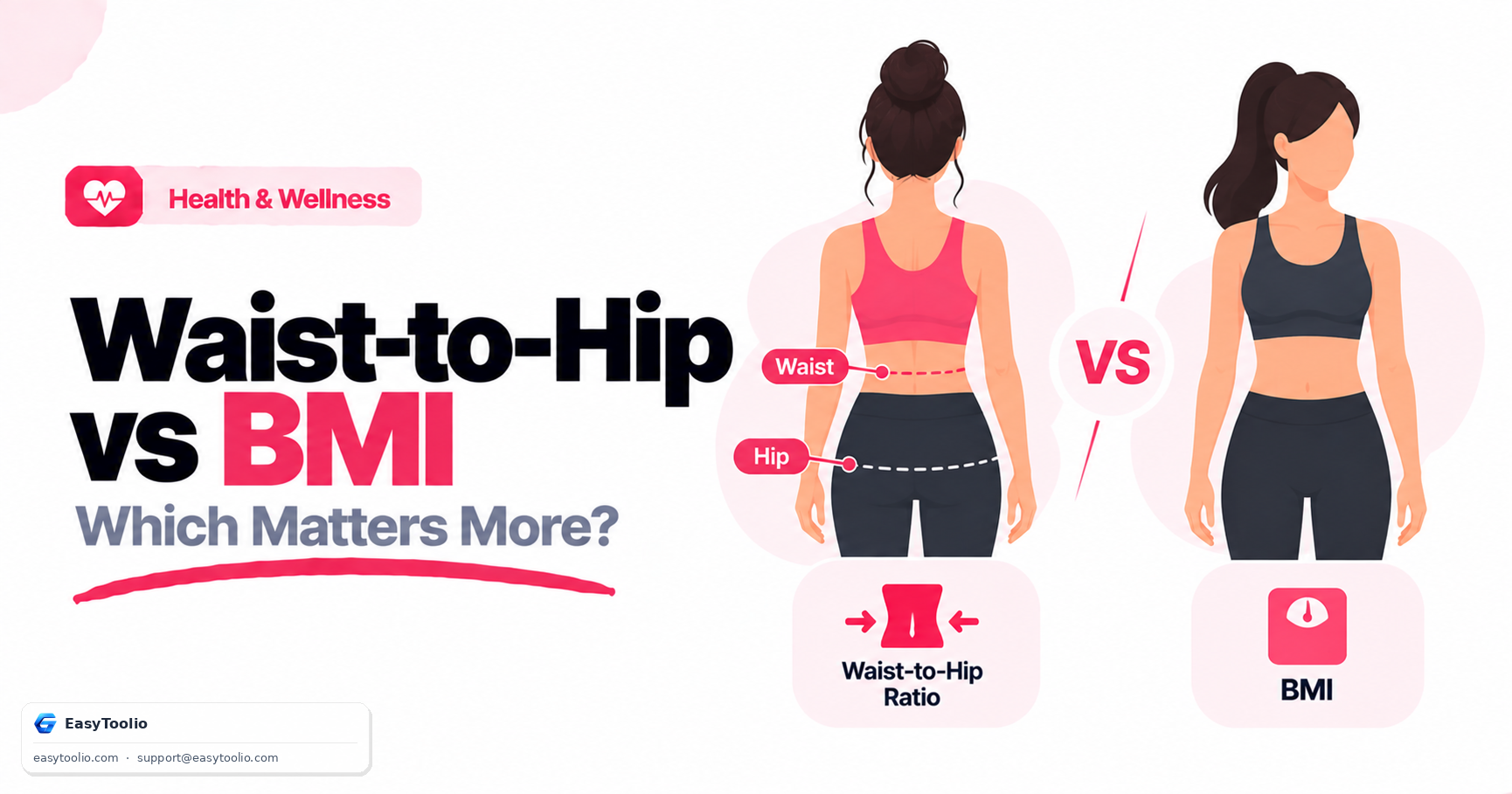
BMI measures weight relative to height but doesn't distinguish between muscle and fat, nor does it account for where fat is stored. WHR specifically measures abdominal fat distribution. Visceral (midsection) fat is much more metabolically active and dangerous to organs than lower-body fat.

An "Apple" body shape (android) means more fat is stored around the waist and chest, indicating higher levels of visceral fat and increased risk for chronic illnesses. A "Pear" body shape (gynoid) stores fat in the lower body (hips, thighs), which is subcutaneous fat and has a lower health risk profile.

According to the World Health Organization (WHO), a healthy WHR is 0.90 or less for men and 0.85 or less for women. Ratios above these values indicate abdominal obesity and an increased risk of health complications.

You can improve your WHR by losing abdominal fat through a combination of healthy diet (reducing refined sugars, processed carbs, and trans fats), regular physical activity (both aerobic cardio and resistance strength training), stress management (cortisol increases belly fat storage), and adequate sleep.

Articles

Related Guides & Insights

Read our in-depth articles and guides related to this tool to help you make smarter decisions.

Workflow Suggestions

Recommended for Your Workflow

Category Showcase

More from Health & Wellness

Platform Spotlight

Popular Tools on EasyToolio

Explore More Tools Like Waist-to-Hip Ratio Calculator

Loved the Waist To Hip Ratio Calculator? Explore our suite of related utilities to boost your productivity even further.