Notification
Go to Home All Tools Compare Glossary Blog Contact
Be the first to rate
Health & Wellness

BMR Calculator

BMR Calculator

Calculate your Basal Metabolic Rate (BMR) at rest using Mifflin-St Jeor and Harris-Benedict formulas.

Secure Resting Energy Predictions

Calculations run locally in client-side memory. No metabolic factors or demographic entries are recorded or uploaded.

Physiological Parameters

cm
kg
Biological Gender

Example Presets

Load representative profiles to check ranges:

BMR Assessment

Awaiting Parameters

Fill in your physical attributes to predict resting energy expenditure baselines.

BMR, Metabolism & Energy Expenditure Guide

Understanding basal calories and the metabolic mechanisms driving daily energy burn.

What is Basal Metabolic Rate (BMR)?

BMR represents the baseline amount of thermal energy required to keep your body functional in a resting state. It accounts for about 60% to 75% of your total daily energy output.

Your organs (liver, brain, heart, kidneys) utilize the majority of resting baseline energy, even when you are asleep.

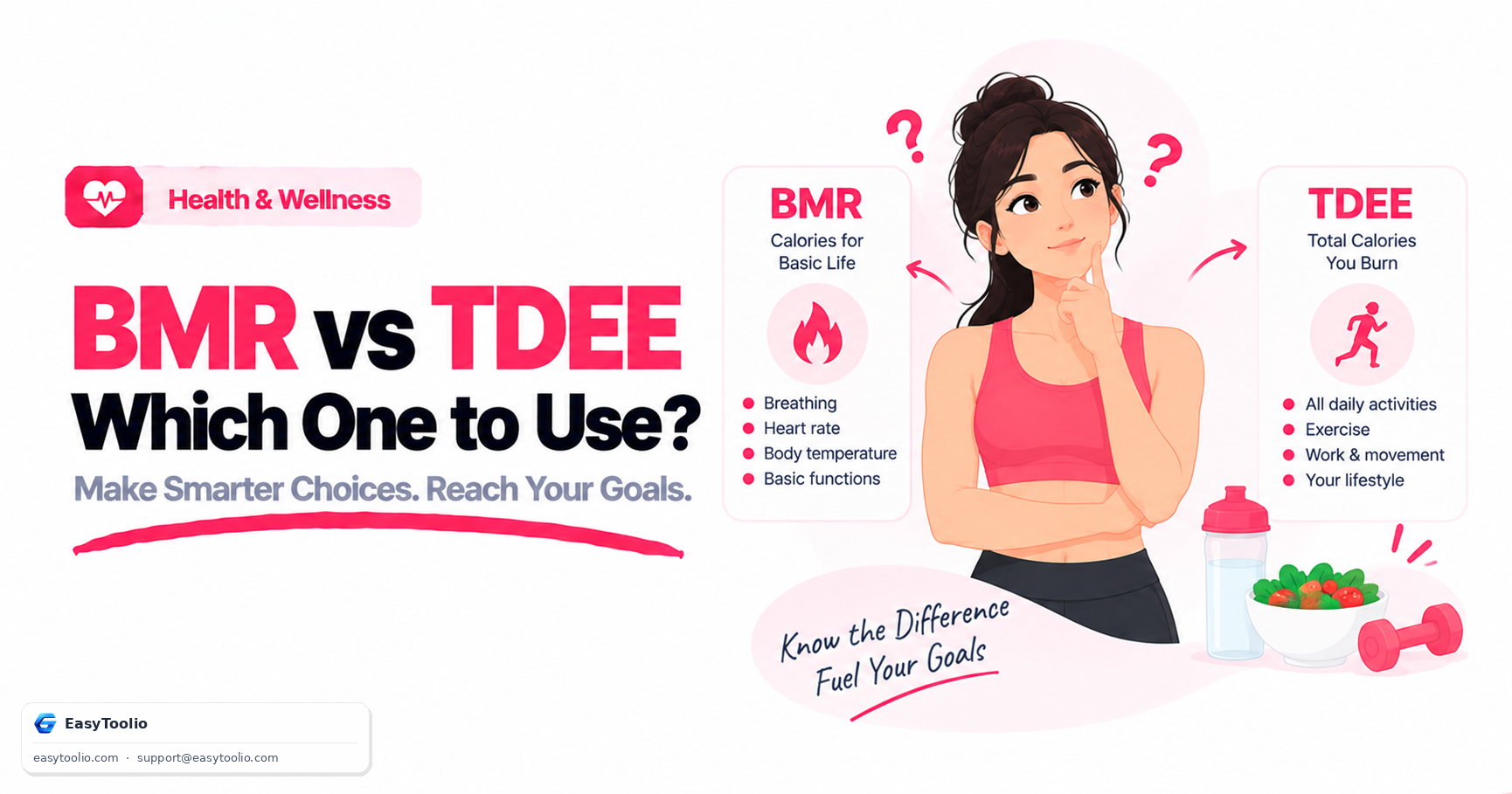
BMR vs. TDEE

BMR is your resting metabolic rate. Total Daily Energy Expenditure (TDEE) factors in physical activity and digestive processes.

  • • TDEE = BMR × Activity Factor
  • • Sedentary lifestyle = BMR × 1.2
  • • Moderately active = BMR × 1.55

Metabolic Factors

Several physiological factors regulate BMR:

  • Lean Muscle Mass: Muscle burns more calories at rest than fat tissue. Increasing muscle increases BMR.
  • Hormones: Thyroid hormones regulate overall metabolism speed.
  • Body Stature: Taller, heavier bodies require more energy, raising BMR.
Wellness & Health Coach

AI Advisor Health Advisor

Get personalized advice on fitness routines, diet plans, and understanding your health metrics better.

Topics this feature will cover:

🥗 Diet & Nutrition 🏃 Fitness Routines 🩺 Understanding Metrics

Be first to access it when it launches.

We'll notify you the moment AI Advisor goes live. One email, no spam.

FAQs

Frequently Asked Questions

The original Harris-Benedict formula was published in 1918. The Mifflin-St Jeor formula was introduced in 1990 and is generally considered more accurate for modern populations. Mifflin-St Jeor tends to predict slightly lower BMR values, which helps prevent overestimating daily calorie needs.

Metabolism is the cellular chemical process of converting food intake into physical energy. BMR naturally declines with age (roughly 1-2% per decade after age 30) due to gradual muscle tissue loss. Regular strength training can help maintain muscle and preserve BMR.

Yes, BMR is the energy required to survive in a comatose state at rest. However, any physical activity—including sitting, walking, or eating—requires additional calories. Consuming fewer calories than your BMR for long periods forces the body to conserve energy, potentially slowing down weight loss and causing muscle depletion.

Basal Metabolic Rate (BMR) is the number of calories your body needs each day to perform essential life-sustaining functions such as breathing, circulation, cell production, and temperature regulation while at complete rest.

BMR is calculated using factors such as age, gender, height, and weight. This calculator uses scientifically validated equations like the Mifflin-St Jeor or Harris-Benedict formulas to estimate your daily resting energy requirements.

BMR represents the calories your body needs at complete rest, while Total Daily Energy Expenditure (TDEE) includes all calories burned through daily activities, exercise, digestion, and movement throughout the day.

Understanding your BMR helps you estimate your daily calorie needs, create effective weight loss or weight gain plans, and make informed nutrition decisions based on your body's energy requirements.

Yes. BMR serves as a starting point for determining calorie intake. By estimating your total daily calorie needs and creating a moderate calorie deficit, you can develop a sustainable weight loss strategy.

Yes. Muscle tissue requires more energy to maintain than fat tissue, so individuals with greater muscle mass generally have a higher BMR and burn more calories at rest.

Regular exercise, particularly strength training, can increase muscle mass and help raise your BMR over time. Cardiovascular exercise also supports overall calorie expenditure and metabolic health.

BMR calculators provide reliable estimates based on established scientific formulas. However, actual metabolic rates may vary due to genetics, body composition, hormones, health conditions, and lifestyle factors.

Men typically have a higher BMR because they generally possess more lean muscle mass and less body fat than women. The formulas account for these physiological differences when estimating calorie requirements.

It is a good idea to recalculate your BMR whenever you experience significant changes in weight, body composition, activity level, or age. Updating your numbers helps maintain accurate calorie and nutrition planning.

Articles

Related Guides & Insights

Read our in-depth articles and guides related to this tool to help you make smarter decisions.

Workflow Suggestions

Recommended for Your Workflow

Category Showcase

More from Health & Wellness

Platform Spotlight

Popular Tools on EasyToolio

Explore More Tools Like BMR Calculator

Loved the Bmr Calculator? Explore our suite of related utilities to boost your productivity even further.