Notification
Go to Home All Tools Compare Glossary Blog Contact
Be the first to rate
Health & Wellness

Water Intake Calculator

Water Intake Calculator

Estimate your daily water intake needs based on weight, age, exercise levels, climate conditions, and life stage parameters.

Secure Local Calculations

Calculations run locally in client-side Javascript. No physiological metrics are shared or uploaded to the servers.

Hydration Inputs

kg
Biological Gender
30 min

Example Presets

Load profiles to check varying baseline recommendations:

Hydration Target

Awaiting Parameters

Fill in your physical attributes to predict daily recommended fluid levels.

The Science of Hydration

How water scales biological metrics, prevents metabolic strain, and powers physical systems.

Why Hydrate?

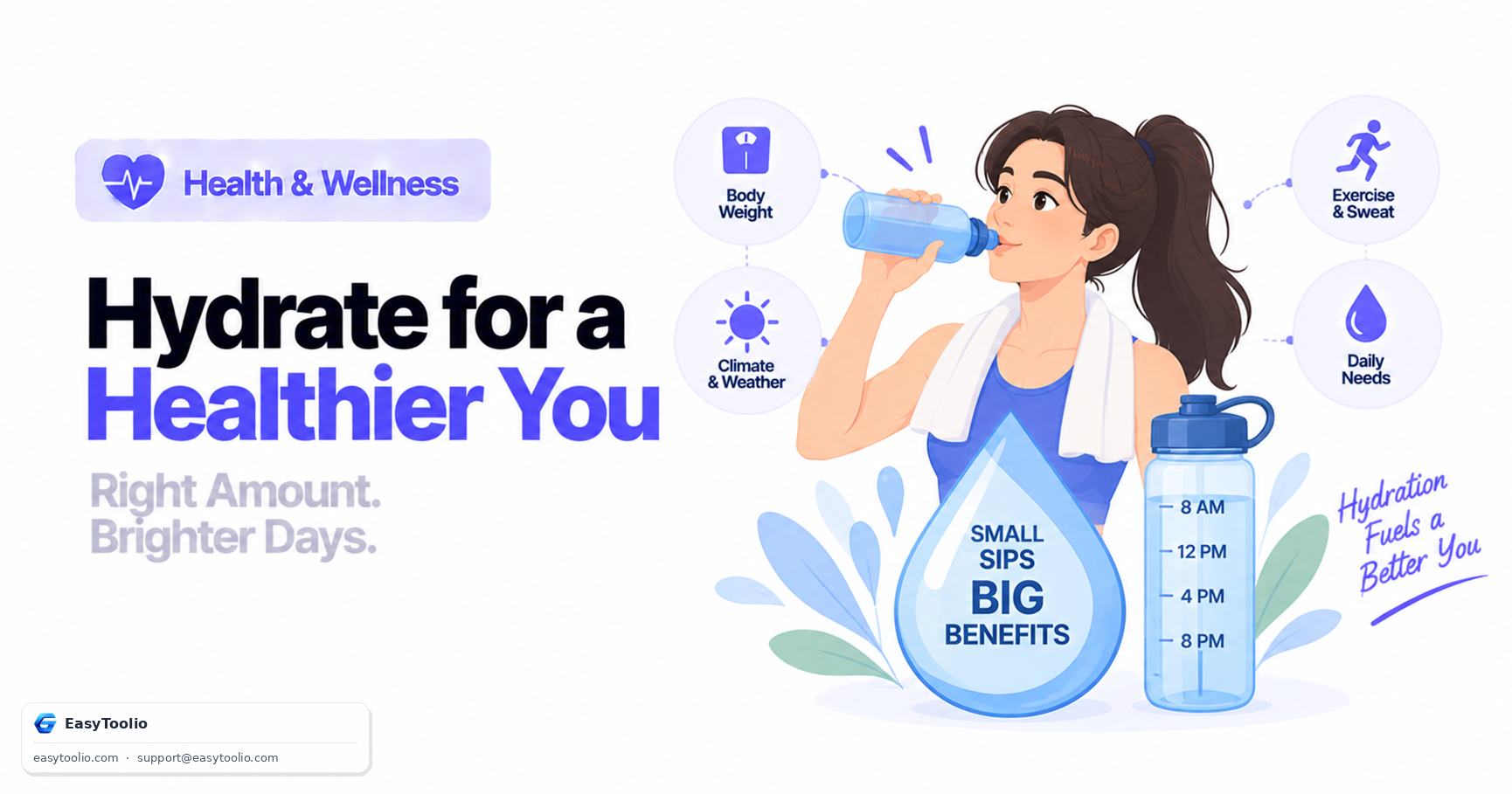
Water facilitates metabolic reactions, regulates blood circulation, ensures cell volume, keeps joints lubricated, and cushions critical organs. Even a minor 2% drop in hydration levels causes a noticeable drop in mental clarity and physical endurance.

Dehydration Risks

  • Mild Symptoms: Dry mouth, headaches, decreased coordination, fatigue, and muscle cramping.
  • Urine Color Check: Aim for pale straw or clear urine. Darker shades mean you need to hydrate immediately.
  • Brain/Muscle Function: Water loss reduces blood volume, making the heart work harder.

Hydration Best Practices

To maintain peak cellular function, space your fluid intake evenly across the day. Avoid chugging massive quantities at once, as your kidneys can process only about 800-1000 ml of water per hour. Sucking small, steady sips is optimal.

Wellness & Health Coach

AI Advisor Health Advisor

Get personalized advice on fitness routines, diet plans, and understanding your health metrics better.

Topics this feature will cover:

🥗 Diet & Nutrition 🏃 Fitness Routines 🩺 Understanding Metrics

Be first to access it when it launches.

We'll notify you the moment AI Advisor goes live. One email, no spam.

FAQs

Frequently Asked Questions

An average baseline is about 2.2 liters (9 cups) per day for adult females and 3.0 liters (12 cups) for adult males. However, this varies based on body weight, climate, and physical activity levels.

Physical activity increases sweating and respiratory water loss. To compensate, it is recommended to drink an additional 350 to 500 ml (12 to 16 oz) of water for every 30 minutes of moderate-to-intense physical exercise.

Mild dehydration symptoms include dry mouth, fatigue, headache, dizziness, dry skin, and dark yellow urine. Severe dehydration can lead to extreme thirst, confusion, rapid heart rate, and requires immediate medical attention.

A water intake calculator estimates how much water you should drink each day based on factors such as body weight, age, activity level, and environmental conditions. It helps you maintain proper hydration and support overall health.

Proper hydration supports body temperature regulation, nutrient transport, digestion, joint lubrication, kidney function, and overall physical and mental performance. Even mild dehydration can affect energy levels and concentration.

Daily water requirements are commonly estimated using body weight, activity level, climate conditions, and other lifestyle factors. People who exercise frequently or live in hot environments typically require more fluids.

Yes. Most beverages contribute to your daily fluid intake, including coffee, tea, milk, and juice. However, water remains the best choice for hydration because it contains no added sugars or calories.

Yes. Hot and humid weather increases sweat loss, causing your body to require more fluids. Drinking additional water helps replace lost fluids and reduces the risk of dehydration.

Water may support weight management by promoting feelings of fullness and helping reduce unnecessary calorie intake from sugary beverages. It also supports normal metabolism and overall health.

A common sign of adequate hydration is pale yellow urine and regular urination. Persistent thirst, dark urine, dry mouth, fatigue, or headaches may indicate that you need to drink more fluids.

Yes. Excessive water consumption in a short period can lead to a rare condition called water intoxication or hyponatremia, where blood sodium levels become dangerously low. Most healthy adults can safely follow recommended hydration guidelines.

Yes. Hydration requirements vary by age. Children, older adults, pregnant women, and breastfeeding mothers may have different fluid needs and should pay close attention to maintaining proper hydration.

Yes. Thirst is often a sign that your body has already started to lose fluids. Drinking water consistently throughout the day can help maintain hydration levels and prevent dehydration before symptoms appear.

Articles

Related Guides & Insights

Read our in-depth articles and guides related to this tool to help you make smarter decisions.

Workflow Suggestions

Recommended for Your Workflow

Category Showcase

More from Health & Wellness

Platform Spotlight

Popular Tools on EasyToolio

Explore More Tools Like Water Intake Calculator

Loved the Water Intake Calculator? Explore our suite of related utilities to boost your productivity even further.