"120 over 80" is the blood pressure number most people have heard, but very few people know what actually counts as normal, elevated, or dangerous — or that the healthy range shifts slightly as you age. Here is a clear, chart-based breakdown of what your numbers mean.
This article is educational information only and is not a medical diagnosis. If you have concerns about your blood pressure, please consult a doctor or qualified healthcare provider.
What Systolic and Diastolic Numbers Mean
Blood pressure is written as two numbers, measured in millimeters of mercury (mmHg):
- Systolic pressure (the top, larger number) measures the pressure in your arteries when your heart beats and pushes blood out.
- Diastolic pressure (the bottom, smaller number) measures the pressure in your arteries when your heart rests between beats.
So a reading of 120/80 mmHg means a systolic pressure of 120 and a diastolic pressure of 80. Both numbers matter, and clinical guidelines classify your blood pressure category based on whichever number falls into the higher-risk range.
Check your own numbers instantly with the Blood Pressure Calculator, and pair it with the Heart Rate Calculator to understand your cardiovascular fitness more completely.
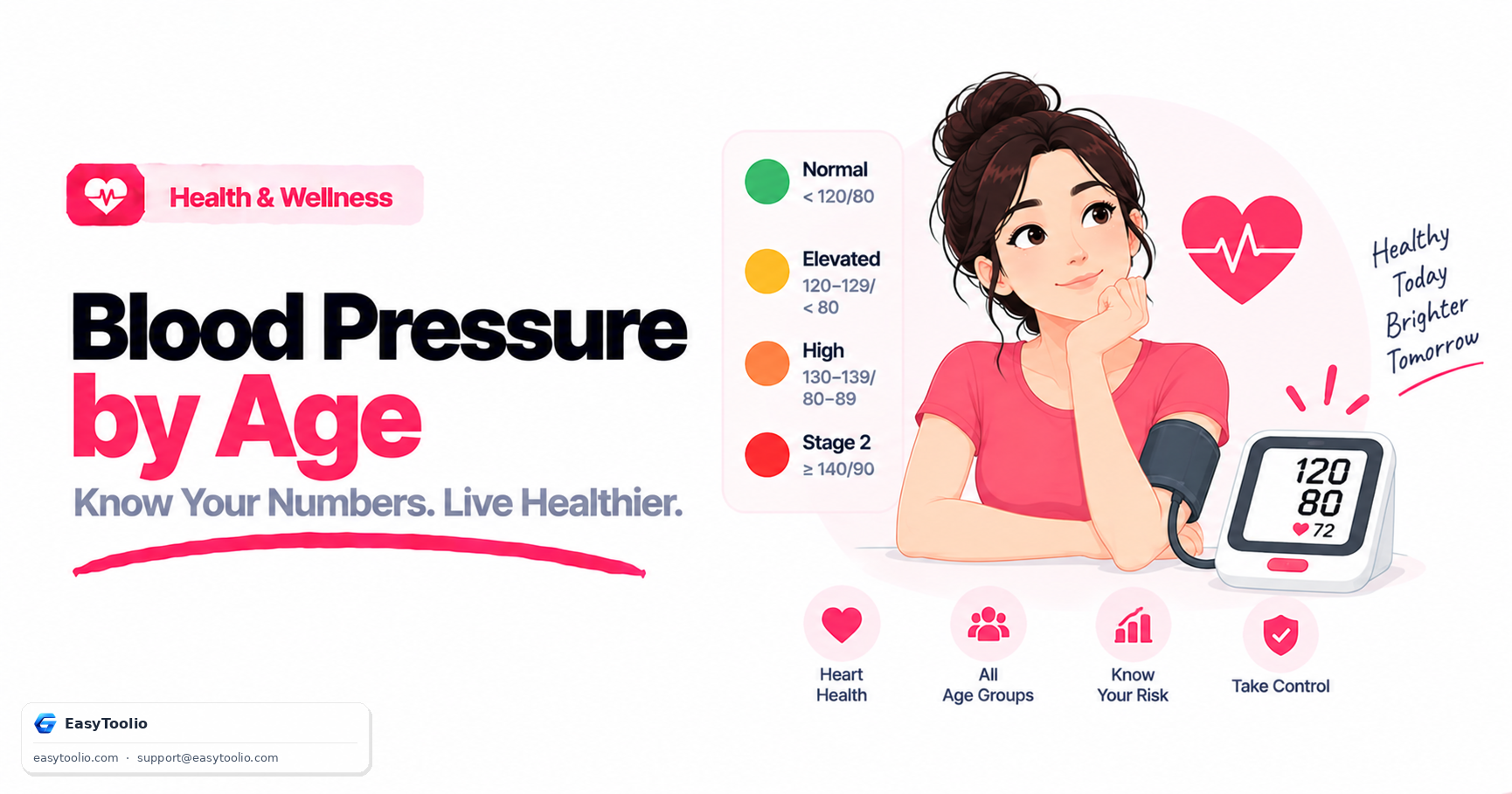
The Standard Blood Pressure Categories (AHA)
The American Heart Association (AHA) defines five categories based on systolic and diastolic readings:
| Category | Systolic (mmHg) | Diastolic (mmHg) | |
|---|---|---|---|
| Normal | Less than 120 | and | Less than 80 |
| Elevated | 120–129 | and | Less than 80 |
| Hypertension Stage 1 | 130–139 | or | 80–89 |
| Hypertension Stage 2 | 140 or higher | or | 90 or higher |
| Hypertensive Crisis | Higher than 180 | and/or | Higher than 120 |
A reading only needs to fall into a category on either the systolic or diastolic side to place you in that category — you don't need both numbers to be elevated.
How "Normal" Shifts Slightly with Age
Clinical guidelines apply the same category thresholds to all adults, but average population blood pressure does tend to rise gradually with age, largely due to natural stiffening of the arteries over time. The table below is a general population reference, not a diagnostic standard — an individual's healthy target should always be set by their doctor based on personal health history.
| Age Range | Typical Average Reading (general reference) |
|---|---|
| 18–39 years | Around 110–120 / 70–80 mmHg |
| 40–59 years | Around 120–130 / 75–85 mmHg |
| 60+ years | Around 130–140 / 75–85 mmHg |
Even though average readings creep upward with age, the AHA's Normal/Elevated/Stage 1/Stage 2 categories above remain the clinical benchmark used for diagnosis at any age — "higher than it used to be" is not the same as "healthy."
Key Lifestyle Factors That Influence Blood Pressure
Several everyday, modifiable factors have a well-established effect on blood pressure:
- Sodium (salt) intake: Excess dietary sodium causes the body to retain fluid, increasing blood volume and pressure. Indian diets, which often rely heavily on salt, pickles, and processed snacks, can push sodium intake well above recommended limits.
- Body weight: Every extra kilogram of body weight requires the heart to pump blood through additional tissue, raising the workload on the cardiovascular system.
- Stress: Chronic stress triggers repeated releases of cortisol and adrenaline, which temporarily raise heart rate and constrict blood vessels — and repeated spikes can contribute to sustained hypertension over time.
- Physical activity: Regular aerobic exercise strengthens the heart muscle, allowing it to pump more efficiently and with less force, which lowers resting blood pressure over months of consistency.
- Sleep quality and alcohol/tobacco use also play a well-documented role in long-term blood pressure control.
When to Seek Medical Attention
Most elevated readings are not emergencies, but certain situations require prompt medical attention:
- A reading in the Hypertensive Crisis range (systolic higher than 180 and/or diastolic higher than 120) should be treated seriously. If this reading is accompanied by symptoms such as severe headache, chest pain, shortness of breath, vision changes, or difficulty speaking, seek emergency care immediately.
- Consistently elevated readings (Stage 1 or Stage 2) across multiple checks, even without symptoms, warrant a conversation with a doctor about lifestyle changes or treatment.
- A single high reading taken during stress, after exercise, or after caffeine is common and not necessarily concerning — but a pattern over several days or weeks is worth discussing with a healthcare provider.
Frequently Asked Questions
Q: Is 130/85 considered high blood pressure? A: Yes, under the AHA guidelines a systolic reading of 130–139 or a diastolic reading of 80–89 falls into the Hypertension Stage 1 category, which is considered high blood pressure and worth discussing with a doctor.
Q: Does blood pressure naturally increase as you get older? A: Population averages do tend to rise gradually with age due to natural arterial stiffening, but the clinical categories for Normal, Elevated, and Hypertension apply the same thresholds at every adult age — an older adult's high reading is still high.
Q: What blood pressure reading counts as a medical emergency? A: A systolic reading above 180 and/or a diastolic reading above 120 is considered a hypertensive crisis. If this is paired with severe headache, chest pain, shortness of breath, or vision changes, it requires immediate emergency medical care.