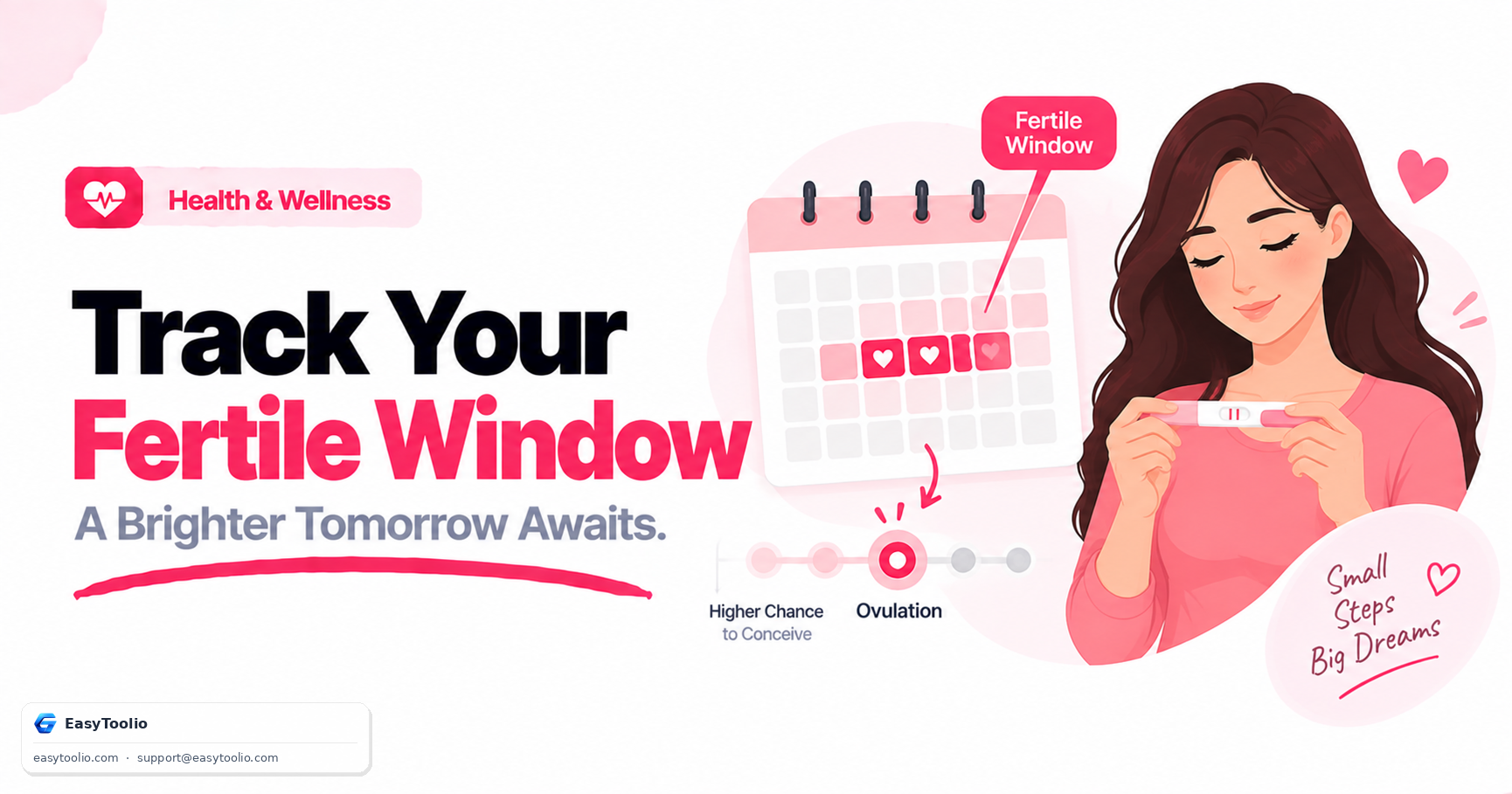
Ovulation is the release of a mature egg from the ovary — and it only happens once per cycle. An egg survives for just 12–24 hours after release. However, sperm can survive in the female reproductive tract for up to 5 days. This creates a 6-day fertile window: the 5 days before ovulation plus the day of ovulation itself.
Understanding when your fertile window opens is the most evidence-based way to increase your chances of conception.
How to Calculate Your Ovulation Day
For a regular menstrual cycle, ovulation typically occurs approximately 14 days before the start of the next period — not necessarily 14 days after the current period started.
Formula: Ovulation Day = Cycle Length − 14
| Cycle Length | Ovulation Day | Fertile Window |
|---|---|---|
| 26 days | Day 12 | Days 7–12 |
| 28 days | Day 14 | Days 9–14 |
| 30 days | Day 16 | Days 11–16 |
| 32 days | Day 18 | Days 13–18 |
| 35 days | Day 21 | Days 16–21 |
Example: If your cycle is 30 days and your last period started on June 1:
- Ovulation Day = Day 16 = June 16
- Peak fertile window = June 11–16
Why the Formula Is an Estimate
The 14-day luteal phase (post-ovulation to menstruation) is relatively fixed for most women. But the follicular phase (period to ovulation) is what varies. Stress, illness, weight changes, and travel can shift ovulation by several days. For irregular cycles, the calculation becomes less reliable.
Signs of Ovulation to Confirm Your Window
Rather than relying on calculation alone, combine it with physical signs:
1. Cervical mucus changes: Around ovulation, discharge becomes clear, slippery, and stretchy — often compared to raw egg whites. This indicates peak fertility.
2. Basal Body Temperature (BBT): Your temperature rises by approximately 0.2–0.5°C after ovulation and stays elevated until your next period. You have already ovulated by the time you notice the rise, so this is most useful for predicting future cycles from historical data.
3. LH Surge (Ovulation Predictor Kits): Luteinising hormone (LH) spikes 24–36 hours before ovulation. OPKs detect this surge in urine. A positive OPK means ovulation is imminent — intercourse in the next 24–48 hours gives the highest conception probability.
4. Mittelschmerz: About 20% of women feel a one-sided twinge of pain at mid-cycle — the moment of ovulation.
Conception Probability by Timing
Research from the New England Journal of Medicine (Wilcox et al., 1995) established relative conception probabilities by day:
| Days Before Ovulation | Relative Probability of Conception |
|---|---|
| 5 days before | ~10% |
| 4 days before | ~16% |
| 3 days before | ~14% |
| 2 days before | ~27% |
| 1 day before | ~31% |
| Day of ovulation | ~33% |
| 1 day after | ~0% |
The highest probability days are the 2 days before ovulation and the day itself. Given that sperm survive 3–5 days, intercourse every 1–2 days throughout the fertile window gives the best cumulative chances.
For Irregular Cycles
If your cycle varies by more than 7 days between cycles, formula-based prediction is unreliable. In this case:
- Daily LH testing (OPKs) starting from cycle day 8 is the most practical approach
- Tracking BBT over several cycles helps identify your typical ovulation range
- A gynaecologist can order an ultrasound (follicular monitoring) to directly observe ovulation
Calculate Your Fertile Window
Our Ovulation Calculator calculates your estimated ovulation day and full fertile window from your last period date and average cycle length. It also shows the projected fertile windows for the next three cycles, so you can plan ahead.
If conception is confirmed, use our Pregnancy Due Date Calculator to find your estimated due date immediately.
This article is for informational purposes only and does not constitute medical advice. If you have been trying to conceive for more than 12 months (6 months if over 35), consult a reproductive medicine specialist.
Frequently Asked Questions
Q: How do I calculate my ovulation day from my cycle length? A: Subtract 14 from your average cycle length (Ovulation Day = Cycle Length − 14); for example, a 30-day cycle puts ovulation around day 16.
Q: What are the best days in the fertile window to try to conceive? A: The 2 days before ovulation and the day of ovulation itself carry the highest conception probability (roughly 27–33%), though the full fertile window spans 6 days because sperm can survive up to 5 days.
Q: What should I do if my cycles are irregular? A: If your cycle length varies by more than 7 days, formula-based prediction is unreliable — daily LH testing (OPKs) from cycle day 8, tracking BBT over several cycles, or ultrasound follicular monitoring give more accurate results.