
Notification
Go to Home All Tools Compare Glossary Blog Contact

Ovulation & Fertility Calculator

Find your fertile window, ovulation date, and next period with a personalized cycle forecast to help plan pregnancy or important dates.

Notice
Your menstrual cycle dates and cycle details are calculated entirely inside your browser. No private medical or physiological data is transmitted to our servers.

Cycle Parameters

28 days

Number of days from the start of one period to the start of the next.

Example Presets

Event Date Planner

Check cycle status for a future date to plan travel, exams, or weddings.

Calculation Results

Enter Menstrual Cycle Data

Calculate your estimated ovulation date to identify peak fertile days, map next period dates, and unlock pregnancy planning calendar parameters.

Fertility Science & Cycle Management

Understanding ovulation calculations, fertile window physiology, and guidelines for optimal reproductive wellness.

The Ovulation Process

Ovulation occurs when a mature egg is released from the ovary, moves down the fallopian tube, and is available to be fertilized. This process typically occurs in the middle of a menstrual cycle, roughly 14 days before the next menstruation begins. The egg survives for about 12 to 24 hours after release before it degrades.

Maximizing the Fertile Window

Because sperm can survive inside the female reproductive system for up to 5 days, the true fertility window comprises the 5 days before ovulation and the day of ovulation itself. Consuming vitamins and scheduling regular intercourse every other day during this period is recommended to maintain peak sperm count.

Reproductive Wellness Care

Tracking cycles over time helps identify issues like irregular cycles or anovulation (where ovulation does not occur). Women planning a pregnancy should start taking prenatal vitamins containing folic acid (400 mcg daily) to prevent birth defects and consult their doctors regarding medical profiles.

Wellness & Health Coach

AI Advisor Health Advisor

Ask AI
Education

How Ovulation and Fertile Windows Are Estimated

01

Ovulation Date Formula

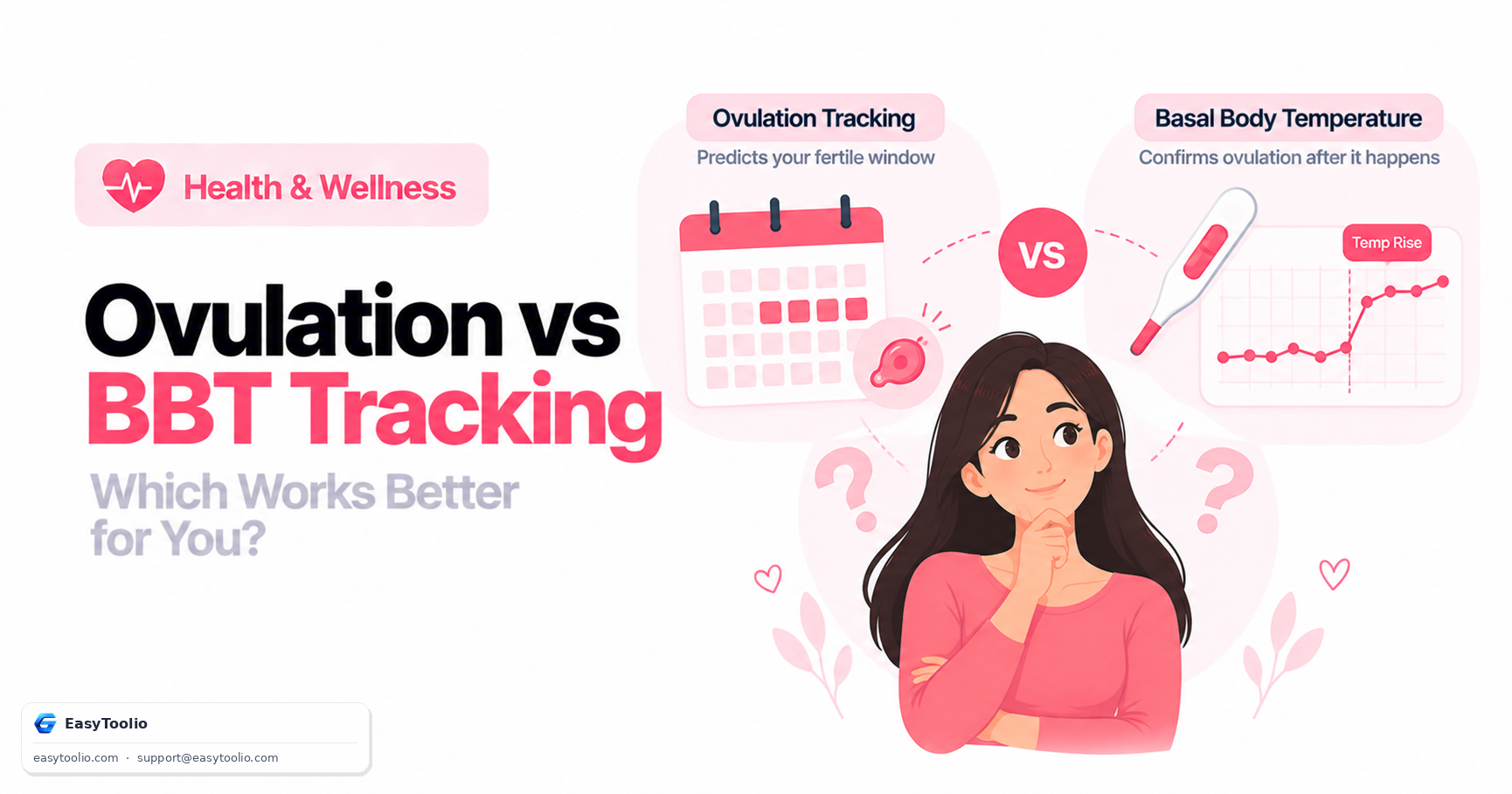
For a regular cycle, ovulation is estimated by counting back 14 days from the start of your next expected period, since the post-ovulation (luteal) phase is fairly consistent at around 14 days across most cycle lengths. The next period is then projected as your last period start date plus your average cycle length.

02

The Fertile Window

The fertile window spans the five days before ovulation through the ovulation day itself, because sperm can survive several days while the egg remains viable for about 24 hours. Within that window, the three days immediately before and including ovulation are highlighted as the highest-probability days to conceive.

03

Worked Example

For a last period starting March 1 with a typical 28-day cycle, ovulation is estimated around March 15 (28 minus 14 days later), and the next period is projected for March 29. A shorter or longer cycle shifts both dates earlier or later by the same difference.

04

Irregular Cycles and Next Steps

If your cycle length varies month to month, the calculator uses your shortest and longest recent cycles to produce a broader estimated range instead of a single date. If you already know you are pregnant, switch to the Pregnancy Due Date Calculator, and consider the Sleep Calculator or Water Intake Calculator to support overall cycle health.

Good to know

Questions, answered

Quick answers about how this tool works.

Ovulation is the release of a mature egg from one of the ovaries. In a typical 28-day cycle, ovulation often occurs around day 14, but timing varies based on individual cycle length and hormonal factors.

The fertile window includes the five days before ovulation and the ovulation day itself. Pregnancy is most likely during this period because sperm can survive for several days while the egg remains viable for about 24 hours.

For irregular cycles, the calculator uses the shortest and longest cycle lengths provided to estimate a broader fertility range. This approach helps identify likely fertile days even when cycle timing varies from month to month.

For the most accurate result, take a pregnancy test on or after the first day of a missed period. If cycle timing is uncertain, testing at least 14 days after estimated ovulation is generally recommended.

The calculator can estimate future periods using your cycle history and average cycle length. However, stress, illness, travel, medications, and hormonal changes may affect actual cycle dates.

Yes. The future cycle planner can help estimate whether a selected event date may fall during a fertile window, ovulation period, or expected menstrual cycle, making long-term planning easier.

This calculator is intended for menstrual cycle tracking and fertility estimation. If you are already pregnant, use the Pregnancy Due Date Calculator to track pregnancy milestones and estimate your due date.

Popular Tools on EasyToolio

Swipe

What do you need to work out next?

Search 190+ free tools by name, or pick a category below. Every one runs instantly in your browser — no signup, nothing to install.