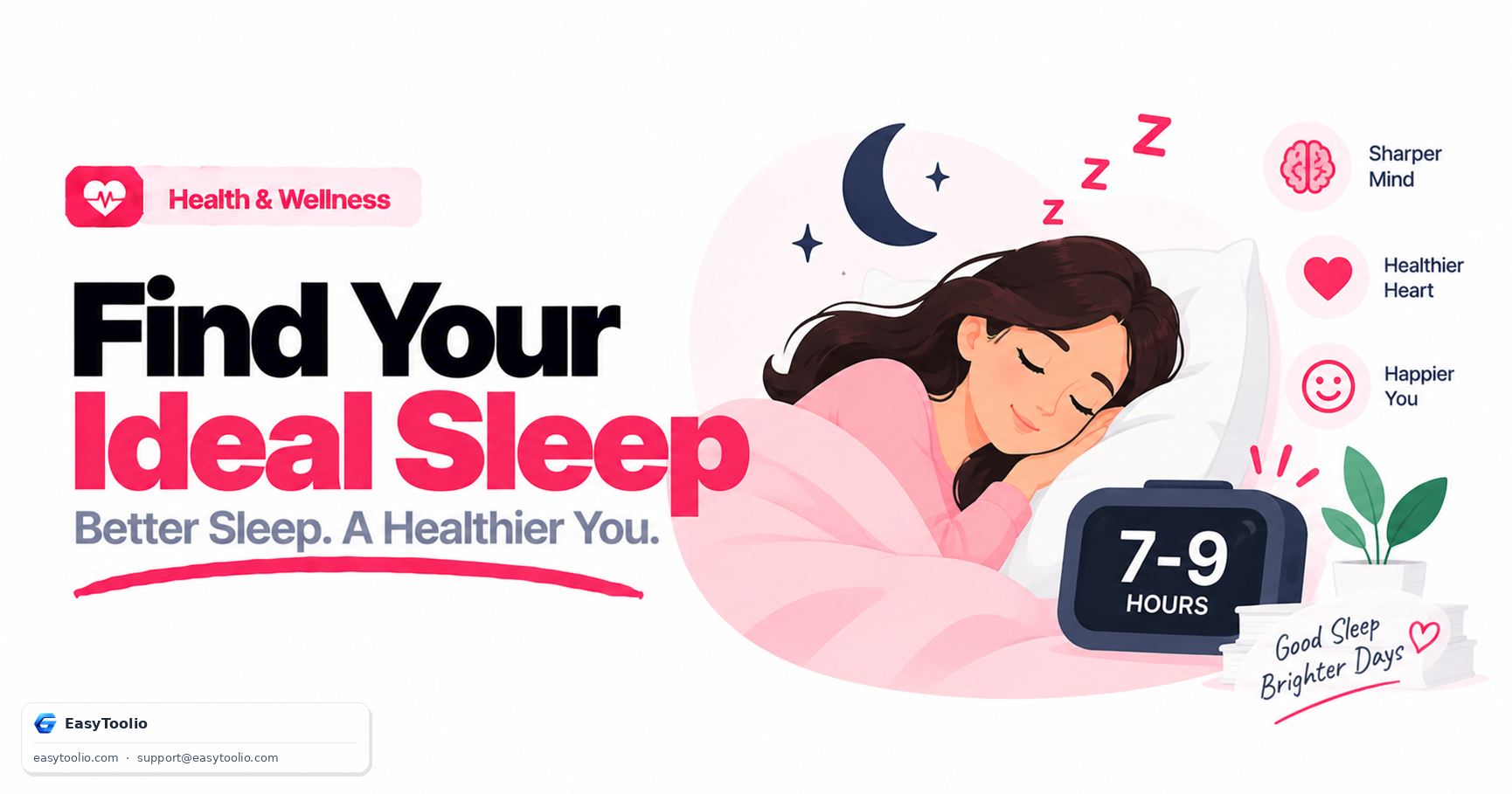
Sleep is not passive rest — it is an active biological process during which your brain consolidates memory, your body repairs tissue, and your immune system resets. Getting the wrong amount costs more than you think.
How Much Sleep Do You Need?
The CDC and American Academy of Sleep Medicine recommendations by age:
| Age Group | Recommended Hours |
|---|---|
| Newborn (0–3 months) | 14–17 hours |
| Infant (4–12 months) | 12–16 hours |
| Toddler (1–2 years) | 11–14 hours |
| Preschool (3–5 years) | 10–13 hours |
| School age (6–12 years) | 9–12 hours |
| Teen (13–18 years) | 8–10 hours |
| Adult (18–60 years) | 7–9 hours |
| Older adult (61–64 years) | 7–9 hours |
| Senior (65+ years) | 7–8 hours |
For most adults, fewer than 7 hours is insufficient and more than 9 hours may indicate an underlying condition unless you are recovering from illness or sleep debt.
The 90-Minute Sleep Cycle
Sleep is not continuous — it moves through cycles of approximately 90 minutes each. A full night typically contains 4–6 complete cycles. Each cycle includes:
- Stage 1 (NREM1): Light sleep, easily woken — lasts 1–7 minutes
- Stage 2 (NREM2): Heart rate slows, body temperature drops — lasts 10–25 minutes
- Stage 3 (NREM3): Deep slow-wave sleep — most restorative stage
- REM: Rapid Eye Movement — dreaming, memory consolidation
Waking up in the middle of deep sleep (Stage 3) causes sleep inertia — that groggy, disoriented feeling that can last hours. Waking at the end of a cycle, during light sleep or REM, feels natural and alert.
How to Use a Sleep Calculator
If you need to wake at 6:30 AM, count back in 90-minute increments from your ideal wake time:
| Bedtime | Cycles Completed | Total Sleep |
|---|---|---|
| 12:00 AM | 4 cycles | 6 hours |
| 10:30 PM | 5 cycles | 8 hours |
| 9:00 PM | 6 cycles | 9.5 hours |
Allow 14–20 minutes to fall asleep when planning — so for 5 full cycles with a 6:30 AM alarm, aim to be in bed by 10:15 PM (10:30 − 15 min = 10:15).
The Cost of Sleep Deprivation
Research is clear on the consequences of chronic under-sleeping (less than 7 hours/night):
- Cognitive impairment equivalent to blood alcohol of 0.05–0.10% after 17–24 hours awake
- 3× elevated risk of catching the common cold (documented in a 2015 UCSF study)
- Increased appetite — sleep deprivation elevates ghrelin (hunger hormone) and suppresses leptin (satiety hormone)
- Elevated cortisol and inflammatory markers, associated with long-term cardiovascular risk
Common Sleep Myths Debunked
"I can catch up on sleep on weekends." Partially true for short-term alertness, but chronic sleep debt creates long-term metabolic changes that weekend recovery does not fully reverse.
"Some people only need 5 hours." Genuine short sleepers exist but are extremely rare (estimated less than 1% of the population). Most people who believe they function fine on 5 hours are chronically impaired without knowing it.
"Alcohol helps you sleep." Alcohol reduces time to fall asleep but fragments sleep architecture, reducing REM sleep — you wake up less restored.
Find the Right Bedtime
Our Sleep Calculator works backwards from your wake time to show you the ideal bedtimes for 4, 5, or 6 complete sleep cycles — so you can plan your sleep for the most natural, restful wake-up.
Frequently Asked Questions
Q: How many sleep cycles should I aim for each night? A: Most adults need 4–6 complete 90-minute cycles per night, which works out to roughly 6–9 hours of sleep depending on how many full cycles you complete.
Q: Why do I feel groggy even after sleeping 8 hours? A: You likely woke up mid-cycle during deep slow-wave sleep (Stage 3), which causes sleep inertia; waking at the end of a cycle, during light sleep or REM, feels far more natural and alert.
Q: Can I "catch up" on lost sleep over the weekend? A: Only partially — extra weekend sleep helps short-term alertness, but chronic sleep debt built up during the week causes metabolic changes that a couple of long weekend nights do not fully reverse.