Notification
Go to Home All Tools Compare Glossary Blog Contact

Blood Pressure Calculator

Check your blood pressure reading and see whether it falls in the Normal, Elevated, or Hypertension range, based on ACC/AHA guidelines.

Informational Reference & Privacy Notice
Notice
This calculator runs locally. No vitals readings, age details, or cardiovascular logs are saved or shared. Outputs follow ACC/AHA 2017 screening guidelines and are for informational purposes only. Do not use results as a replacement for clinical checkups or doctor diagnoses.

Enter Vitals

mmHg
Min: 70 mmHg Max: 220 mmHg
mmHg
Min: 40 mmHg Max: 130 mmHg

Standard Classifications Presets

Quickly evaluate typical systolic/diastolic reference bounds:

Calculated BP Analysis

Awaiting Blood Pressure Inputs

Input your systolic and diastolic measurements to analyze classification, risks, and clinical advisories.

BP Demographic & Guidelines Matrix

Reference averages and classification thresholds defined by medical consensus groups.

AHA/ACC 2017 Diagnostic Thresholds

BP Category Systolic (mmHg) Diastolic (mmHg)
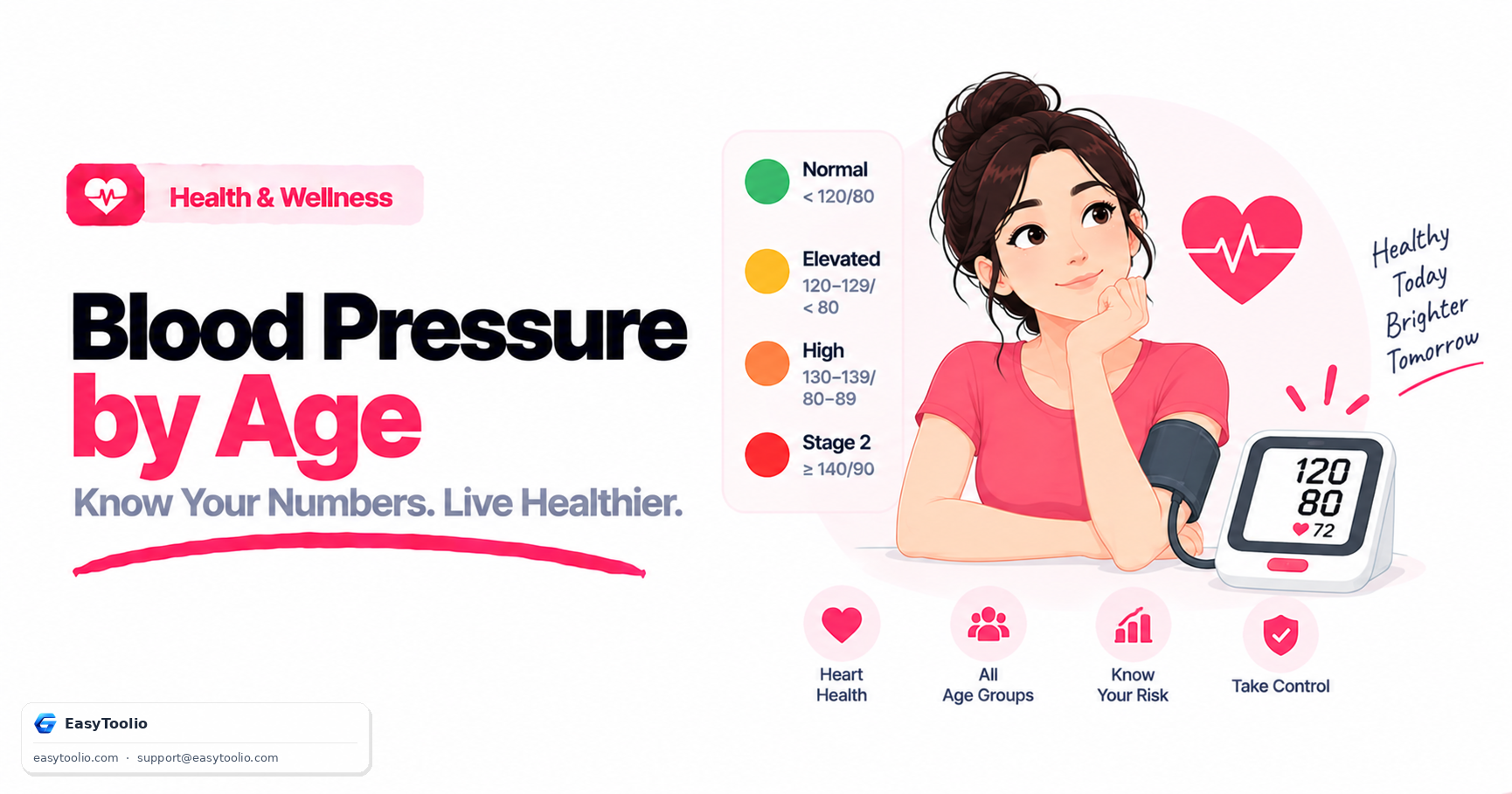
Normal < 120 and < 80
Elevated 120 – 129 and < 80
Stage 1 130 – 139 or 80 – 89
Stage 2 140 – 179 or 90 – 119
Crisis ≥ 180 or ≥ 120

Average Adult BP Norms by Age

Age Bracket Male Average BP Female Average BP
18 – 39 years 119 / 78 mmHg 110 / 72 mmHg
40 – 59 years 124 / 80 mmHg 122 / 78 mmHg
60+ years 133 / 69 mmHg 139 / 68 mmHg

*Note: BP naturally increases with age due to gradual arterial stiffening. In individuals over 60, doctors sometimes tolerate slightly higher systolic values if no comorbidities exist.

Hypertension & Cardiovascular Health

Understanding the "silent killer", physical causes of high BP, and effective management.

The "Silent Killer"

Hypertension (high blood pressure) is often referred to as a "silent killer" because it rarely causes noticeable physical symptoms until significant internal damage has occurred. Elevated pressures slowly strain and micro-damage blood vessel walls over years, increasing the risk of coronary artery disease, heart failure, kidney failure, dementia, and stroke. Consistent home tracking is essential for early diagnosis.

DASH Diet & Sodium Limits

Nutritional modifications are highly effective at lowering BP. The **DASH Diet** (Dietary Approaches to Stop Hypertension) emphasizes potassium-rich foods (bananas, sweet potatoes, spinach) which help the kidneys flush excess sodium, alongside calcium, magnesium, and lean proteins. Limiting sodium intake to **1,500 mg per day** (roughly 2/3 of a teaspoon of salt) can lower systolic BP by 5 to 6 mmHg.

Correct BP Protocol

BP readings fluctuate easily. To test accurately at home: avoid caffeine, nicotine, and exercise for 30 minutes before testing. Sit quietly in a chair with back supported and feet flat on the floor for 5 minutes. Position the cuff on a bare arm, level with the heart, and do not speak during the test. Take two readings 1–2 minutes apart and calculate their average for diagnostic logs.

Wellness & Health Coach

AI Advisor Health Advisor

Ask AI
Education

How Blood Pressure Categories Are Classified

01

The 2017 ACC/AHA Classification Tiers

This calculator sorts readings into five tiers defined by the 2017 American College of Cardiology and American Heart Association guidelines: Normal (systolic under 120 and diastolic under 80), Elevated (systolic 120-129 and diastolic under 80), Stage 1 Hypertension (systolic 130-139 or diastolic 80-89), Stage 2 Hypertension (systolic 140+ or diastolic 90+), and Hypertensive Crisis (systolic 180+ or diastolic 120+).
02

Why Either Number Can Trigger a Category

The classification always applies the higher-risk category triggered by either number, so a normal systolic reading paired with an elevated diastolic reading still moves the result into the higher tier. This reflects the fact that systolic and diastolic pressure each independently contribute to cardiovascular strain.

03

Worked Classification Example

A reading of 128/82 mmHg falls into Stage 1 Hypertension, because although the systolic value of 128 sits in the Elevated range, the diastolic value of 82 falls within the 80-89 mmHg Stage 1 band and takes priority. A reading of 182/78 mmHg would instead be classified as a Hypertensive Crisis purely because of the systolic number.

04

Track Alongside Related Metrics

Blood pressure often correlates with body weight and metabolic health, so comparing your readings against the BMI Calculator and Body Fat Calculator can help identify contributing lifestyle factors. Regular home monitoring combined with these tools gives a fuller picture of cardiovascular risk than a single reading alone.

Good to know

Questions, answered

Quick answers about how this tool works.

Systolic pressure (the upper number) measures the force your heart exerts on the artery walls during a heartbeat. Diastolic pressure (the lower number) measures the force when your heart muscle is resting between beats.

A normal blood pressure reading is defined as a Systolic pressure of less than 120 mmHg AND a Diastolic pressure of less than 80 mmHg (e.g. 115/75 mmHg). Both numbers must be within these ranges to be classified as normal.

A hypertensive crisis is a sudden, severe spike in blood pressure defined as a Systolic reading above 180 mmHg and/or a Diastolic reading above 120 mmHg. If you experience these readings, wait 5 minutes and test again. If they remain high, contact your doctor immediately. If accompanied by symptoms like chest pain, shortness of breath, back pain, or slurred speech, call 911 or go to the emergency room immediately.

White Coat Syndrome occurs when a patient experiences temporary anxiety or stress in a clinical setting (like a doctor's office), causing their blood pressure to read significantly higher than it normally is at home. Self-monitoring in a comfortable home environment helps provide a more representative average of your actual blood pressure.

Natural ways to lower blood pressure include adopting the DASH diet (high in vegetables, fruits, and whole grains, low in saturated fat), reducing sodium intake to less than 2,300 mg (ideally 1,500 mg) per day, engaging in at least 150 minutes of moderate aerobic exercise per week, limiting alcohol consumption, managing chronic stress, and maintaining a healthy body weight.

Popular Tools on EasyToolio

Swipe

What do you need to work out next?

Search 190+ free tools by name, or pick a category below. Every one runs instantly in your browser — no signup, nothing to install.