
Finance
5 Tools College Students Use to Manage Money and Time
A simple toolkit for students balancing a tight budget, shared living costs, and academic deadlines.
Personal Finance, Income Tax & Investment Algorithms
The Toolio Finance Team consists of Chartered Accountants (CAs), Certified Financial Planners (CFPs), and quantitative tax researchers. The team specializes in Indian taxation (Income Tax, GST, HRA, Capital Gains), loan amortization algorithms, mutual fund investment strategies (SIP, SWP, CAGR), and personal financial planning, adhering strictly to official RBI and Income Tax Department rules.
A simple toolkit for students balancing a tight budget, shared living costs, and academic deadlines.
Can you sell on Amazon, Meesho, or Flipkart without GST below ₹20 lakh? Explore the Section 24 rules, Notification 34/2023-CT intra-state exemption, and Enrolment ID steps.
Are Indian freelancers liable for GST at ₹20 lakh or ₹40 lakh? Here is how CGST s.22, Notification 10/2019-CT, export zero-rating with LUT, and inter-state rules apply.
Comparing UPI 0.4% MDR (capped at ₹300) against credit card and debit card POS terminal fees, plus capital-markets and essential-sector rates. Discover why UPI remains the most cost-effective payment rail for Indian businesses.
A practical toolkit for solo operators who handle their own pricing, invoicing, and profit tracking without an in-house accountant.
A practical financial guide for retailers, wholesalers, and shop owners on navigating the 0.4% UPI MDR rule, the ₹1 lakh small-merchant exemption, essential-sector flat fees, and GST tax credit rules.
Debunking the rumors: why everyday UPI payments, bill splits, Autopay mandates, and retail scanning stay 100% free for consumers, and where the new 0.4% merchant fee actually applies.
Understand the new 2026 UPI MDR rule: what changed, why payments under ₹2,000 and P2P transfers stay 100% free, and how the 0.4% merchant fee capped at ₹300 works — plus the essential-sector, capital-markets, and small-merchant exemptions most guides miss.
HRA can shield a big chunk of your salary from tax — but only if you calculate it correctly and keep the old regime. Here is the exact formula, with worked numbers.
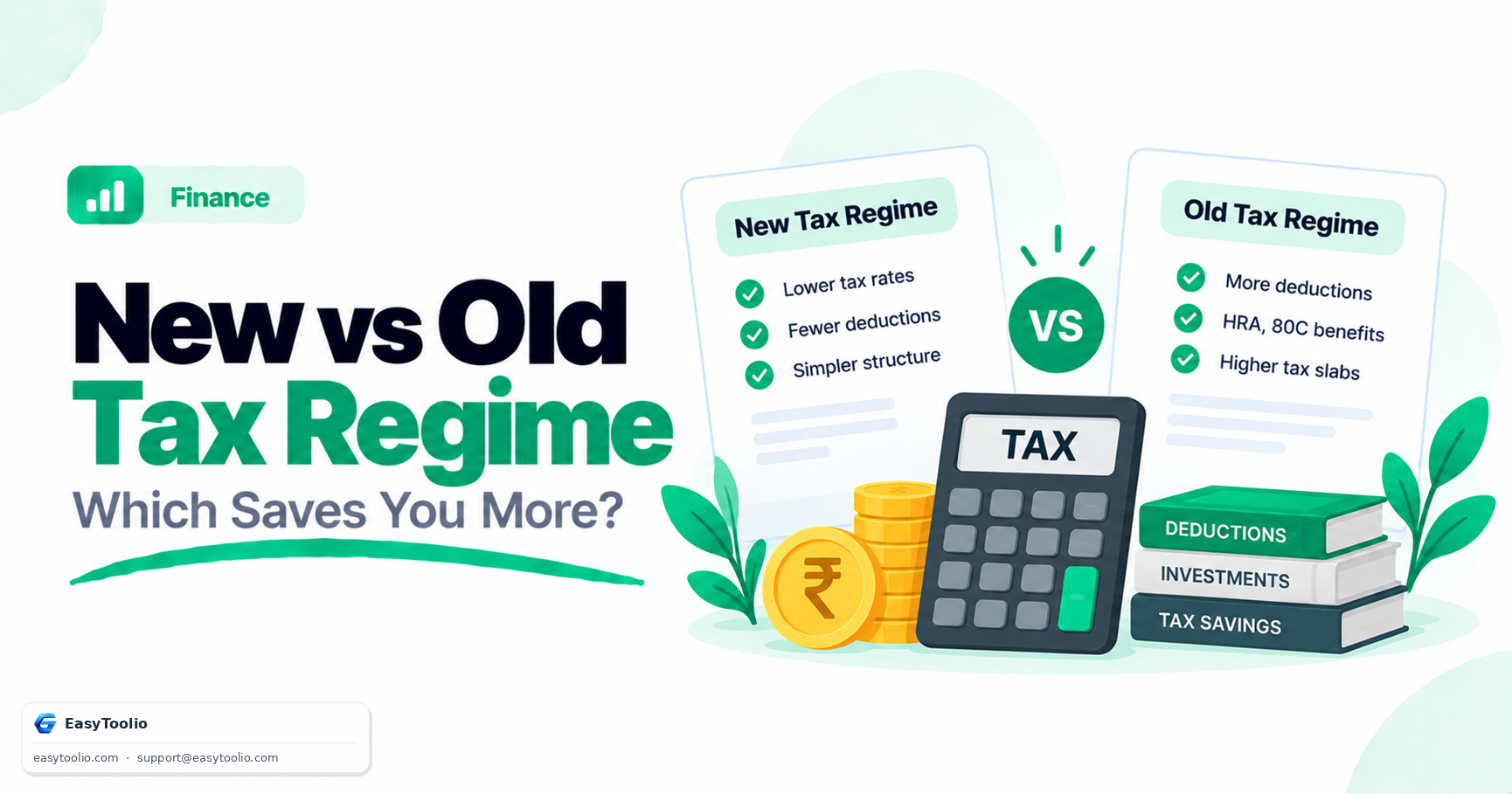
The new regime has lower slab rates but almost no deductions. The old regime taxes you more per slab but rewards HRA, 80C, and home loan interest. Here is how to pick correctly.
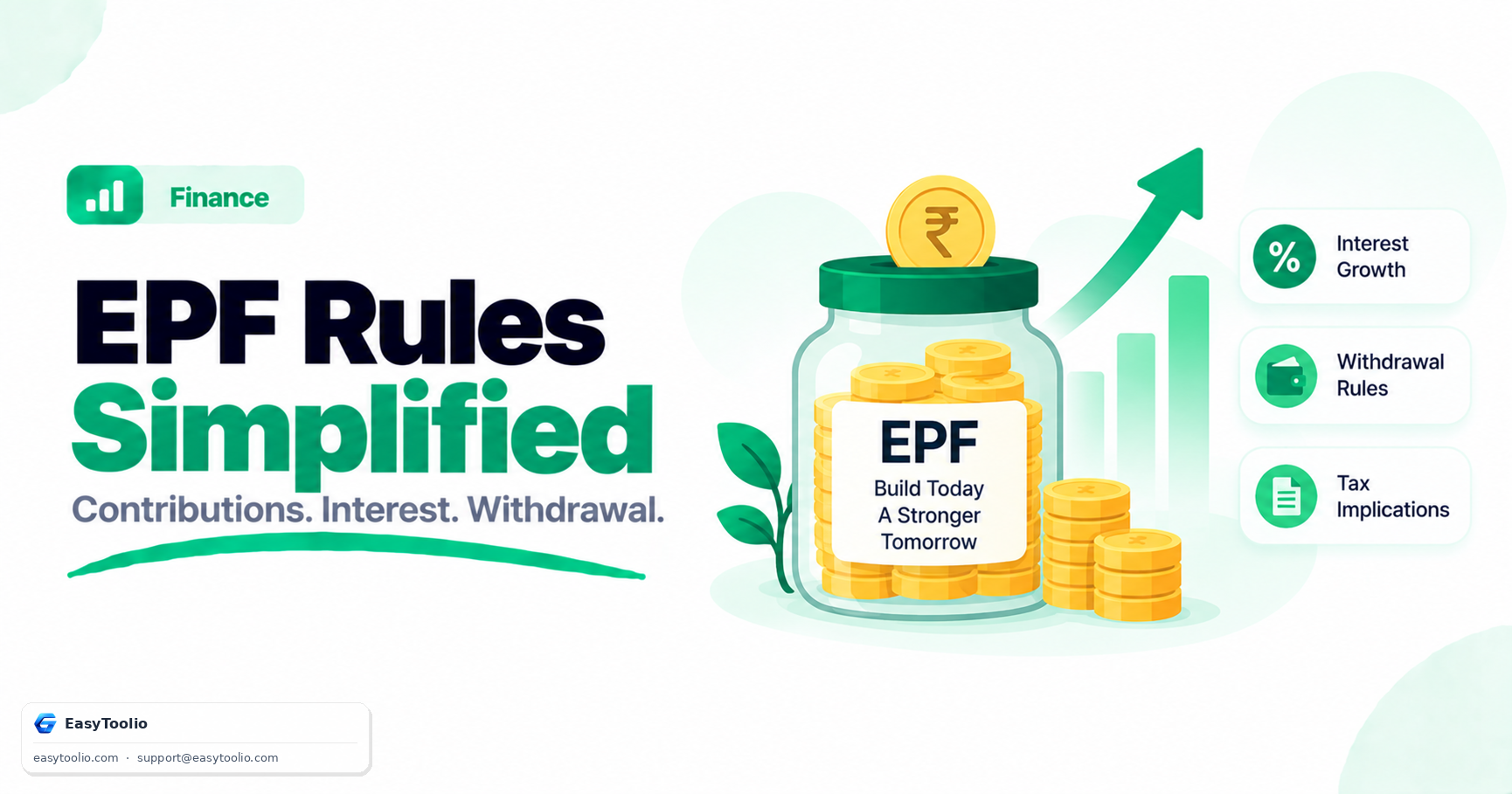
Your EPF quietly compounds every year of your career, but withdrawal rules are stricter than most employees realise. Here is how contributions, interest, and withdrawal tax actually work.
Gratuity is a lump-sum thank-you from your employer for long service — but only if you clear the 5-year mark. Here is the exact formula and a worked payout example.