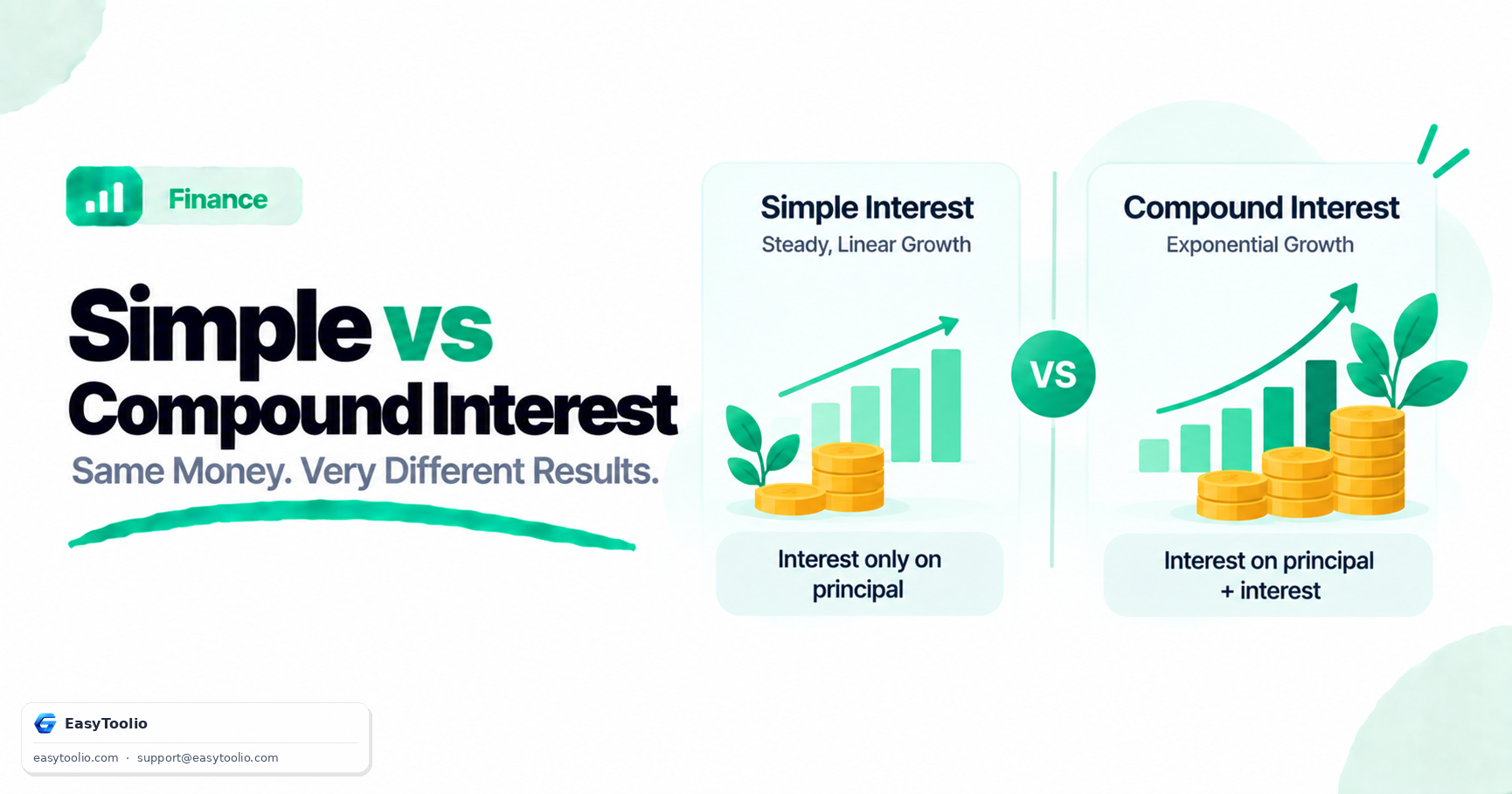
The difference between compound interest and simple interest is the difference between linear growth and exponential growth. Over short periods, the gap is small. Over decades, it becomes enormous.
Simple Interest: The Straight Line
Simple interest calculates a fixed amount of interest on the original principal only — never on previously earned interest.
Formula: Interest = P × r × t
Where P = principal, r = annual rate (decimal), t = time in years.
Example: $10,000 at 8% simple interest for 30 years:
- Interest = $10,000 × 0.08 × 30 = $24,000
- Final value = $34,000
Simple interest is predictable and easy to understand. It is commonly used for short-term personal loans, car loans, and some bonds.
Compound Interest: The Curve
Compound interest calculates interest on the principal plus all previously accumulated interest. Each period, the base grows — which means the interest earned grows too.
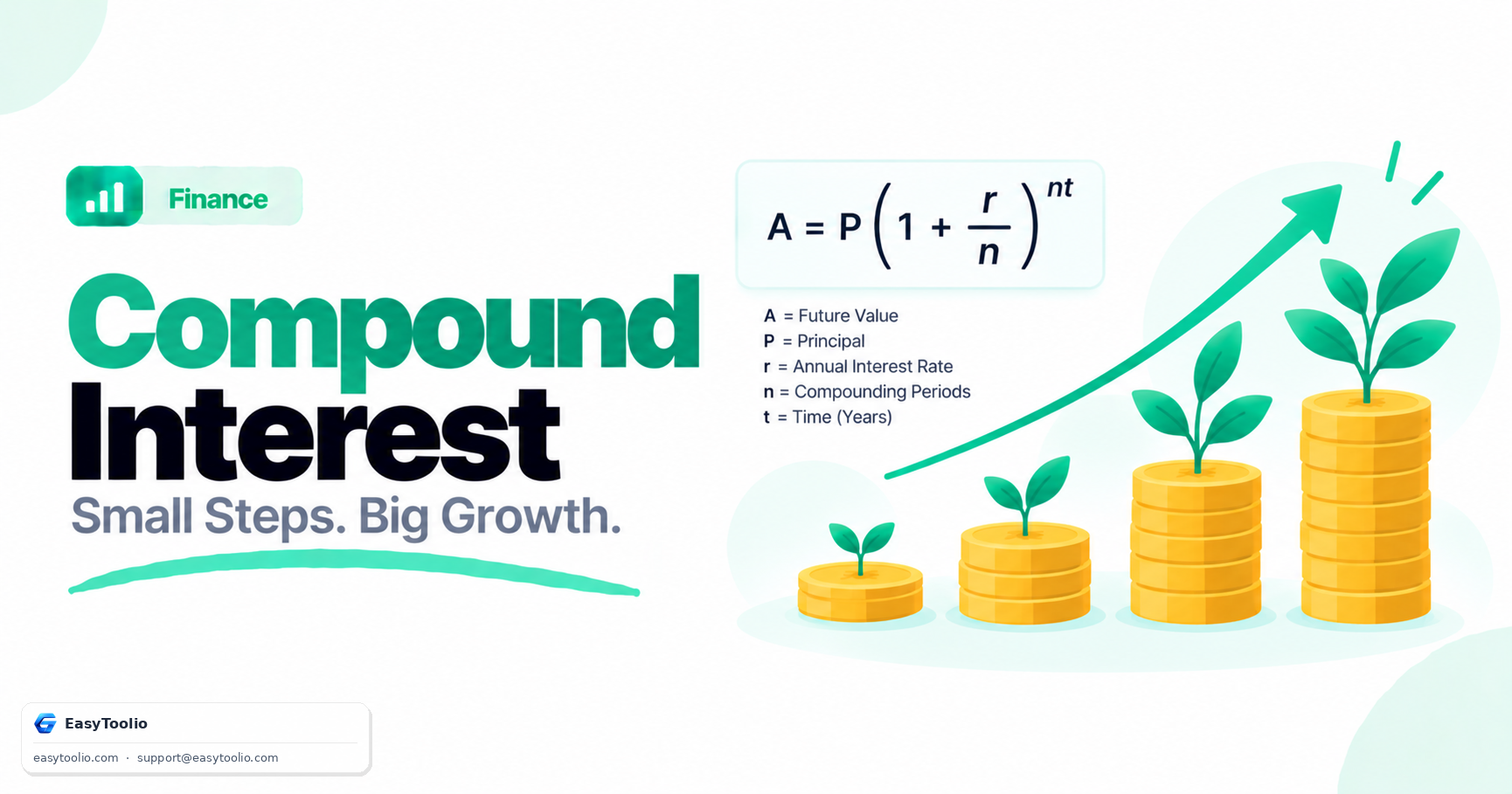
Formula: A = P × (1 + r/n)^(n × t)
Example: $10,000 at 8% compound interest (annually) for 30 years:
- A = 10,000 × (1.08)^30 = $100,627
That is nearly 3× more than simple interest produced over the same period.
Side-by-Side Comparison
Here is what happens to $10,000 at 8% per year, simple vs compound, over time:
| Year | Simple Interest Balance | Compound Interest Balance | Compound Advantage |
|---|---|---|---|
| 1 | $10,800 | $10,800 | $0 |
| 5 | $14,000 | $14,693 | $693 |
| 10 | $18,000 | $21,589 | $3,589 |
| 15 | $22,000 | $31,722 | $9,722 |
| 20 | $26,000 | $46,610 | $20,610 |
| 30 | $34,000 | $100,627 | $66,627 |
In Year 1, both methods produce identical results. By Year 30, compound interest generates $66,627 more on the same investment.
When Simple Interest Is Used in Real Life
Simple interest is not obsolete — it appears in specific, common financial products:
- Auto loans: Most car loans are calculated using simple interest
- Personal loans: Many bank personal loans use simple interest on the reducing balance
- US savings bonds (certain types): Use simple interest formulas
- Short-term business loans: Often quoted as simple APR
When Compound Interest Works Against You
Compound interest is the engine of credit card debt. Most credit cards compound daily at APRs of 20–29%. If you carry a $5,000 balance and make only minimum payments:
- At 22% APR, the debt takes over 20 years to pay off
- Total interest paid exceeds $9,000 — more than the original balance
The same exponential curve that builds investment wealth accelerates debt dramatically.
The Key Takeaway
For savings and investments, always seek compound interest — and choose the highest compounding frequency available. For loans and credit, understand that compound interest is working against you and prioritise paying off high-rate debt first.
Use our Compound Interest Calculator to model your savings growth, and our Simple Interest Calculator to verify loan repayment estimates.
Frequently Asked Questions
Q: What is the actual difference between simple and compound interest formulas? A: Simple interest is Interest = P × r × t and applies only to the original principal, while compound interest is A = P × (1 + r/n)^(n × t) and applies to the principal plus all previously earned interest.
Q: How much more does compound interest earn than simple interest over 30 years? A: On $10,000 at 8%, simple interest produces a final balance of $34,000, while compound interest produces $100,627 — a $66,627 advantage for compounding.
Q: Where is simple interest actually still used? A: Most auto loans, many personal loans on a reducing balance, certain US savings bonds, and short-term business loans are calculated using simple interest rather than compound interest.