Predictable Growth
Simple interest generates returns only on the original principal amount. Because interest does not compound, growth remains steady and predictable, making it easier to estimate future earnings or borrowing costs.
Calculate simple interest on any loan or investment by entering the principal, rate, and time period in years, months, or days.
Detailed period progression of linear interest accumulation
| Year | Principal | Simple Balance | Compound Balance | Difference |
|---|
Compare linear gains against a quarterly compounding FD
Simple Interest is a straightforward method of calculating interest charges or investment growth on a principal sum without compounding reinvestment.
An online math tool that computes total interest earned or charged using the linear formula I = P × r × t across days, months, or years.
Calculated for a principal sum of ₹50,000 at 6.00% annual interest rate over a 4-year tenure:
Input starting principal capital amount.
Select interest rate % and term in days, months, or years.
Review total interest, maturity total, and compare against compound interest.
Simple interest is a straightforward method of calculating interest charges on a loan or investment. Unlike compound interest, simple interest is computed only on the original prin...
| Calculation Mode: | Simple Interest |
| Principal Capital: | $25,000 |
| Interest Rate: | 6.50% |
| Time Period: | 5 Years |
| Interest Earned: | $8,125 |
| Total Maturity Value: | $33,125 |
| Total Return %: | 32.50% |
| Monthly Avg Return: | $135 |
| Daily Avg Return: | $4.50 |
| Simple Interest Maturity: | $33,125 |
| Compound Interest Maturity (FD): | $34,270 |
| Compounding Surplus: | $1,145 |
| Future Maturity Value: | $33,125 |
| Real Purchasing Power Value: | $29,800 |
| Period | Principal | Simple Balance | Compound Balance | Difference |
|---|
Simple interest generates returns only on the original principal amount. Because interest does not compound, growth remains steady and predictable, making it easier to estimate future earnings or borrowing costs.
Simple interest is commonly used for short-term loans and investments where transparency is important. Since returns grow at a fixed rate, borrowers and investors can easily understand the total amount payable or receivable.
Understanding simple interest helps when comparing loans, savings products, and fixed-income investments. It provides a clear picture of total interest earned or paid without the complexity of compounding calculations.
Because interest is calculated only on the original principal, simple interest generally produces lower returns than compound interest over long periods. This difference becomes increasingly significant as the investment duration grows.
Quick answers about how this tool works.
The simple interest formula is: Interest = Principal × Rate × Time (I = P × R × T), where Principal is the original amount, Rate is the annual interest rate, and Time is the duration of the investment or loan in years.
Simple interest is calculated only on the initial principal amount. Compound interest is calculated on both the principal and any previously earned interest, which allows returns or debt to grow faster over time.
Simple interest is commonly used for short-term loans, certain savings products, Treasury Bills (T-Bills), certificates of deposit (CDs), corporate debt instruments, and some personal or auto loans.
While uncommon, simple interest can be negative in rare negative-interest-rate environments. In such cases, the value of an investment may decrease over time rather than increase.
Plain-language explainers that sit next to this tool.
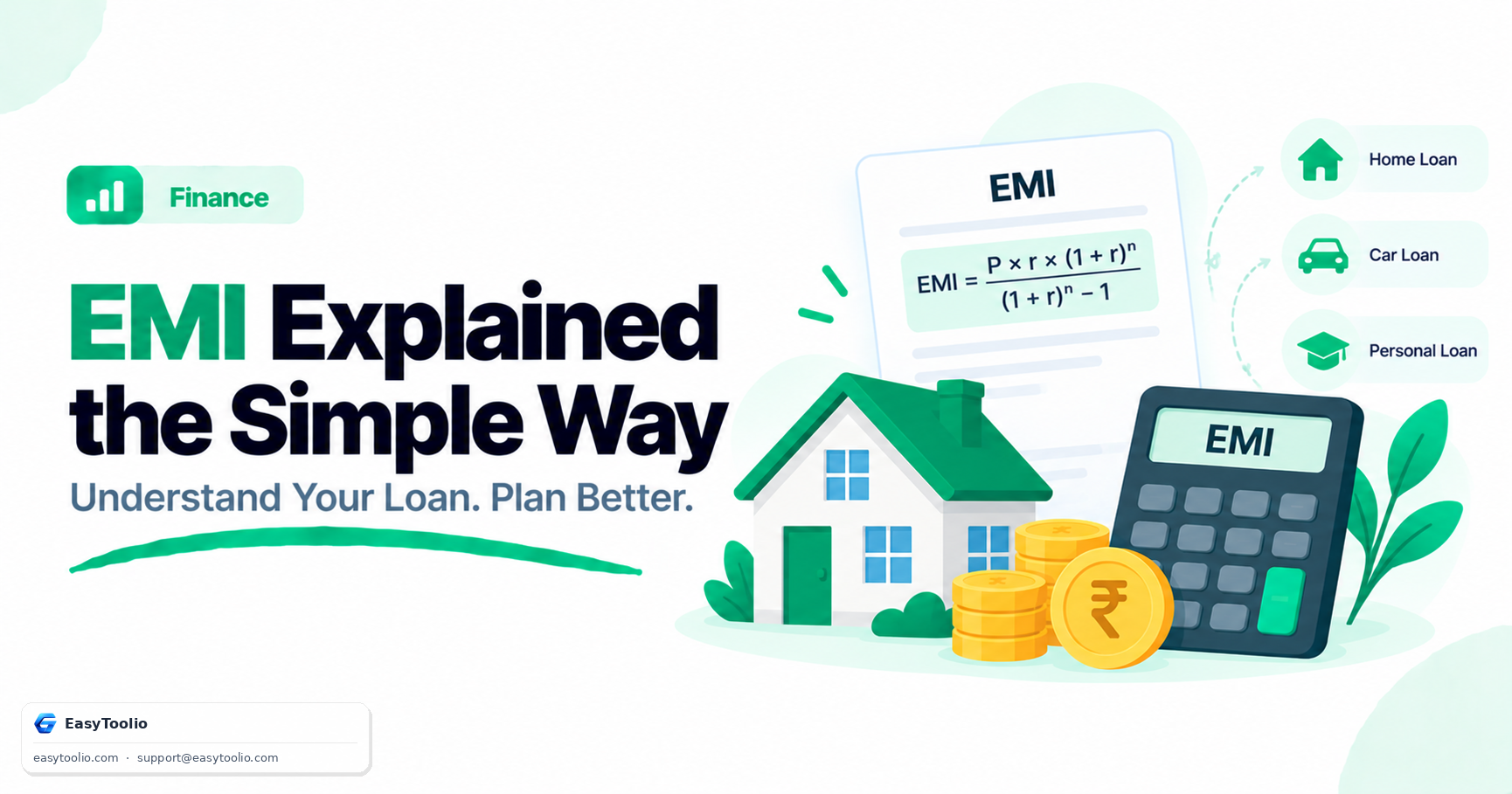
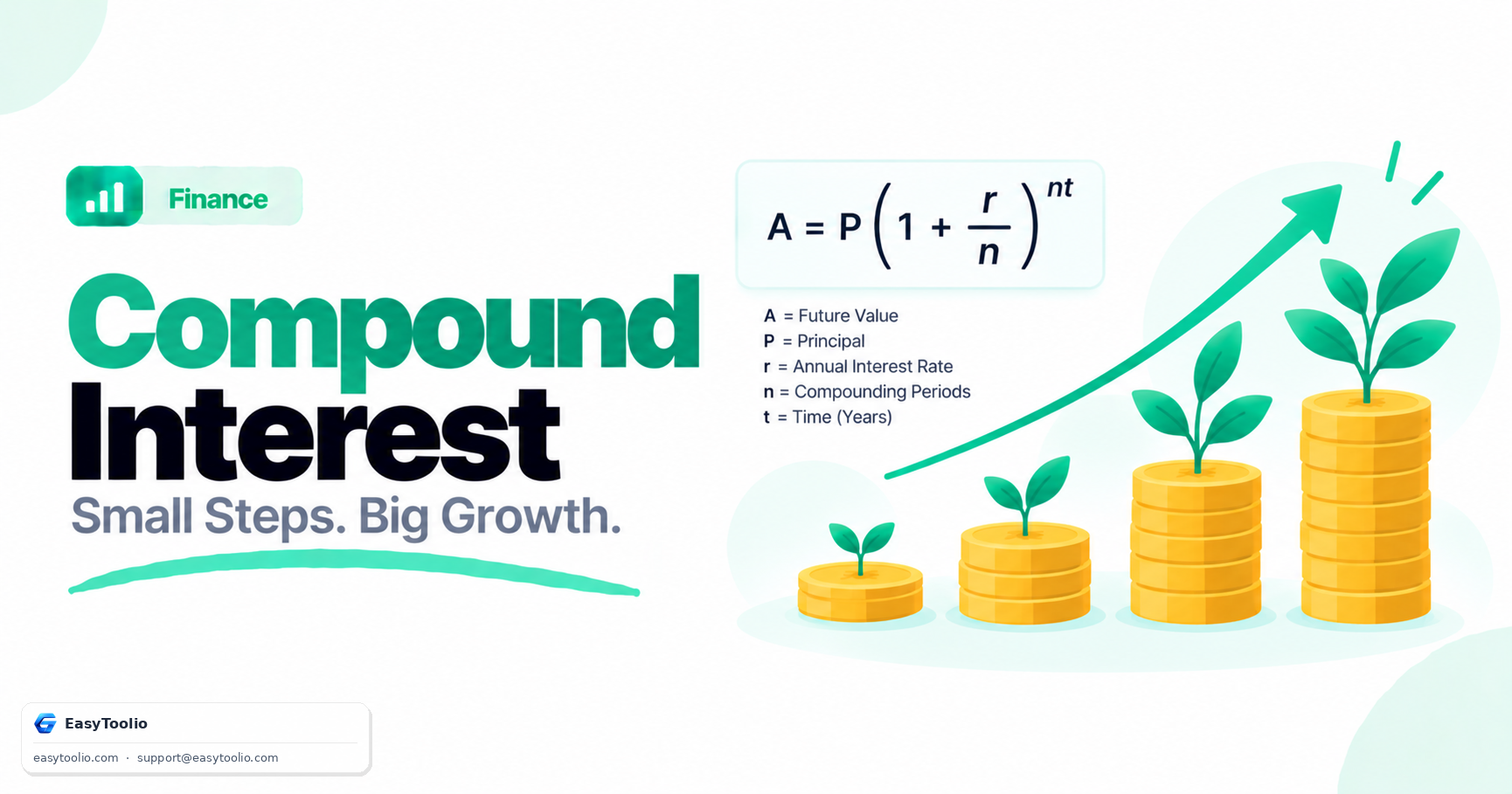
Compound interest is the single most powerful force in personal finance. Understand the formula, see how small differences in rate and time create massive differences in outcome, and learn how to use it to your advantage.
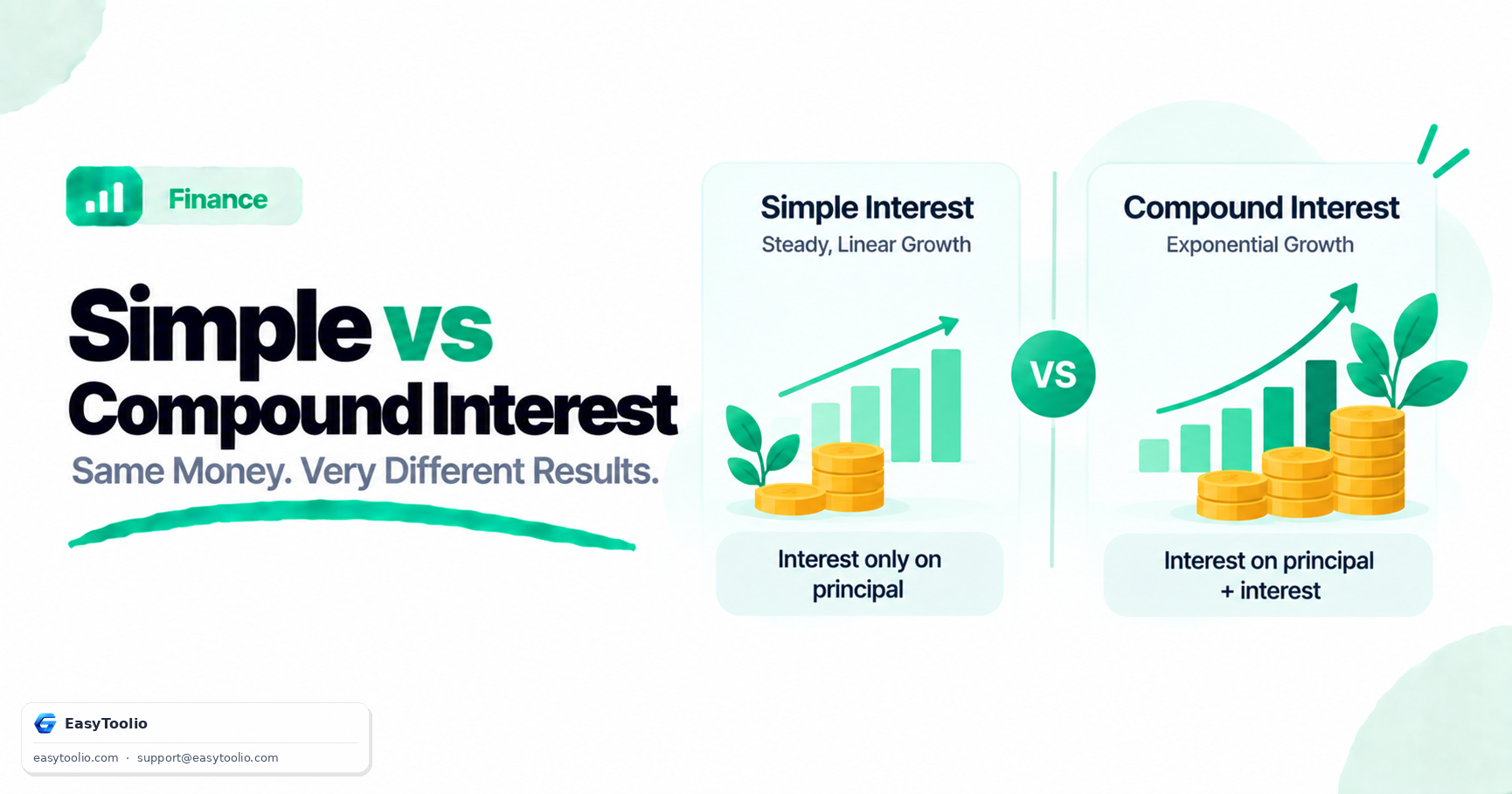
Both earn interest on a principal — but compound interest earns interest on the interest too. After 20 years, the difference is staggering. Here is the side-by-side math.
Most Indians accept an EMI figure from their bank without questioning it. This guide explains exactly how Indian banks calculate EMI — the reducing balance method, how RBI repo rate changes flow through to your loan, and what you can do to pay off your home loan years early.
Understand the math behind monthly mortgage payments. Learn how to calculate Principal and Interest (P&I) manually, evaluate the costs of PMI, estimate escrow expenses, and discover strategies to save over $200,000 in lifetime interest.
Add Simple Interest Calculator to a blog, site, or docs page with a free responsive iframe. No signup.
Search 190+ free tools by name, or pick a category below. Every one runs instantly in your browser — no signup, nothing to install.
Tap a star to rate us instantly.