Notification
Go to Home All Tools Compare Glossary Blog Contact
Be the first to rate
Income Tax FY 2025-26 (AY 2026-27)

HRA Exemption Calculator.

Calculate your House Rent Allowance (HRA) tax exemption under Section 10(13A) of the Income Tax Act. Instantly evaluate Metro vs Non-Metro limits and view your taxable salary portion.

Configuration Settings

Income & Rent Details

₹5,000 ₹5 Lakh
₹0 ₹2.5 Lakh
₹0 ₹2.5 Lakh
Formula Reference

HRA Exemption Formula

$$HRA\ Exempt = \min\left( \text{Actual HRA}, \text{Rent Paid} - 10\%\ \text{Basic}, 50\%\ \text{Basic\ (Metro)}\ \text{or}\ 40\%\ \text{Basic\ (Non-Metro)} \right)$$
Actual HRA Total House Rent Allowance received from the employer
Rent Paid - 10% Basic Actual rent paid minus 10% of basic salary plus Dearness Allowance (DA)
50% / 40% Basic 50% of basic salary for metro cities (Delhi, Mumbai, Kolkata, Chennai) or 40% for non-metro cities
Taxability Assessment

HRA Exemption Summary
Exempt HRA

₹0

Taxable HRA

₹0

Under Section 10(13A) (Least of Three):
1. Actual HRA Received The HRA component declared in your salary structure.
₹0
2. Rent Paid - 10% of Salary Excess rent paid over 10% of Basic Salary + DA.
₹0
3. City Limit Allowance 50% of Basic for Metro, 40% for Non-Metro cities.
₹0

Monthly & Annual Comparison Sheet

Particulars Monthly Basis Annual Basis
Basic Salary + DA ₹0 ₹0
Actual HRA Received ₹0 ₹0
Rent Paid ₹0 ₹0
Rent Paid in Excess of 10% of Salary ₹0 ₹0
50% / 40% of Salary ₹0 ₹0
Tax-Exempt HRA (Section 10(13A)) ₹0 ₹0
Taxable HRA Component ₹0 ₹0

Complete HRA Exemption Guide - FY 2025-26

What is House Rent Allowance (HRA)?

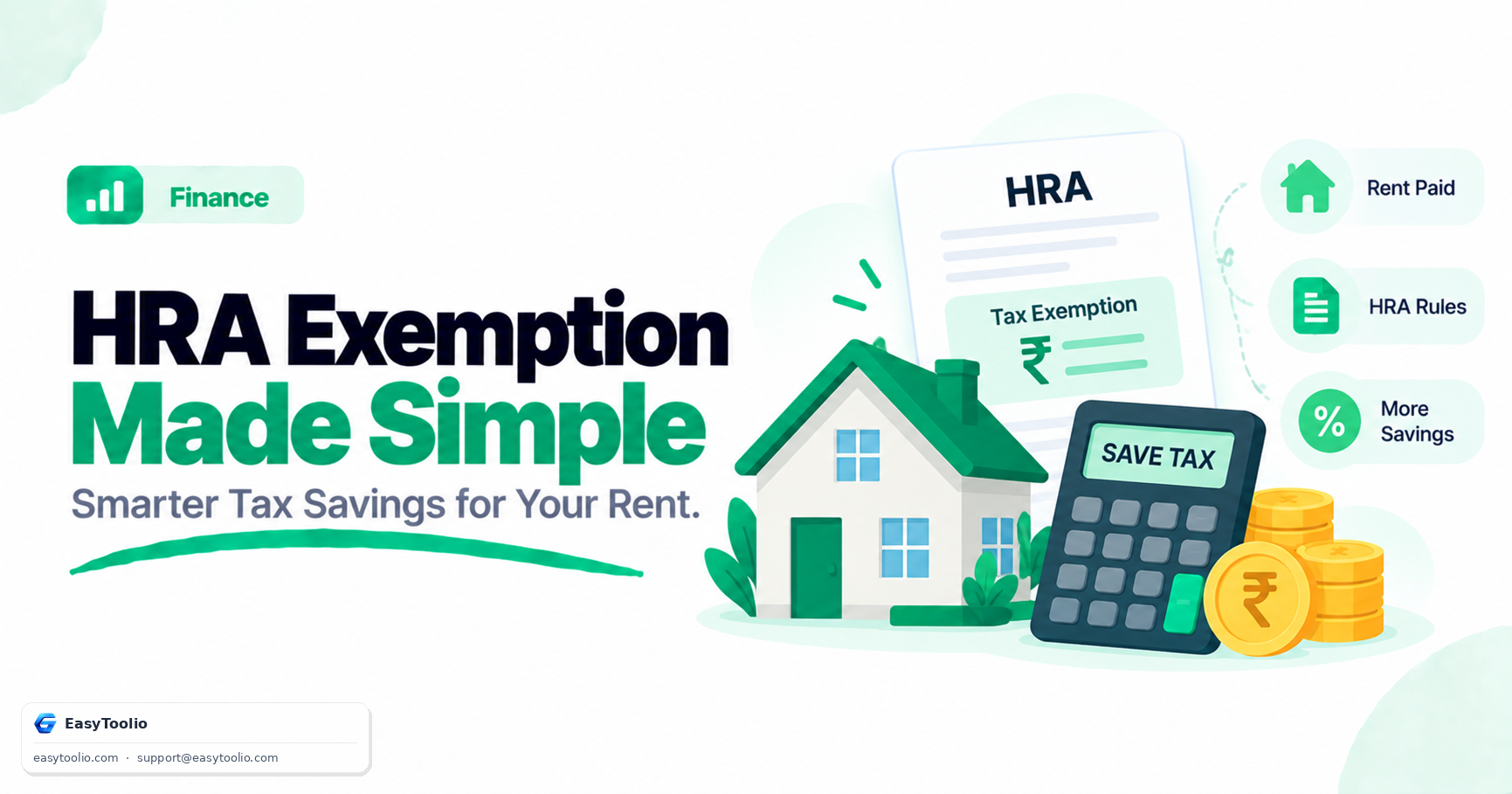
House Rent Allowance (HRA) is a key component of most salaried employees' pay structure in India. It is provided by employers to help employees pay for rented accommodation. HRA is a fully taxable salary component unless an employee is living in a rented house and claims HRA tax exemption under Section 10(13A).

The HRA Exemption Calculation Rules (The "Least of Three" Rule)

To claim tax exemptions, the HRA tax-free amount is computed as the lowest (least) of the following three parameters:

  • Actual HRA Received: The HRA allowance paid out by your employer during the financial year.
  • Excess Rent Paid: The total rent you paid during the year minus 10% of your Basic Salary (plus Dearness Allowance).
  • City Limit (50% or 40%): 50% of your basic salary if you reside in a metro city (Delhi, Mumbai, Kolkata, Chennai) or 40% if you live in a non-metro city.

Important Changes: Metro vs Non-Metro Cities

Under Section 10(13A), only four Indian cities qualify for the 50% basic salary cap: Delhi, Mumbai, Kolkata, and Chennai. If you live in any other major technology or financial hub (such as Bangalore, Hyderabad, Pune, Gurgaon, or Noida), you fall under the Non-Metro category, meaning your cap is limited to 40% of your Basic Salary + DA.

HRA under Old vs New Tax Regime for FY 2025-26

Regime Restriction:

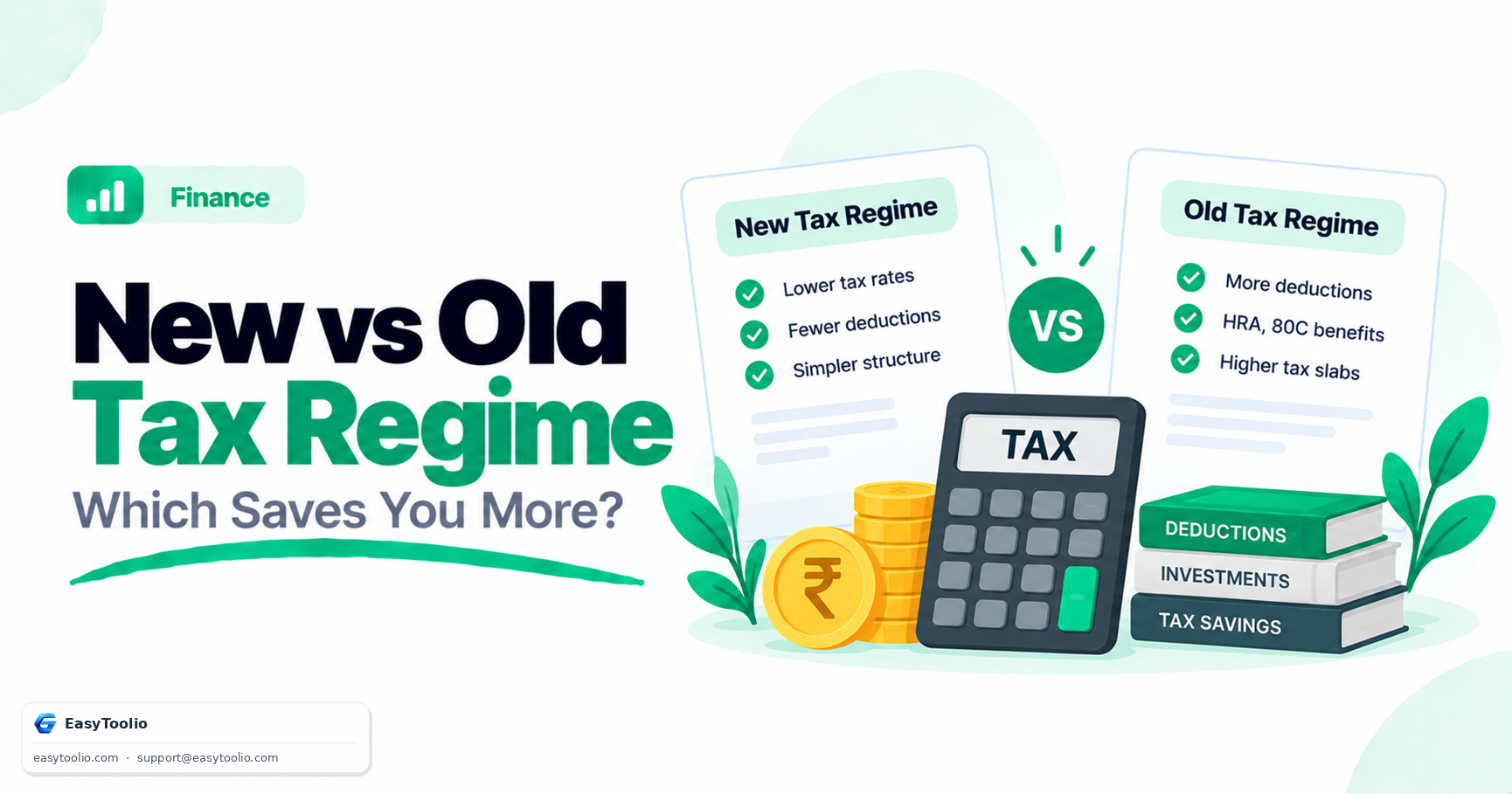
HRA tax exemptions can only be claimed under the Old Tax Regime. If you opt for the New Tax Regime (Section 115BAC) for FY 2025-26 (AY 2026-27), the entire HRA allowance paid by your employer becomes fully taxable. Take this into consideration when selecting your tax regime.

Worked Example

Let's take a look at a worked example for an employee residing in a Metro city (Delhi) with the following salary breakdown:

  • Basic Salary: ₹6,00,000 annually (₹50,000/month)
  • Actual HRA Received: ₹2,40,000 annually (₹20,000/month)
  • Rent Paid: ₹1,80,000 annually (₹15,000/month)
  • City classification: Metro (50% rule applies)

Let's calculate the three limits:

  1. Actual HRA: ₹2,40,000
  2. Rent Paid minus 10% of Salary: ₹1,80,000 - (10% of ₹6,00,000) = ₹1,80,000 - ₹60,000 = ₹1,20,000
  3. 50% of Basic Salary: 50% of ₹6,00,000 = ₹3,00,000

The lowest of the three amounts is ₹1,20,000. Therefore:

  • Exempt HRA: ₹1,20,000
  • Taxable HRA: ₹2,40,000 - ₹1,20,000 = ₹1,20,000

Pro Tax Saving Tips for Renters

  1. Pay Rent to Parents: If you reside with your parents, you can pay rent to them, establish a legal lease agreement, and transfer rent via banking channels. Note that parents must declare the rent as income on their ITRs.
  2. Structure your Salary: Try negotiating with your employer to increase your HRA component if you pay high rents, but keep basic salary high enough to optimize the 10% deduction cap.
  3. Keep Landlord's PAN Handy: If your annual rent exceeds ₹1,00,000, keep a copy of your landlord's PAN card, as it is mandatory to declare it to claim tax benefits.
HRA Optimization

AI HRA Tax Advisor

Ask our custom AI assistant regarding HRA guidelines, claiming rent paid to parents, or optimizing tax structures.

Topics this feature will cover:

🇮🇳 Can I claim HRA and Section 80GG together? 🏢 Documents required to pay rent to parents 💳 What if my landlord does not have a PAN card?

Be first to access it when it launches.

We'll notify you the moment AI Advisor goes live. One email, no spam.

FAQs

Frequently Asked Questions

House Rent Allowance (HRA) is a salary component paid by employers to help employees cover rental housing costs. The tax-exempt portion of HRA is calculated under Section 10(13A) of the Income Tax Act as the lowest of three amounts: actual HRA received, 50% (metro) or 40% (non-metro) of Basic Salary + DA, or actual rent paid minus 10% of Basic Salary + DA.

The three rules to determine HRA tax exemption are: (1) The actual HRA received from your employer; (2) The actual rent you pay minus 10% of your basic salary (+ DA); (3) 50% of your basic salary if you reside in a metro city (Delhi, Mumbai, Kolkata, Chennai) or 40% if you live in a non-metro city. The lowest of these three is exempt from income tax.

For the purpose of HRA tax exemption under Indian tax laws, only four cities are considered Metro cities: Delhi, Mumbai, Kolkata, and Chennai. Employees living in these cities qualify for the 50% salary threshold. All other cities (including major hubs like Bangalore, Hyderabad, Pune, and Gurgaon) are classified as Non-Metro and qualify for the 40% threshold.

No. Under the New Tax Regime (Section 115BAC), most tax exemptions and deductions, including HRA exemption under Section 10(13A), are not allowed. To claim HRA tax exemption, you must opt for the Old Tax Regime when filing your income tax return.

No. You cannot claim HRA exemption if you live in your own house, as you do not incur any rental expenses. The entire HRA component received from your employer will be fully taxable in this case.

Yes. You can claim both HRA exemption and home loan tax benefits (under Section 24(b) for interest and Section 80C for principal repayment) if you live in a rented house while owning a house in another city or if you reside in a rented house due to genuine reasons like work location, even if your owned house is in the same city.

Yes. Employers require rent receipts and a valid rent agreement to grant HRA exemption in your Form 16. If your rent paid exceeds ₹3,000 per month, submitting rent receipts to your employer is mandatory. If you pay rent exceeding ₹1 Lakh annually, you must also provide the landlord's PAN card.

Yes, if your annual rent payments exceed ₹1,00,000 (roughly ₹8,333 per month), it is mandatory to provide your landlord's PAN card to your employer. If the landlord does not have a PAN card, they must sign a declaration (Form 60) along with their details.

You can pay rent to your parents and claim HRA, provided there is a formal rent agreement, regular bank transfers, and your parents declare this rent as rental income in their tax returns. However, paying rent to a spouse is generally not accepted by tax authorities as it lacks a commercial relationship, and couples are expected to live together.

For HRA calculation purposes, "Salary" is defined as Basic Salary plus Dearness Allowance (DA) plus any commission received that is based on a fixed percentage of turnover. Other allowances like travel, medical, or performance bonuses are excluded from this definition.

If your rent, basic salary, HRA component, or city type (metro vs. non-metro) changes during the financial year, the HRA exemption must be calculated separately for each period. The sum of these individual calculations will determine your total HRA exemption for the year.

Articles

Related Guides & Insights

Read our in-depth articles and guides related to this tool to help you make smarter decisions.

Workflow Suggestions

Recommended for Your Workflow

Category Showcase

More from Finance

Platform Spotlight

Popular Tools on EasyToolio

Explore More Tools Like HRA Exemption Calculator

Restructure your salary, calculate tax liabilities, or estimate deductions using our advanced free tools.