
Income Determines Borrowing Capacity
Lenders primarily assess your income to determine how much you can comfortably repay each month. Higher and more stable income levels generally improve your eligibility for larger loan amounts.
Estimate the maximum home loan amount you may qualify for, based on your income, age, tenure, and existing debts.
**Fixed Obligation to Income Ratio (FOIR)** is the parameter banks use to check your loan paying capacity. It represents the percentage of monthly income you can afford to allocate for all your EMIs.
Usually, banks restrict the FOIR between **40% and 55%** depending on your salary tier. Any existing EMI commitments are deducted directly from this allowed pool, reducing your eligibility.
Quick load net monthly salaries to test approvals:
Banks use the Fixed Obligation to Income Ratio (FOIR) method to decide how much of your monthly income can go toward loan repayments. The FOIR percentage itself rises with income (...
Lenders primarily assess your income to determine how much you can comfortably repay each month. Higher and more stable income levels generally improve your eligibility for larger loan amounts.
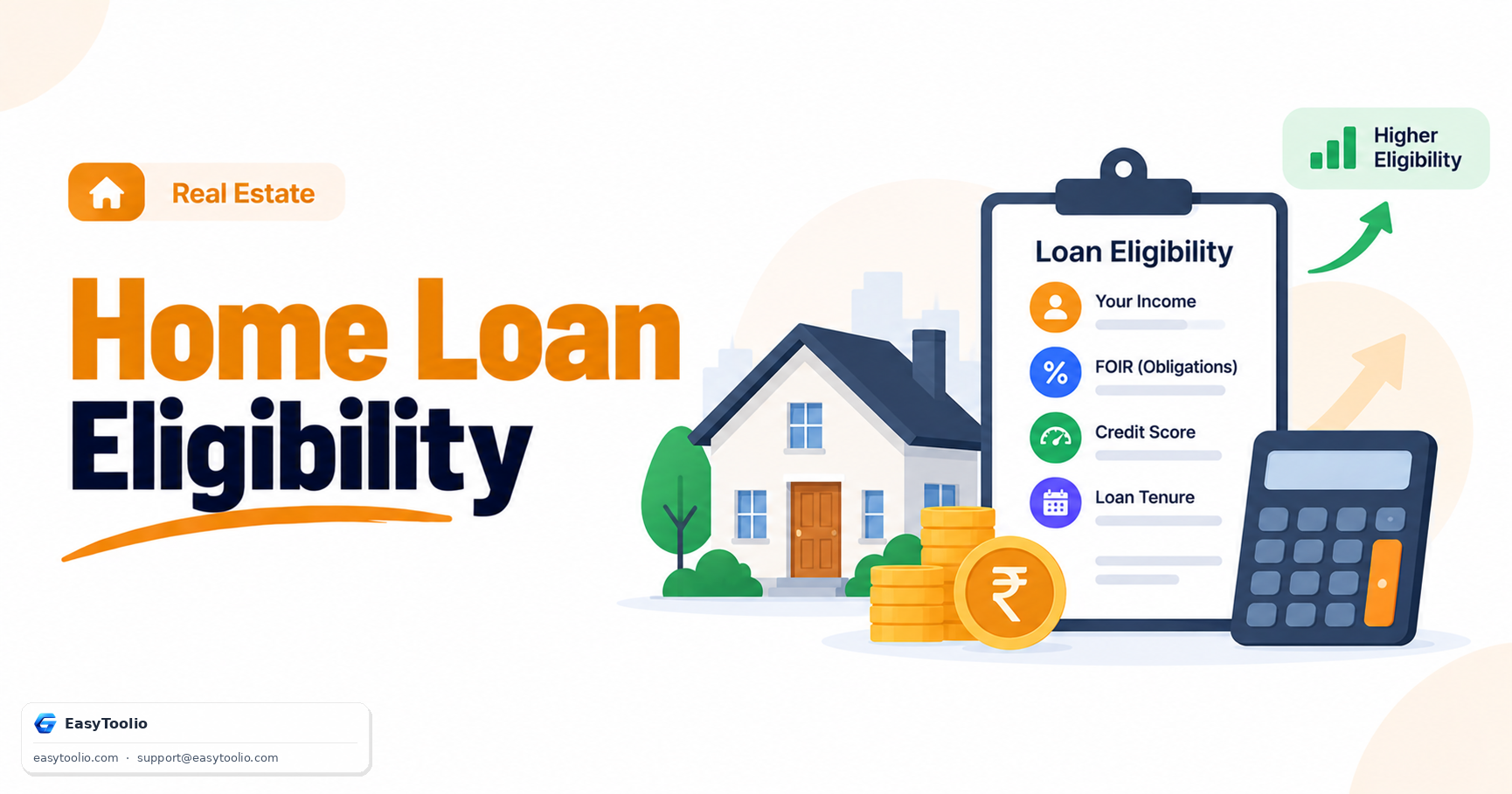
Existing EMIs, credit card balances, and other financial commitments affect your debt-to-income ratio. Lower outstanding obligations typically improve your chances of qualifying for a higher loan amount.
A strong credit history demonstrates responsible borrowing behavior and can improve both loan approval chances and interest rate offers. Maintaining timely payments is one of the most effective ways to strengthen eligibility.
Applying with a spouse or co-borrower can increase the combined income considered by the lender. This may improve loan eligibility and allow borrowers to qualify for a higher loan amount.
Quick answers about how this tool works.
Key factors include monthly net income, age (which determines maximum loan tenure), existing loans/EMIs, credit score (CIBIL), and the property valuation.
Yes, you can increase eligibility by adding a co-applicant (e.g., spouse), declaring additional income sources, paying off existing debts/EMIs, or choosing a longer loan tenure.
Eligibility depends on monthly income, existing debt obligations (FOIR ratio), credit score, age, and property valuation.
You can increase eligibility by adding a co-applicant (spouse/parents), clearing existing personal debts, or choosing a longer tenure.
Plain-language explainers that sit next to this tool.
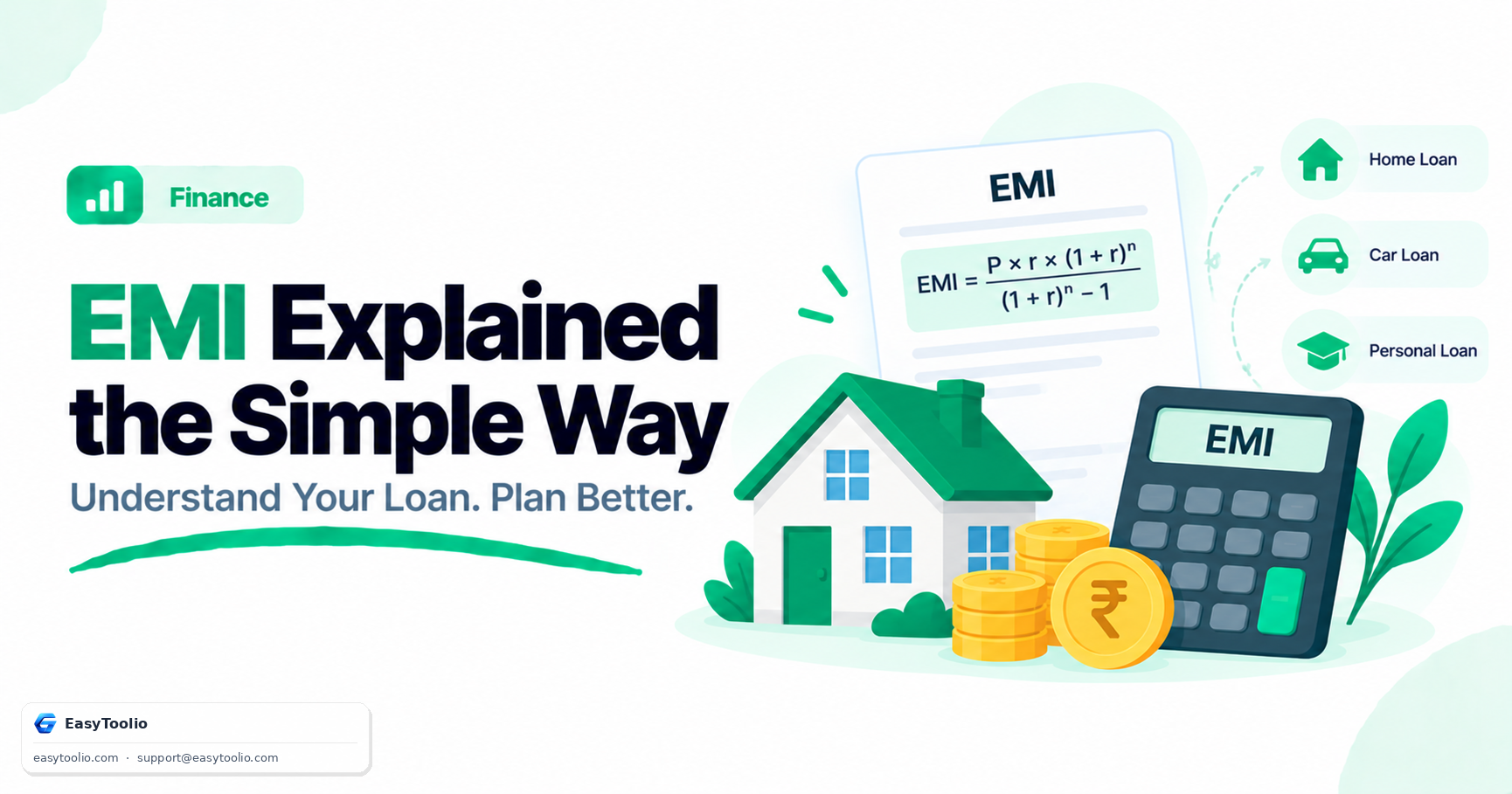
Most Indians accept an EMI figure from their bank without questioning it. This guide explains exactly how Indian banks calculate EMI — the reducing balance method, how RBI repo rate changes flow through to your loan, and what you can do to pay off your home loan years early.
Wondering why the bank approved less than you expected? Learn exactly how lenders calculate home loan eligibility using income, FOIR, credit score, and tenure, with a worked example.
Banks approve loans based on income ratios, not wishful thinking. Learn how to work out the home price you can realistically afford.
Rental yield tells you whether a property is a good income investment, not just a good home. Learn the gross vs net yield formulas, a worked example, and healthy benchmark ranges.
Compare secured Car Loans against unsecured Personal Loans. Analyze interest rates, EMIs, processing fees, and total repayment costs.
Compare two loan options side-by-side. Evaluate EMI amounts, total interest payable, and total cost to choose the most cost-effective loan.
Compare buying a home with a loan against renting and investing the difference. Analyze net worth, EMI outgo, and property appreciation over time.
Add Home Loan Eligibility Calculator to a blog, site, or docs page with a free responsive iframe. No signup.
Search 190+ free tools by name, or pick a category below. Every one runs instantly in your browser — no signup, nothing to install.
Tap a star to rate us instantly.