Focus on Usable Living Space
Carpet area represents the portion of a property that can actually be used for daily living. It provides a practical measure of how much functional space is available for furniture, movement, and day-to-day activities.
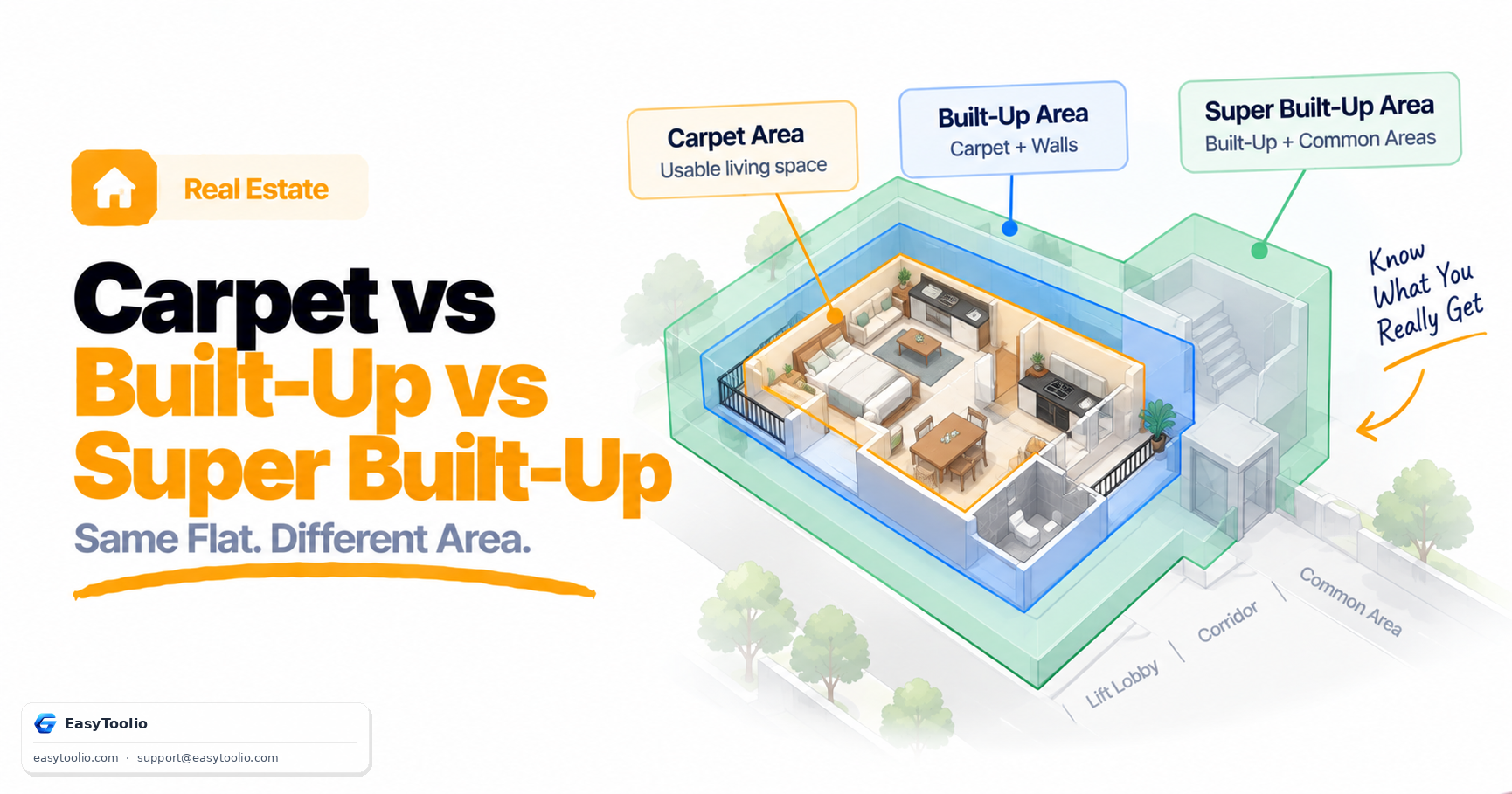
Calculate the carpet area of your flat from its built-up or super built-up area, based on standard RERA loading factors.
Lobby, elevator, stairs, and parking area ratio.
Inner and outer wall thickness and balcony spaces.
How properties are sized under the Real Estate Regulatory Authority (RERA) mandate:
The actual walkable net usable floor area of an apartment. It excludes outer wall thickness, common shafts, balcony areas, and elevator lobbies.
Carpet area plus the thickness of internal/external walls, balcony floor areas, and private utility terrace/duct areas.
The total built-up area plus a proportionate share of common township facilities like lifts, corridors, clubhouses, and lobby space.
Select standard township Super Built-Up areas to check expected net carpet spaces:
Carpet Area, Built-Up Area, and Super Built-Up Area are the three RERA-defined area measures used across Indian real estate listings. Carpet Area is the actual usable floor space w...
Carpet area represents the portion of a property that can actually be used for daily living. It provides a practical measure of how much functional space is available for furniture, movement, and day-to-day activities.

Two apartments may have similar advertised sizes but significantly different carpet areas. Comparing carpet area helps buyers evaluate which property offers better value and more usable space.
Carpet area is often the most useful measurement when planning furniture layouts, interior design, storage solutions, and room utilization. It reflects the actual space available inside the home.
Modern real estate regulations encourage clearer disclosure of carpet area to help buyers make informed decisions. Understanding this metric reduces confusion and improves confidence during property purchases.
Quick answers about how this tool works.
Carpet area is calculated by applying a loading factor (usually between 20% to 35%) to the Super Built-Up Area. On average, the carpet area is approximately 70% of the super built-up area.
Carpet area is the net usable area within the inner walls of the apartment, excluding balcony and common spaces (literally, where you can spread a carpet).
Built-up area includes the carpet area plus the thickness of inner/outer walls, balconies, and private utility ducts.
Carpet area represents the true usable space. Evaluating property cost per square foot of carpet area is the most accurate way to compare values.
Plain-language explainers that sit next to this tool.
Confused why the flat you booked at 1,200 sq ft feels smaller than expected? Learn the exact difference between carpet, built-up, and super built-up area, with formulas and a worked example.
Most Indians accept an EMI figure from their bank without questioning it. This guide explains exactly how Indian banks calculate EMI — the reducing balance method, how RBI repo rate changes flow through to your loan, and what you can do to pay off your home loan years early.
Rental yield tells you whether a property is a good income investment, not just a good home. Learn the gross vs net yield formulas, a worked example, and healthy benchmark ranges.
Wondering why the bank approved less than you expected? Learn exactly how lenders calculate home loan eligibility using income, FOIR, credit score, and tenure, with a worked example.
Search 190+ free tools by name, or pick a category below. Every one runs instantly in your browser — no signup, nothing to install.
Tap a star to rate us instantly.