Official Definition
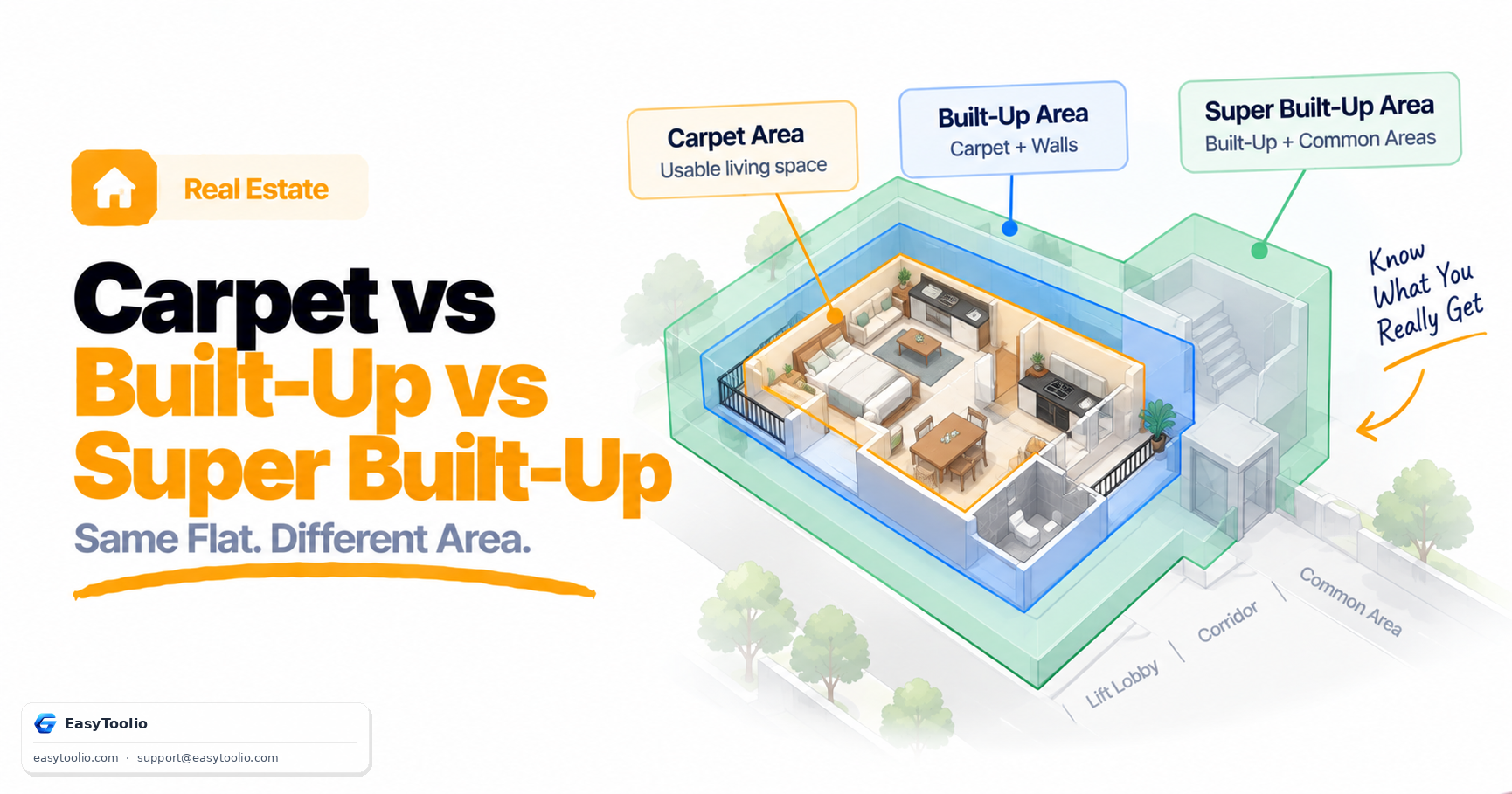
Super Built-Up Area, often called the saleable area, is a unit's Built-Up Area plus a proportionate share of shared building spaces like the lobby, staircases, elevators, and clubhouse — this is the figure developers typically use to price a property.
Detailed Explanation
In-Depth Guide
Key Takeaway
Super Built-Up Area is the largest of the three common real estate area measurements, and the number most commonly seen in property advertisements and price quotes. It starts with the unit's own Built-Up Area and adds a "loading" percentage on top to account for the buyer's proportionate share of common areas — the entrance lobby, corridors, staircases, elevators, and sometimes amenities like a gym or clubhouse.
This loading percentage typically ranges from around 20% to 40%, depending on how many shared amenities the building offers — buildings with more common facilities generally carry a higher loading percentage. Because it directly determines how much extra space (and price) is added on top of the unit's actual footprint, understanding the loading percentage is one of the most important things a buyer can check before purchasing.
Since Super Built-Up Area is the figure developers most often quote and price against, it's easy to end up paying for square footage you can't actually use for furniture or living space — which is exactly why Carpet Area, not Super Built-Up Area, is now required to be prominently disclosed under RERA regulations, giving buyers a way to see the real usable space behind the marketing number. When comparing properties, it's good practice to ask for all three figures so you can judge both true usable space and how much you're paying for shared common areas.