Notification
Go to Home All Tools Compare Glossary Blog Contact

Rent Vs Buy Calculator

Compare the long-term costs of renting versus buying a home, including down payment costs, appreciation, and the break-even point.

Property & Home Loan Details

%
Yrs

Rental & Market Growth Assumptions

%
%

Expected annual increase in the property's market value.

%

Expected annual return if the renter invests their downpayment and savings in the market (e.g. Mutual Funds/S&P 500).

Expenses & Stay Duration

Annual municipal property tax paid by the homeowner.

How many years you plan to live in this home before selling it.

Recommendation

--

Calculations are based on stay duration and opportunity costs.

Wealth Growth Comparison

🏢 Buying Equity + Savings --
📈 Renting + Stock Portfolio --

Financial Breakdown

Total Buyer Cost --
Total Renter Cost --
Home Equity Built --
Interest Paid --
Property Appreciation --
Renter Opportunity Return --
Formula Reference

Rent vs Buy Formula

This is a year-by-year wealth simulation rather than a single formula: each year, the buyer's wealth grows through mortgage principal repayment (building equity) plus property appr...

$$\begin{aligned} \text{Buyer Net Wealth} &= \text{Home Equity} + \text{Invested Cash Surplus} \\ \text{Renter Net Wealth} &= \text{Invested Down Payment} + \text{Invested Cash Surplus} \end{aligned}$$
View Full Formula, Step-by-Step Guide & Worked Examples

Yearly Projection Table

Year Property Value Remaining Loan Buyer Net Wealth Annual Rent Paid Renter Net Wealth
Decisions Framework

When is Renting Better vs Buying?

When Buying is Better

  • You intend to settle down and reside in the property for at least 5-7 years.
  • Property appreciation rates are solid and outpace standard cost increases.
  • Mortgage interest rates are low, making monthly EMI outlays reasonable.
  • Building long-term equity and owning a physical asset aligns with your portfolio goals.

When Renting is Better

  • Your work or lifestyle requires relocations or flexibility in less than 3 years.
  • Stock market return rates are high, yielding more than real estate appreciation.
  • Upfront transaction charges (stamp duty, brokerage, registration) are prohibitive.
  • Monthly rents are exceptionally low compared to equivalent home prices.

Key Financial Risks

  • **Illiquidity**: Physical properties cannot be quickly sold for cash during financial crises.
  • **Opportunity Cost**: Locking downpayment capital in real estate misses stock compounding.
  • **Hidden Costs**: Taxes, community fees, maintenance, and transaction overheads degrade overall returns.
Education

Rent vs Buy: Making the Right Housing Decision

01

Flexibility vs Long-Term Stability

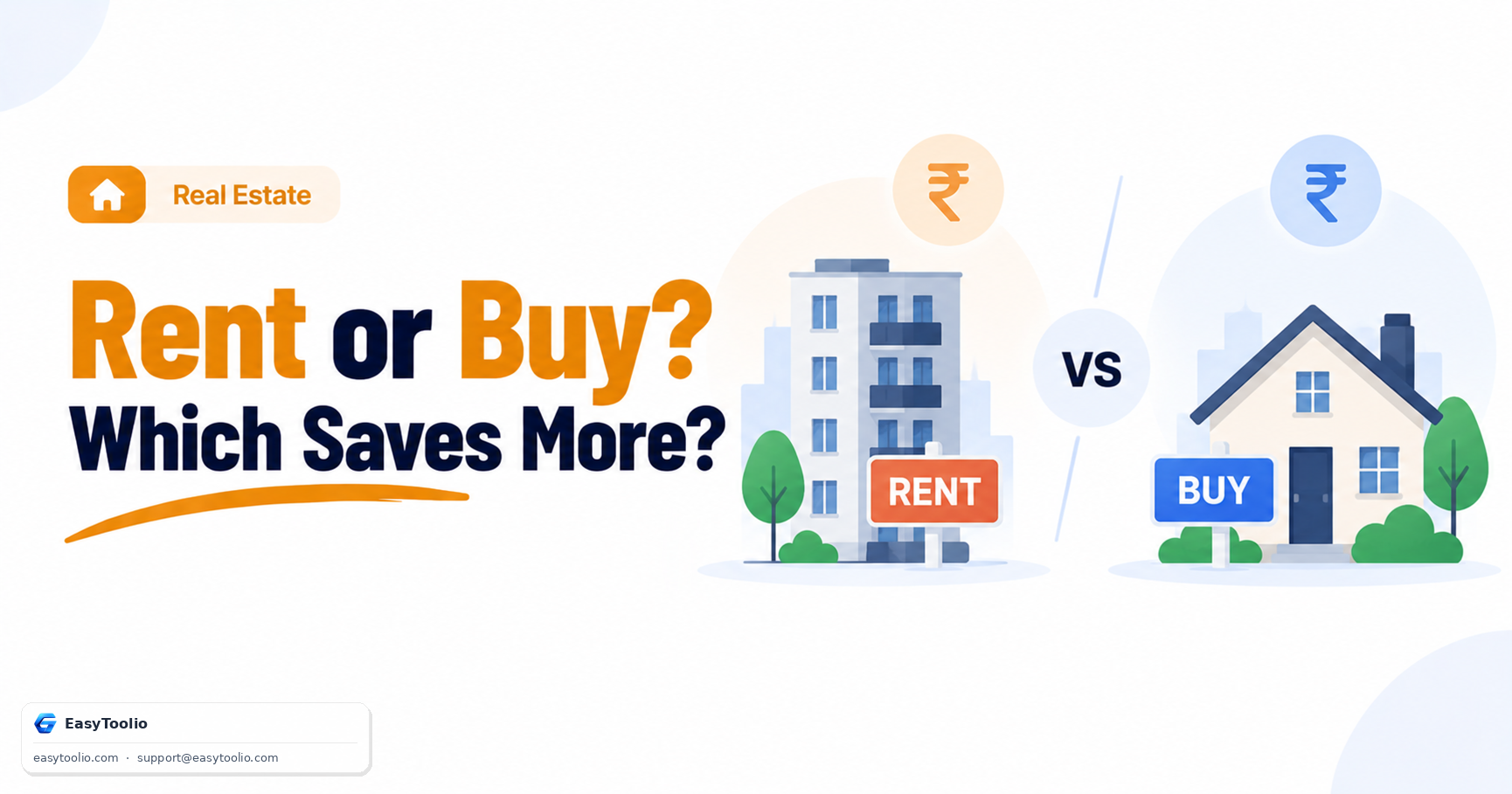
Renting offers greater flexibility for people who may relocate for work, education, or lifestyle changes. Buying a home provides long-term stability and eliminates uncertainty related to lease renewals or rental increases.
02

Building Equity Through Ownership

Monthly mortgage payments gradually increase your ownership stake in the property. Unlike rent payments, which provide no ownership benefits, home loan repayments help build equity that can contribute to long-term wealth.

03

Consider Opportunity Cost

The down payment and other upfront costs required to purchase a home could potentially be invested elsewhere. Comparing expected investment returns against property appreciation can help determine the financially optimal choice.

04

Your Time Horizon Matters

Buying is generally more attractive when you plan to stay in a property for many years, allowing time to recover transaction costs and benefit from appreciation. Renting may be more economical for shorter stays or uncertain future plans.

Good to know

Questions, answered

Quick answers about how this tool works.

In the short term, renting is usually cheaper because you avoid down payments, property taxes, maintenance costs, and transaction fees. However, in the long term, buying can build equity and real estate appreciation, which may outweigh the costs of renting.

Generally, if you plan to stay in the home for at least 5 to 7 years (the break-even point), buying is often more financially beneficial than renting. This allows property appreciation and equity building to offset the high upfront purchasing costs.

The break-even point is the year when the cumulative cost of buying a home becomes lower than the cumulative cost of renting a similar property. It is calculated by comparing home price, rent, interest rates, property appreciation, and opportunity cost of the down payment.

Compare the monthly cost of rent versus a mortgage payment, factoring in property appreciation, opportunity cost of the down payment, and maintenance charges.

It is the home price divided by annual rent. A ratio of 15 or less suggest buying is better; 21 or more suggests renting is cheaper.

Popular Tools on EasyToolio

Swipe

What do you need to work out next?

Search 190+ free tools by name, or pick a category below. Every one runs instantly in your browser — no signup, nothing to install.

More Real Estate tools