Draft Post content
This is a draft post used to verify status filters and previewing.
Double check spelling or search for categories (like "finance" or "health").
 EasyToolio
Client-side privacy, zero signups, zero paywalls. Compute instantly in browser.
Compare interest rates, tenure costs, and investment growth side-by-side.
Explore finance, dev tools, fitness, converters & date generators in structured categories.
In-depth breakdowns on tax saving hacks, EMI formulas, developer tools & productivity.
This is a draft post that should not appear on the public pages but must be visible in the admin section.
This is a draft post used to verify status filters and previewing.
Stop guessing — use our SIP Calculator to run real numbers, compare scenarios, and get instant results you can trust.
Use Free SIP CalculatorReaders of this article also use these tools — try them free, no signup required.

Understand the math behind monthly mortgage payments. Learn how to calculate Principal and Interest (P&I) manually, evaluate the costs of PMI, estimate escrow expenses, and discover strategies to save over $200,000 in lifetime interest.
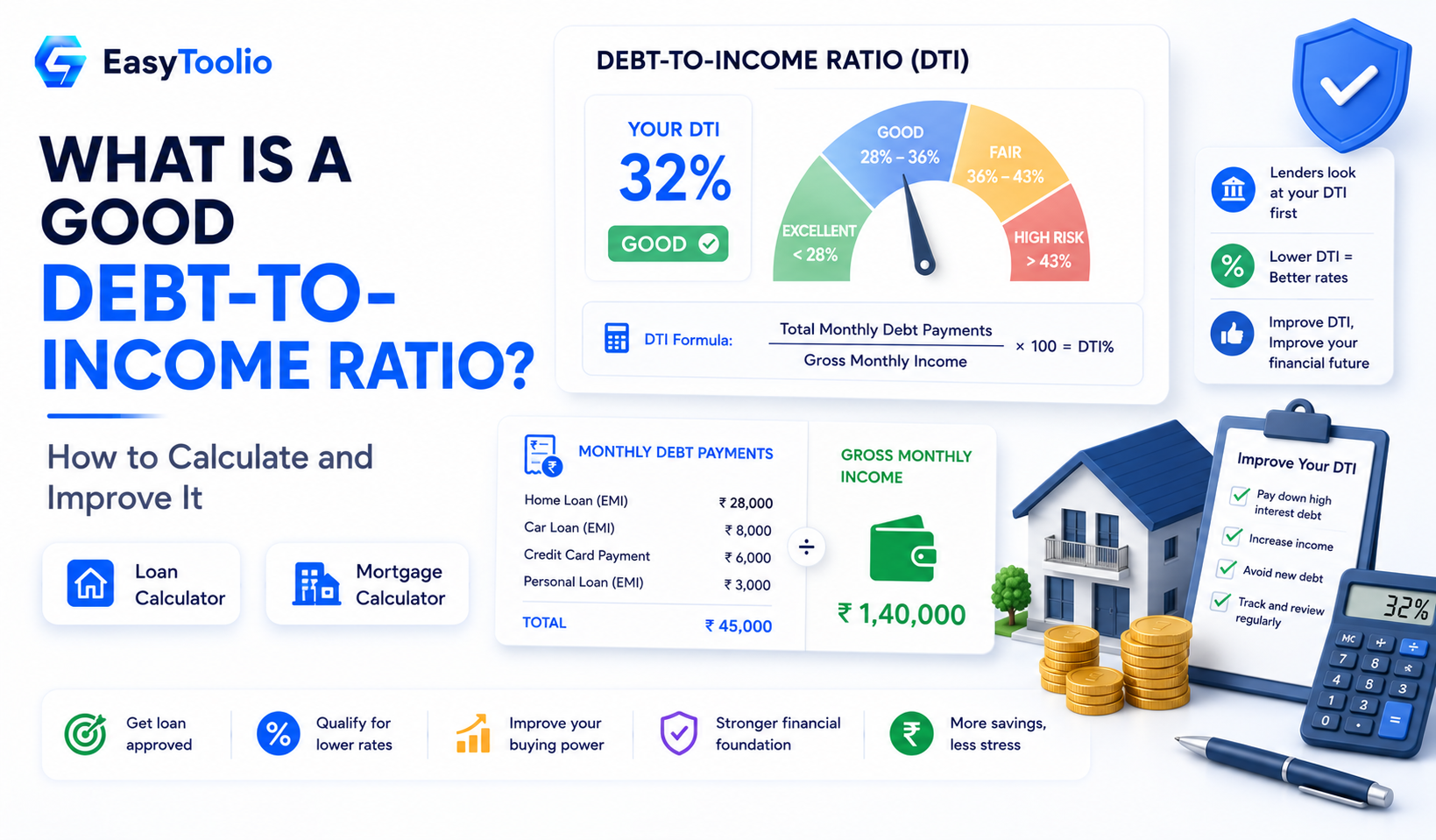
Your Debt-to-Income (DTI) ratio is the single most important number lenders look at when deciding whether to approve your loan — and at what interest rate. This guide explains the exact formula, what lenders consider a good DTI, and the fastest legal strategies to lower yours.

CAGR — Compound Annual Growth Rate — is the most honest way to measure how an investment has grown over time. It smooths out volatile year-to-year swings into a single, comparable annual rate. This guide explains the formula, shows real examples, and explains why CAGR can also be misleading.

How much money do you need to retire? The most cited rule — "save 25× your annual expenses" — is a starting point, not an answer. Your number depends on when you plan to retire, your expected lifestyle, investment returns, inflation, and whether you have pension income. This guide walks through the math.