Long-Term vs Short-Term Assets
The tax rate depends on holding periods: 12 months for listed equity shares/mutual funds, and 24 months for property, gold, and other assets. Debt funds are always treated as short-term regardless of duration.
Calculate short-term and long-term capital gains tax (STCG & LTCG) on stocks, mutual funds, or real estate at current tax rates.
LTCG on listed equity/mutual funds is tax-free up to ₹1.25 Lakh per financial year. Only gains above this limit attract tax.
A Capital Gains Tax Calculator estimates Short-Term Capital Gains (STCG) and Long-Term Capital Gains (LTCG) taxes on stocks, mutual funds, real estate, and gold under the latest Union Budget 2024 rates.
An online tax tool that classifies holding periods, applies new tax rates (Equity LTCG 12.5% over ₹1.25L, Equity STCG 20%), and computes property indexation options.
Calculated for equity mutual fund units held over 12 months, bought for ₹3,00,000 and sold for ₹5,00,000:
Choose equity stocks, mutual funds, real estate property, or gold.
Input acquisition cost, sale price, and holding period dates.
Review STCG vs LTCG tax calculation breakdown and exemptions applied.
Capital Gains Tax is levied on net profit realized from selling capital assets like shares, equity funds, debt funds, gold, or real estate. Holding period determines classification...
The tax rate depends on holding periods: 12 months for listed equity shares/mutual funds, and 24 months for property, gold, and other assets. Debt funds are always treated as short-term regardless of duration.
Indexation allows you to adjust the purchase price of your property or asset to reflect inflation since the year of purchase. It uses cost index tables from CBDT to lower your overall taxable capital gains.
The Union Budget 2024 rationalized LTCG rates to a flat 12.5% without indexation. For properties acquired before July 23, 2024, resident taxpayers retain the option to choose 20% with indexation or 12.5% without indexation.
You can reduce your property capital gains tax by purchasing another residential property within 2 years (or constructing one within 3 years) under Section 54, or investing in capital gain bonds under Section 54EC.
Quick answers about how this tool works.
Short-Term Capital Gains (STCG) on equity shares held for 12 months or less are taxed at 20%.
For immovable property (land or building), a holding period of more than 24 months is classified as Long-Term Capital Asset.
Indexation adjusts the purchase price of an asset using the Cost Inflation Index (CII) to account for inflation, reducing taxable capital gains.
Yes. Short-term capital losses can be set off against both STCG and LTCG. Long-term capital losses can only be set off against long-term capital gains.
Yes, when you sell ancestral property. The cost of acquisition is taken as the original cost to the previous owner or Fair Market Value (FMV) as of April 1, 2001.
Plain-language explainers that sit next to this tool.
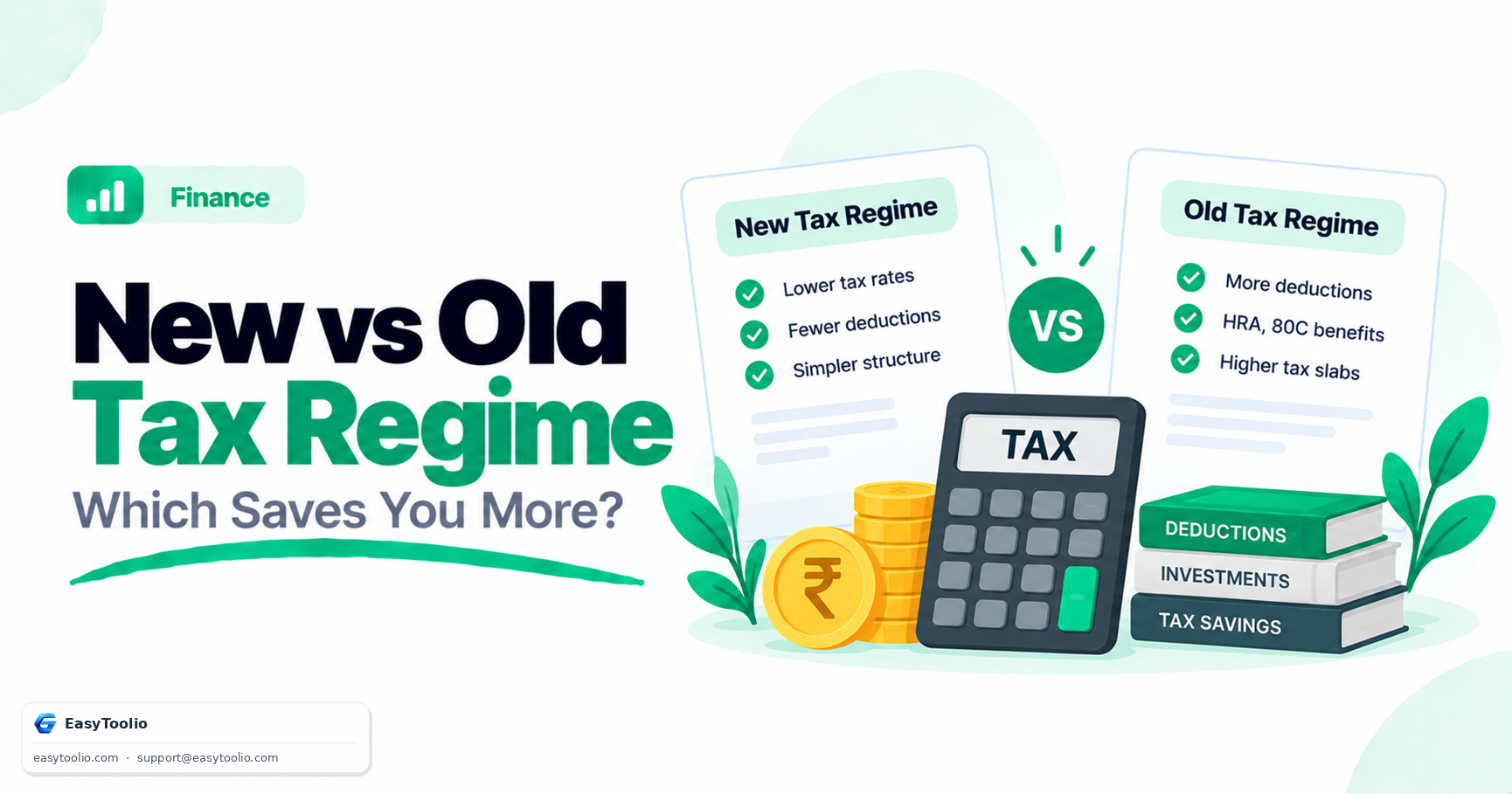
The new regime has lower slab rates but almost no deductions. The old regime taxes you more per slab but rewards HRA, 80C, and home loan interest. Here is how to pick correctly.
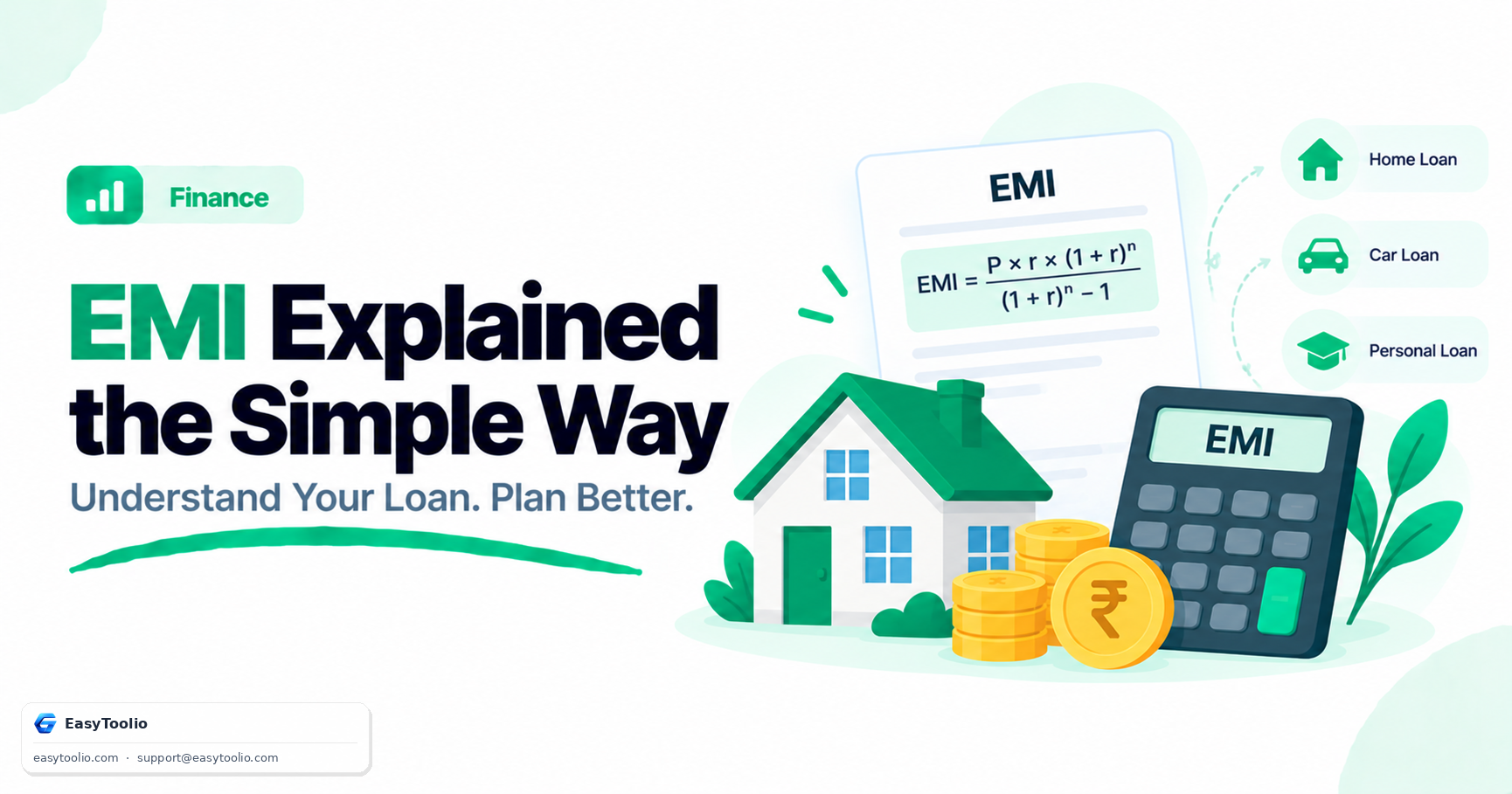
Most Indians accept an EMI figure from their bank without questioning it. This guide explains exactly how Indian banks calculate EMI — the reducing balance method, how RBI repo rate changes flow through to your loan, and what you can do to pay off your home loan years early.
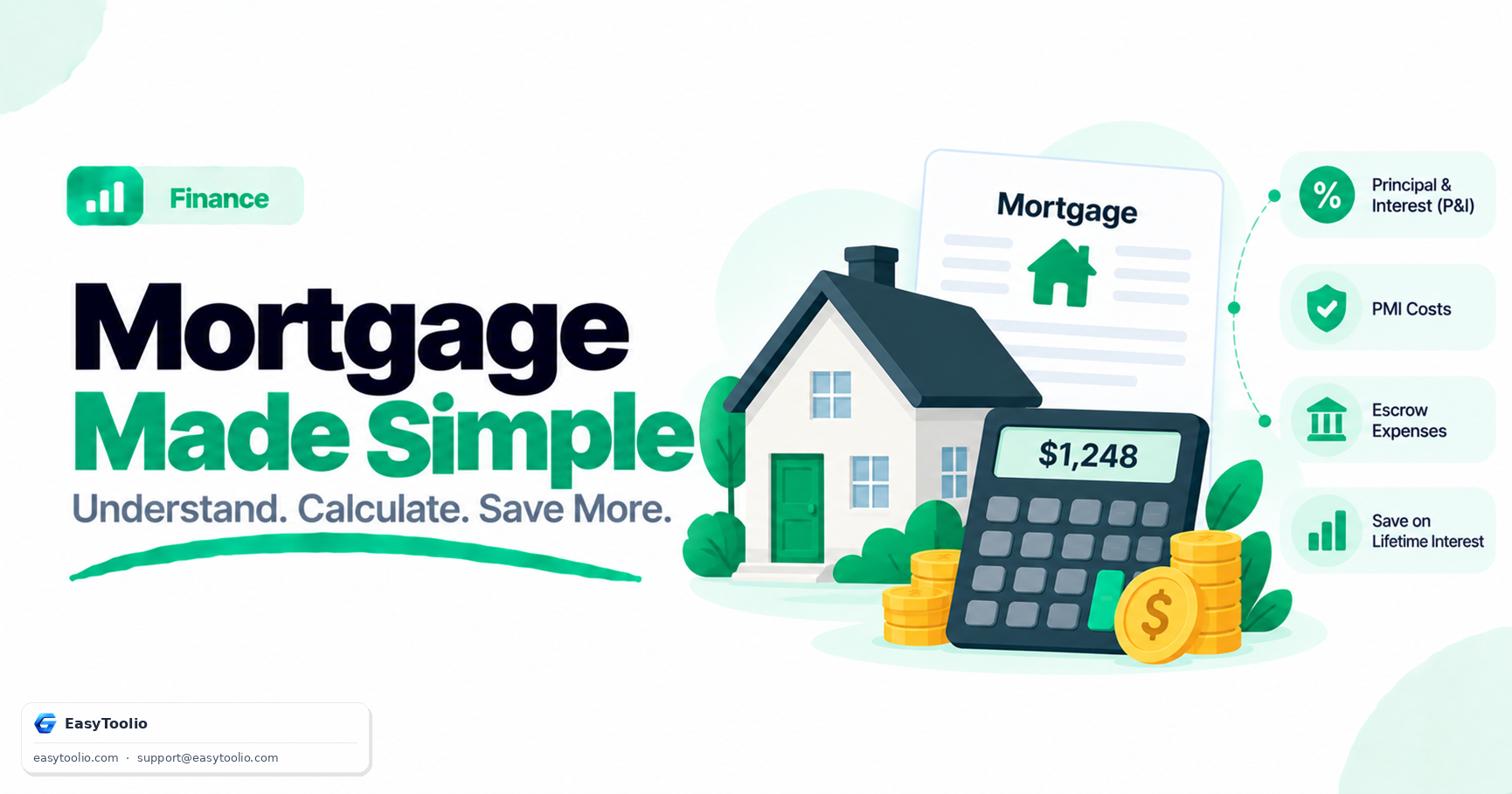
Understand the math behind monthly mortgage payments. Learn how to calculate Principal and Interest (P&I) manually, evaluate the costs of PMI, estimate escrow expenses, and discover strategies to save over $200,000 in lifetime interest.
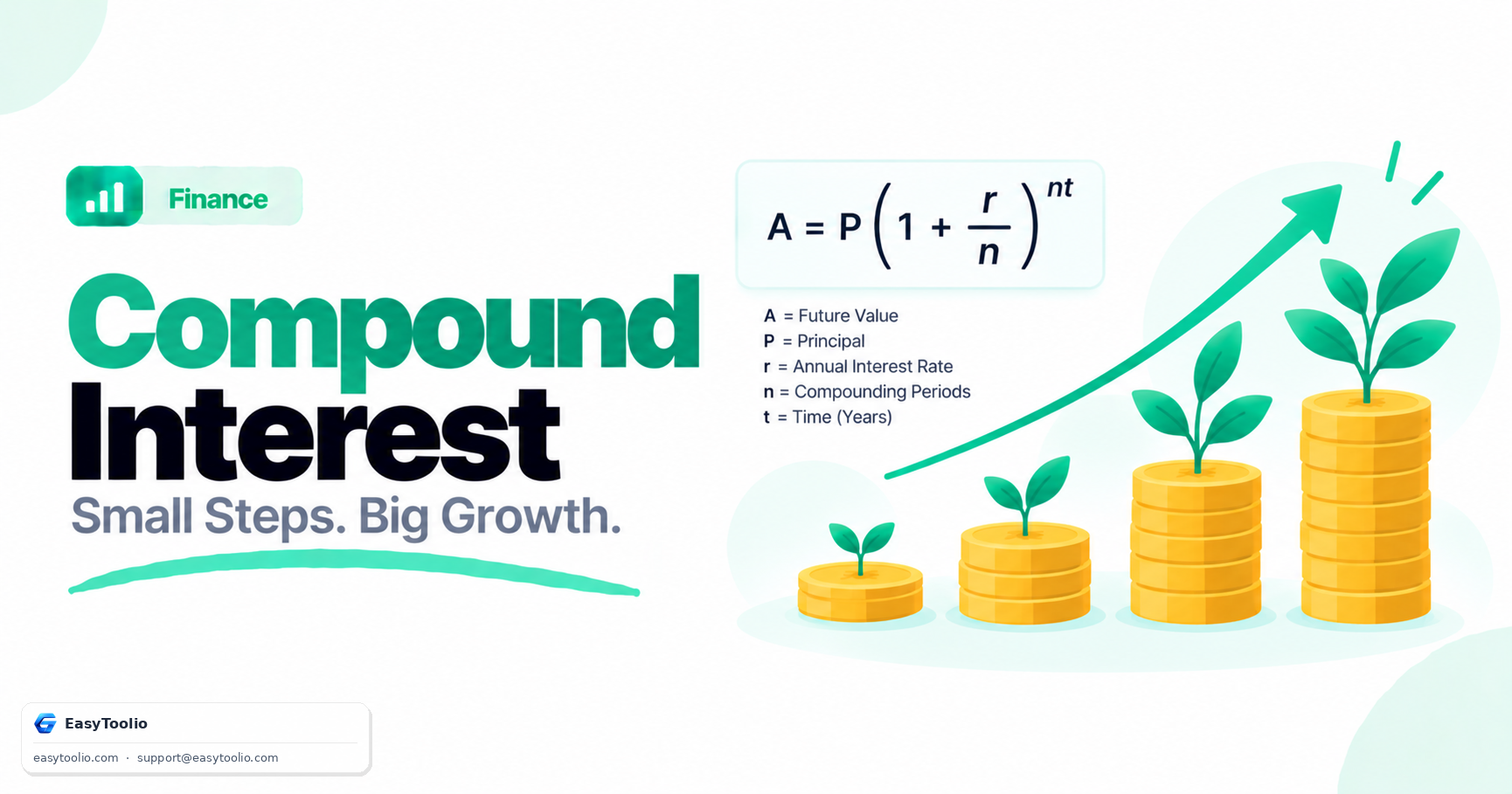
Compound interest is the single most powerful force in personal finance. Understand the formula, see how small differences in rate and time create massive differences in outcome, and learn how to use it to your advantage.
Search 190+ free tools by name, or pick a category below. Every one runs instantly in your browser — no signup, nothing to install.
Tap a star to rate us instantly.