Official Definition
Simple interest is interest calculated only on the original principal amount, at a fixed rate, for the entire duration of a loan or investment — it does not compound.
Detailed Explanation
In-Depth Guide
Key Takeaway
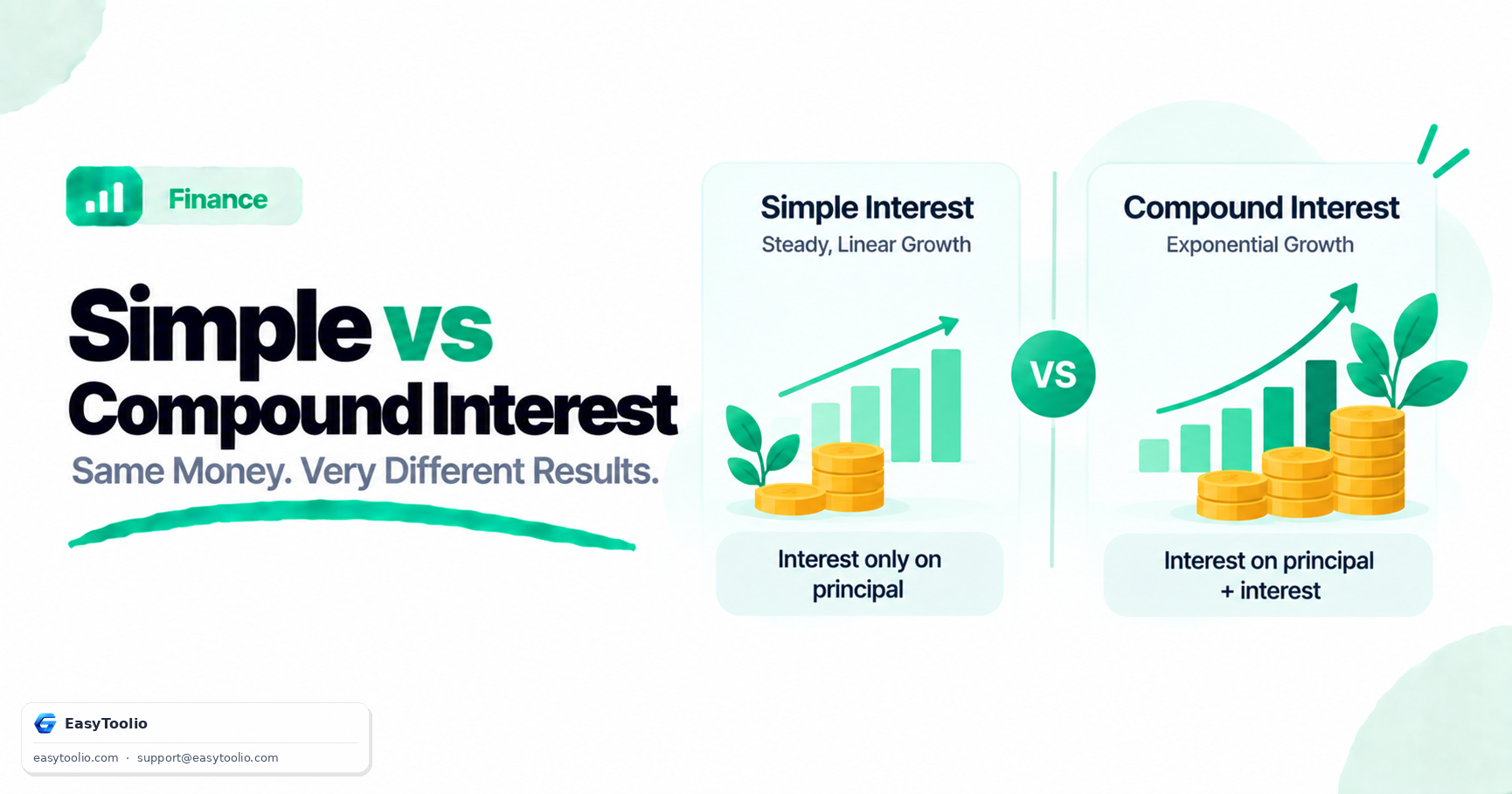
Simple interest is the most straightforward way to calculate interest on money borrowed or invested. Unlike compound interest, it doesn't add previously earned interest back into the balance — it's calculated once, on the original principal, for the entire time period, and the interest charged or earned stays the same in every period. The calculation depends on just three things: the principal amount, the interest rate, and the length of time.
Because interest is always based on the same starting principal, simple interest grows in a straight line over time, rather than accelerating the way compound interest does. Simple interest is common in short-term loans, certain personal loans, and some auto loans, where lenders want a predictable, easy-to-calculate repayment structure. It's also a useful way to understand the basic mechanics of interest before moving on to compound-interest products like fixed deposits or mutual funds.
From a borrower's perspective, simple interest is generally more favorable than compound interest at the same rate, since you're never charged interest on interest already added to the loan. From an investor's perspective, the opposite is true — a compound-interest account will out-earn a simple-interest account of the same rate and term. Comparing the two side by side is a good way to understand why the "same interest rate" can produce very different outcomes depending on how it's structured.