
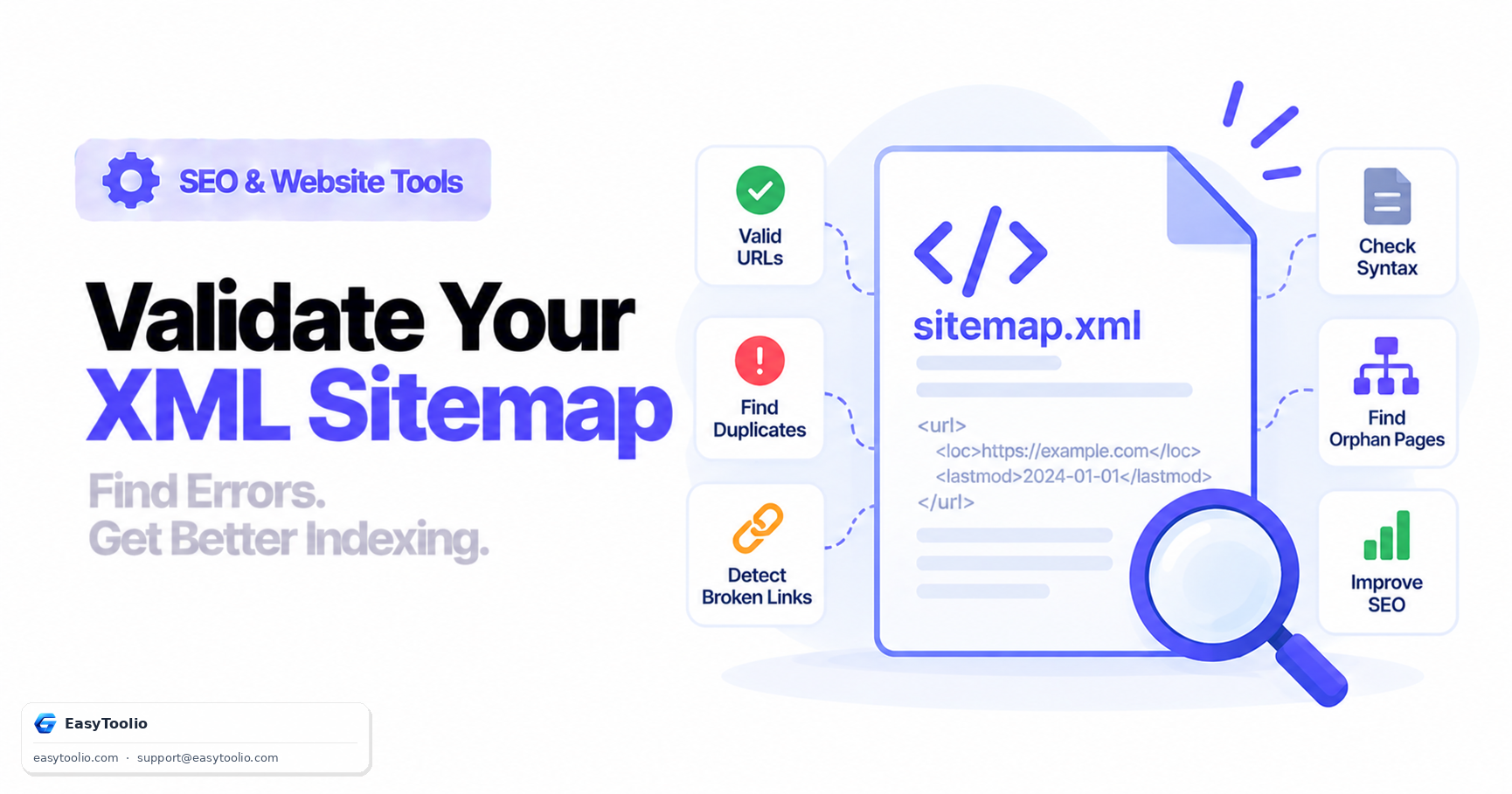
What is XML Sitemap?

Published on November 10, 2026 • Last updated November 10, 2026

Official Definition

An XML sitemap is a structured XML document that lists a website's canonical URLs alongside optional metadata—such as last modified dates and change frequency—to help search engine crawlers discover and index content efficiently.

Detailed Explanation

In-Depth Guide

Key Takeaway

Search engine crawlers discover web pages by following hyperlinks. However, new websites, deeply nested catalog items, and orphaned content pages can be missed during routine crawls.

An XML sitemap acts as an explicit roadmap of all public, indexable URLs that the site owner wishes search engines to crawl. Sites containing more than 50,000 URLs or exceeding 50 MB in size organize their URLs into child sitemaps referenced by a parent sitemap index (<sitemapindex>).

Sitemaps are submitted in Google Search Console and referenced in robots.txt.

Frequently Asked Questions

A single XML sitemap file can contain up to 50,000 URLs and must not exceed 50 MB uncompressed. Websites with more URLs must split them into multiple sitemaps linked by a sitemap index.

Google has stated that Googlebot mostly ignores priority and changefreq tags, but heavily relies on accurate <lastmod> timestamps to schedule re-crawling of updated content.

No. Sitemaps should contain strictly 200 OK, canonical, indexable URLs. Including 404s, 301 redirects, or noindex pages wastes crawl budget and generates warnings in Search Console.

What do you need to work out next?

Search 276+ free tools by name, or pick a category below. Every one runs instantly in your browser — no signup, nothing to install.

More Finance tools
AI ADVISOR & COACH

Ask AI Advisor

Ask AI