Notification
Go to Home All Tools Compare Glossary Blog Contact

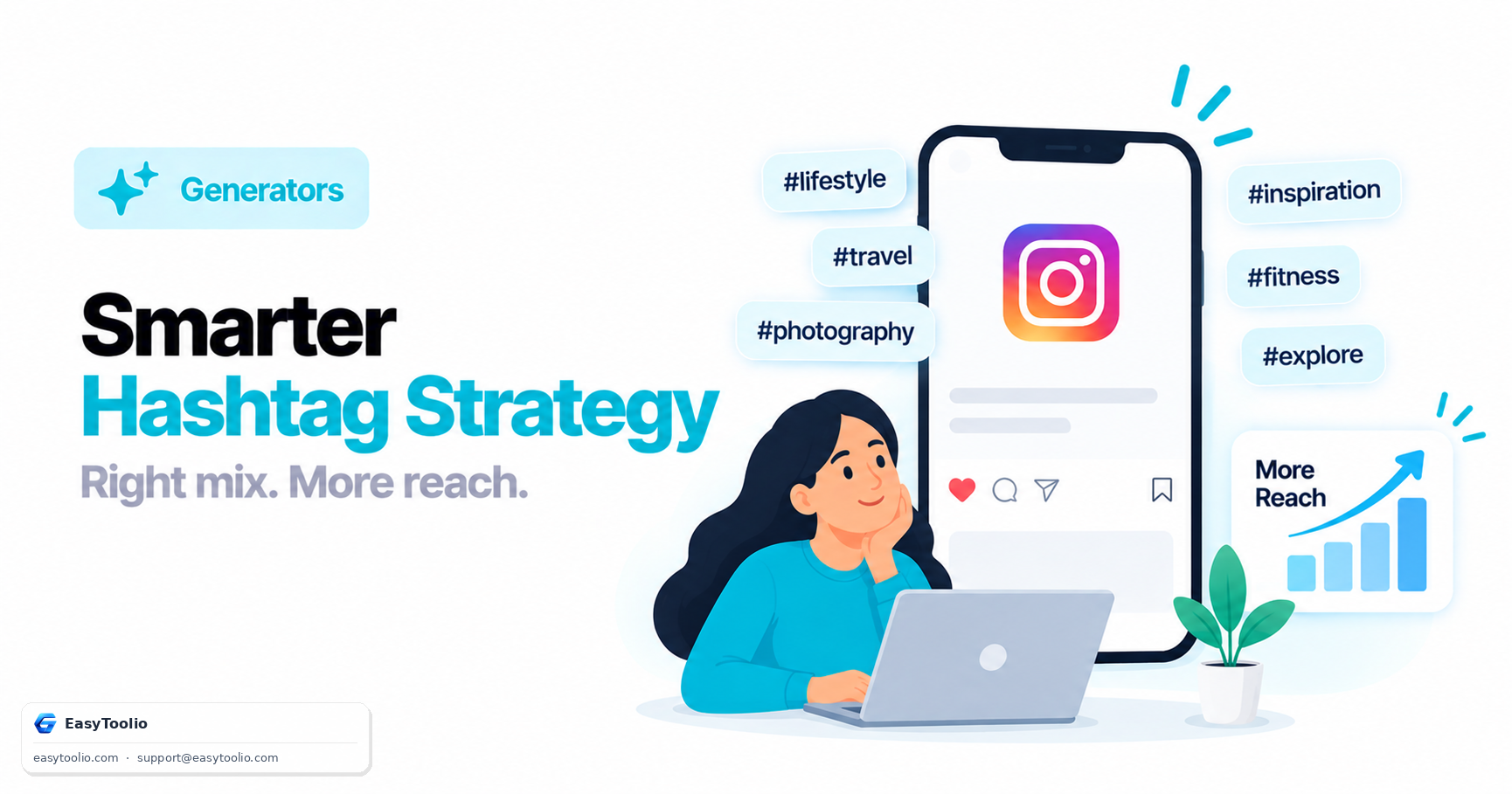
Hashtag Generator

Generate trending and niche hashtags for Instagram, TikTok, YouTube, and X based on your keywords or caption.

Secure Local Analysis
Notice
Keyword matching, keyword dictionaries, and content tokenizers run entirely in local client Javascript. No captions or topic details are uploaded.

Content Inputs

Target Platforms
Hashtags Per Group
tags

Quick Presets

Load demo topics to generate instant hashtag lists:

Features

  • Grouped into High, Medium, and Niche trending volumes.
  • Bulk Copy options for groups or entire generated list.
  • 100% private, on-device text tokenizers.

Social Media Growth & Hashtag Guidelines

Each algorithm evaluates and ranks hashtags differently. Adapt your strategy per platform.

Instagram Strategy

Instagram supports up to 30 hashtags. Use a mix of 5 generic/popular tags, 10-15 highly-specific niche tags, and 2-3 branded tags. Place them in your caption or the first comment.

TikTok Strategy

TikTok values short, precise captions. Use 3-5 tags only. Keep generic tags (like #fyp, #trending) minimal and focus on niche topic tags that match your video's audio and visuals.

YouTube Strategy

Add 3-5 relevant hashtags to the video description. The first three will show up prominently next to your video title. Do not exceed 15 hashtags as YouTube will ignore all tags.

LinkedIn Strategy

LinkedIn feeds rely on professional categorization. Use 3 hashtags at the bottom of your post. Keep them broad (e.g. #marketing, #entrepreneurship) to join general corporate feeds.

X / Twitter Strategy

Due to the character limits, limit hashtags to 1-2 items. Make sure to use trending or high-volume keywords to enter the active conversations and explore streams immediately.

Facebook Strategy

Facebook posts benefit slightly from hashtags. Use 2-3 tags at the end of the post. Avoid using too many tags as it can make the post look cluttered and lower organic engagement.

Hashtag Selection Examples

Topic / Category High Volume (Broad) Medium Volume (Niche) Trending / Low Volume
💻 Tech & SaaS #coding #programming #saasstartup #indiehackers #buildinpublic #solodev
💪 Fitness & Gym #fitness #workout #gymmotivation #fitnesstips #gluteworkout #pushday
✈️ Travel & Adventure #travel #wanderlust #travelblogger #roadtrip #solotravels #hiddengems
🍳 Food & Cooking #foodie #cooking #foodblogger #recipeideas #mealprepideas #easyrecipes
Social Media Expert

AI Advisor Social Strategist

Ask AI
Education

How Hashtag Volume and Strategy Work

01

Why Hashtag Counts Differ by Platform

Each social network ranks and displays hashtags differently, so the ideal count varies widely: Instagram supports up to 30 tags and rewards a broad mix, TikTok performs best with only 3 to 5 highly relevant tags, and X (formerly Twitter) works better with just 1 to 2 tags because of its shorter character limit. LinkedIn and Facebook fall in between, typically working well with 2 to 3 tags placed at the end of a professional or casual post.

02

Balancing High, Medium, and Trending Tags

The generator groups suggestions into three volume tiers: high-volume tags with over 1M posts bring the most search traffic but the most competition, medium-volume niche tags between 100k and 1M posts offer a workable balance of reach and staying power, and low-volume trending tags under 100k posts have the least competition and reach a more targeted, engaged audience. A practical checklist is to combine a few tags from each tier rather than relying only on the biggest, most crowded hashtags.

03

Example: Building a Tag Set

For the keywords "coding" and "startup," the generator might return #coding and #programming as high-volume tags, #saasstartup and #indiehackers as medium-volume niche tags, and #buildinpublic as a low-volume trending tag. Posting all three tiers together on Instagram gives the post a chance to rank in broad searches while also surfacing in smaller, highly engaged communities.

04

Applying Tags Across Your Content

Hashtags work best when paired with a clear caption and a recognizable account name, so it is worth pairing this tool with the Instagram Username Generator or YouTube Channel Name Generator when you are still establishing a handle for the account posting the content. Re-running the generator periodically is useful too, since hashtag popularity shifts over time and a tag that was trending last month may already be oversaturated.

Good to know

Questions, answered

Quick answers about how this tool works.

Optimal hashtag counts vary by platform: Instagram: 10-30 tags (mix of popular & niche); TikTok: 3-5 tags (highly relevant); YouTube: 3-5 tags in the description; LinkedIn: 3 tags (professional/niche); X (Twitter): 1-2 tags due to character limits; Facebook: 2-3 relevant tags.

High-volume hashtags (1M+ posts) have huge search traffic but intense competition, meaning your post can get buried quickly. Medium-volume/niche tags (100k - 1M posts) offer a good balance of reach and longevity. Low-volume/trending tags (<100k posts) have low competition and are excellent for targeting a specific, highly-engaged audience.

Yes! The generator runs entirely client-side in your browser. None of your keywords, topics, or captions are sent to external servers or logged.

The generator combines your keywords, business name, industry, and branding preferences to create unique domain name ideas. It can generate brandable, keyword-rich, creative, and modern domain suggestions for websites and online businesses.

A good domain name is short, memorable, easy to spell, easy to pronounce, and relevant to your business or website. Strong domain names help users remember your brand and find your website more easily.

Ideally, yes. Matching your domain name with your business or brand name improves consistency, trust, and brand recognition. However, slight variations may be necessary if the exact domain is unavailable.

Yes. The generator can create domain name ideas for startups, SaaS products, blogs, eCommerce stores, agencies, technology companies, personal brands, and many other industries.

A domain name is the web address people type into a browser, such as example.com. A website is the collection of pages, content, and functionality hosted under that domain name.

Both approaches can work. Keyword-based domains clearly describe a business or niche, while brandable domains are unique and easier to build into a recognizable brand over time.

Yes. Once you find a suitable domain and confirm availability, you can register it through a domain registrar. Popular domain names can be registered quickly by others, so acting promptly is often recommended.

Popular Tools on EasyToolio

Swipe

What do you need to work out next?

Search 190+ free tools by name, or pick a category below. Every one runs instantly in your browser — no signup, nothing to install.

More AI-Style Tools