There's a persistent belief that stuffing 30 hashtags onto every Instagram post maximizes reach, alongside an opposite camp claiming hashtags "don't matter anymore." Both are oversimplified. Hashtags are a discovery mechanism with real mechanics behind them, and understanding those mechanics — rather than following either extreme — is what actually moves the needle on reach.
Direct Answer: Hashtags work as a searchable and browsable index, letting a platform's algorithm and its users find your post through a specific topic tag rather than only through your existing followers or the general feed algorithm. Research and platform guidance consistently show that hashtag relevance and a mix of audience sizes — a few broad, several mid-sized, and a few niche tags — drive more discovery than raw hashtag count, and most platforms show diminishing or even negative returns well before their technical maximum.
Hashtags as a Discovery Mechanism, Not a Feed Booster
A hashtag doesn't directly increase how the core feed algorithm ranks your post for your existing followers — that ranking is driven mainly by engagement signals and account relationship. What a hashtag does is make your post discoverable to people who are not already following you, by surfacing it in that hashtag's dedicated search and browse page. Someone actively searching or following a specific hashtag sees your post there, independent of whether they follow your account.
This distinction matters because it reframes the strategy question: the goal isn't "which hashtags trigger an algorithm boost," it's "which hashtags are actually searched or followed by people who'd want to see this exact post."
Platform Differences
| Platform | Hashtag Role | Practical Limit | Effective Range |
|---|---|---|---|
| Discovery via hashtag search/follow pages | 30 hashtags max per post | Roughly 3-8 well-chosen tags typically outperform maxing out | |
| TikTok | Discovery + topic/trend signal to the For You algorithm | No hard cap, but caption length limits practical use | A handful of specific, trend-relevant tags |
| X (Twitter) | Discovery via hashtag search, weaker algorithmic role | No hard cap | 1-2 tags; more tends to read as spammy and hurt engagement |
| Discovery via topic feeds, professional context | No hard cap | 3-5 relevant, professional-context tags |
Instagram explicitly allows up to 30 hashtags, but allowing a number isn't the same as that number being optimal — plenty of Instagram's own creator guidance and independent engagement studies point to hashtag quality and relevance mattering more than reaching the cap.
The Mix-of-Sizes Strategy
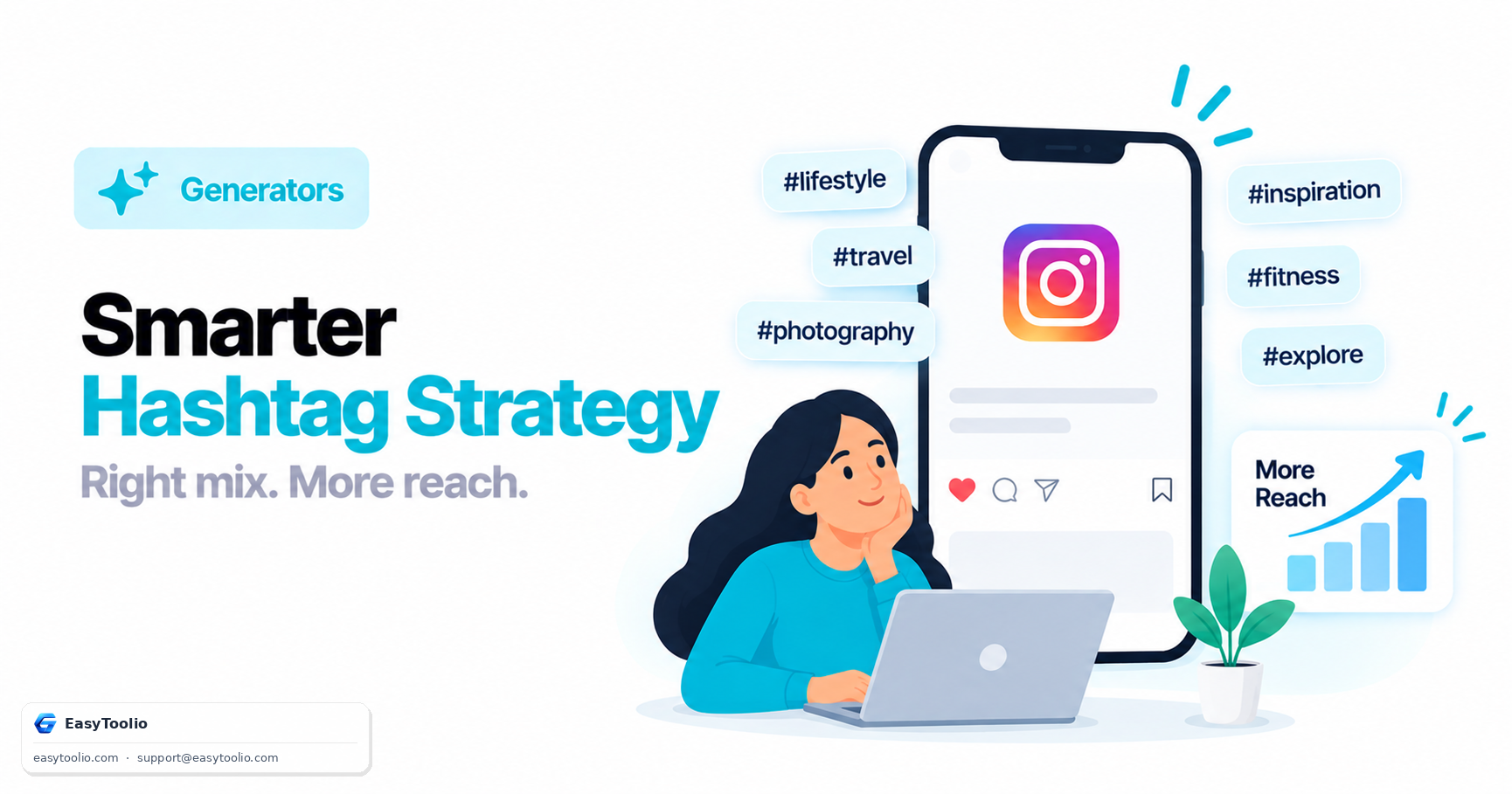
A widely-used and sound approach is layering hashtags across three audience-size tiers instead of picking all from one tier:
- Broad/high-volume tags (millions of posts) get you into a highly competitive stream where your post is quickly buried by newer posts, but they do add some initial visibility.
- Mid-sized tags (tens of thousands to low hundreds of thousands of posts) offer a meaningfully longer window where your post remains visible near the top of that tag's recent/top posts before being buried.
- Niche/specific tags (a few thousand posts or fewer) have the smallest audience but the highest relevance match, meaning the people who do find you through them are unusually likely to actually be interested in your specific content.
Using only broad tags gets you buried fast with low-relevance reach; using only niche tags caps your maximum possible audience. A deliberate mix targets both immediate visibility and sustained, relevant discovery.
Why More Hashtags Isn't Simply Better
Beyond a certain point, adding more hashtags shows diminishing returns, and past a further point it can actively hurt performance for two reasons. First, a caption stuffed with a wall of unrelated or barely-related hashtags reads as spammy to human viewers, which can suppress engagement (likes, comments, saves) — and engagement, not hashtag count, is the strongest input to how far the core algorithm distributes a post beyond hashtag search itself. Second, some platforms have flagged accounts that use hashtags in patterns resembling automated spam behavior (identical hashtag blocks repeated across every post, or hashtags entirely unrelated to the actual content), which can suppress reach rather than help it — often informally referred to as reduced hashtag visibility or "shadowbanning," though platforms rarely confirm the exact mechanism publicly.
Build a relevant, well-mixed hashtag set for your niche instantly with our free hashtag generator instead of guessing or reusing the same generic block on every post.
Frequently Asked Questions
Do hashtags still work on Instagram in 2026?
Yes, but their role has shifted toward niche discovery and search rather than being a primary reach driver, as Instagram's algorithm now weighs engagement velocity, watch time (for Reels), and follower relationship more heavily than earlier eras when hashtags were a dominant discovery lever. They remain useful, just not as a standalone growth strategy.
Is it bad to reuse the exact same hashtag set on every post?
Using an identical, unchanged hashtag block on every single post is a pattern some platforms associate with low-quality or automated content, and it also means your tags aren't actually tailored to each post's specific content. Rotating and customizing hashtags per post, even keeping a few consistent branded tags, is generally safer and more effective.
What are "banned" or restricted hashtags?
Some hashtags get restricted by a platform, usually because they've been heavily associated with content violating community guidelines (spam, misinformation, explicit content). Posts using a restricted hashtag may be excluded from that hashtag's search results entirely, which can quietly reduce your discoverability without any obvious notification that it happened.
Should I put hashtags in the caption or the first comment on Instagram?
Instagram has stated both placements are functionally equivalent for discovery purposes, so it comes down to preference — many creators use the first comment to keep the caption itself cleaner and more readable.
How many hashtags should a TikTok video use?
There's no official cap, but TikTok's own creator guidance and most performance analysis suggest a small number of specific, genuinely relevant tags outperform a large generic block, since TikTok's For You algorithm relies far more heavily on watch-time and completion-rate signals than on hashtag volume.
References: Meta/Instagram Creator guidance on hashtags and discovery; TikTok Creator Portal guidance on content discovery signals.