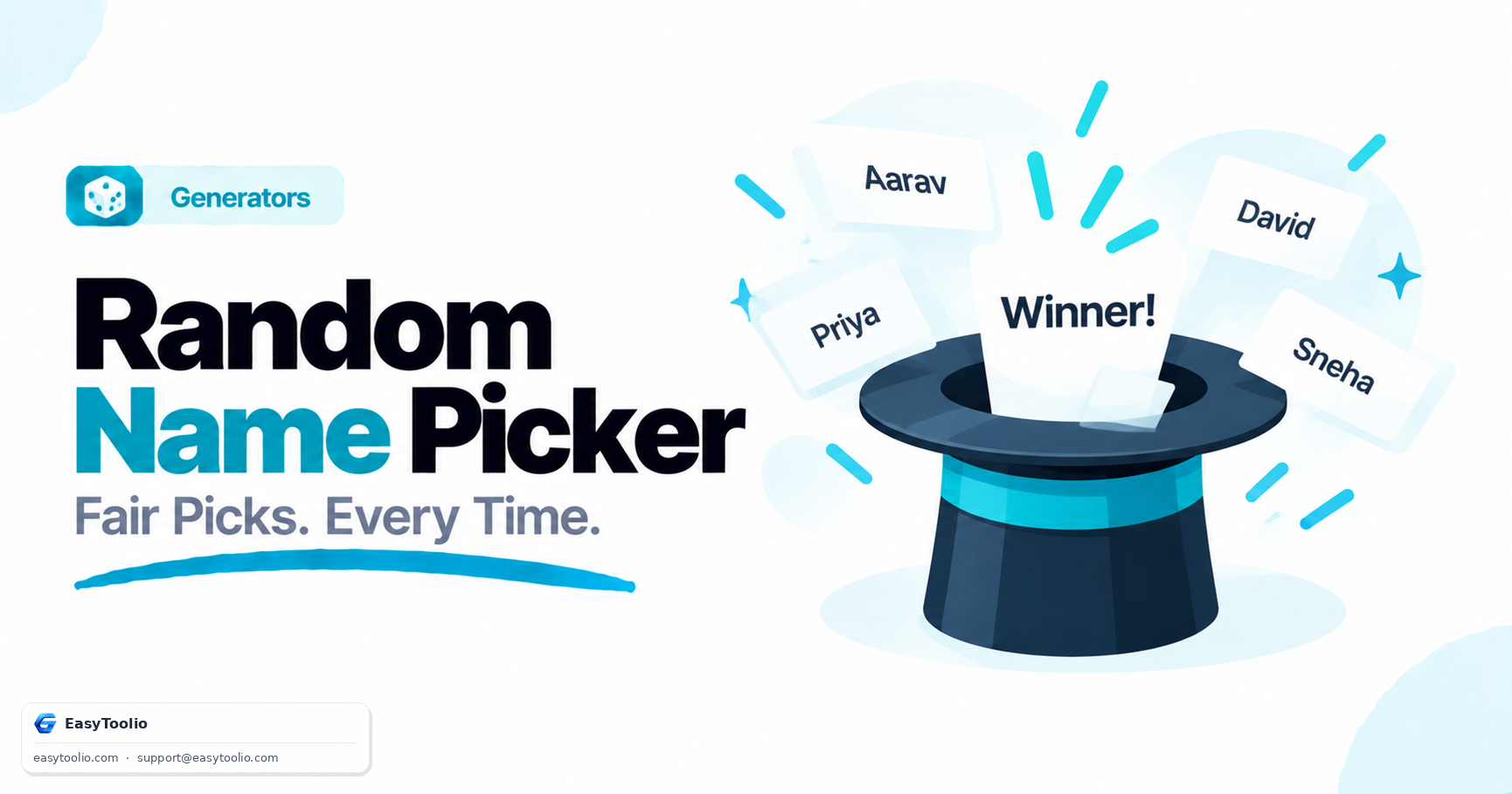
Whenever a prize, a spot on a team, or a coveted assignment is on the line, the fairness of the selection process matters just as much as the outcome. Picking a name out of a hat sounds fair in theory, but in practice, human involvement introduces subtle bias: a name written on a slightly larger slip of paper, an organizer who unconsciously reaches toward a familiar name, or a physical drawing that is never quite as random as it looks. A digital random name picker solves this by using computational randomness that is consistent, repeatable in process, and free of human influence.
What Makes a Selection Truly Random
True randomness means every entry has an equal, independent chance of being selected, with no pattern, order, or external factor influencing the outcome. A well-built Random Name Picker achieves this by using a random number generator (RNG) to index into a list of entered names, rather than relying on any manual process. Because the RNG treats every position in the list identically, it does not matter whether a name was entered first or last, in uppercase or lowercase, or how many times someone glanced at the list beforehand.
This matters most in situations with real stakes: raffle drawings involving purchased tickets, giveaway winners chosen from public entries, or team assignments where perceived favoritism could damage trust. A transparent, tool-based process removes the possibility (and the appearance) of manual manipulation.
When and How to Use a Random Name Picker
- Raffles and giveaways: Enter every eligible name or ticket number exactly as it should count, including duplicates if someone bought multiple entries. This preserves proportional odds correctly, since duplicate entries increase that person's real probability of winning, just as physical duplicate tickets would.
- Classroom or team assignments: Enter each student or employee's name once, and use the tool to either pick one at random (like choosing who presents first) or shuffle the full list into groups.
- Contest winner selection: If your giveaway rules promise "one entry per person," deduplicate the list first, since letting an accidental duplicate stay in undermines the fairness of the process you already told people you'd follow.
- Sports or game team draft: Randomize team order or player assignment to prevent any bias toward stronger or weaker players ending up on the same side.
Always screenshot or record the final list of entries and the result before running the draw, especially for anything with a physical or monetary prize. This creates a simple audit trail if a winner is ever questioned.
Manual vs. Digital Random Selection
| Aspect | Manual (Hat/Drawing) | Digital Random Name Picker |
|---|---|---|
| Bias risk | Higher (visual/physical cues, human error) | Minimal (RNG-based, no visual cues) |
| Repeatability | Cannot be re-verified after the fact | Entry list can be saved and reviewed |
| Handling duplicates | Awkward with physical slips | Easy to manage as list entries |
| Speed for large groups | Slow and error-prone at scale | Instant regardless of list size |
| Perceived fairness | Depends on trust in the organizer | Backed by a documented, neutral process |
Frequently Asked Questions
Q: Is a random name picker actually unbiased, or can the order of names affect the result? A: A properly implemented random name picker uses a random number generator to select an index, so the position of a name in the list (first, last, or anywhere in between) has no effect on its chance of being chosen.
Q: How should I handle multiple entries for the same person in a raffle? A: Enter that person's name once for each legitimate entry they hold. This keeps their odds proportional to how many entries they actually have, matching how a physical raffle with multiple tickets per person would work.
Q: Can I use a random name picker for splitting people into teams, not just picking one winner? A: Yes, many random name pickers support shuffling or grouping the full list, which is a fair way to form teams without anyone influencing who ends up with whom.