Naming a startup carries more weight than naming a hobby project or a YouTube channel, because it's likely to appear on legal documents, investor decks, a trademark filing, and every piece of marketing you produce for years. Getting it wrong is fixable but expensive — a rebrand after you've built any traction means new domains, new legal filings, and lost search equity.
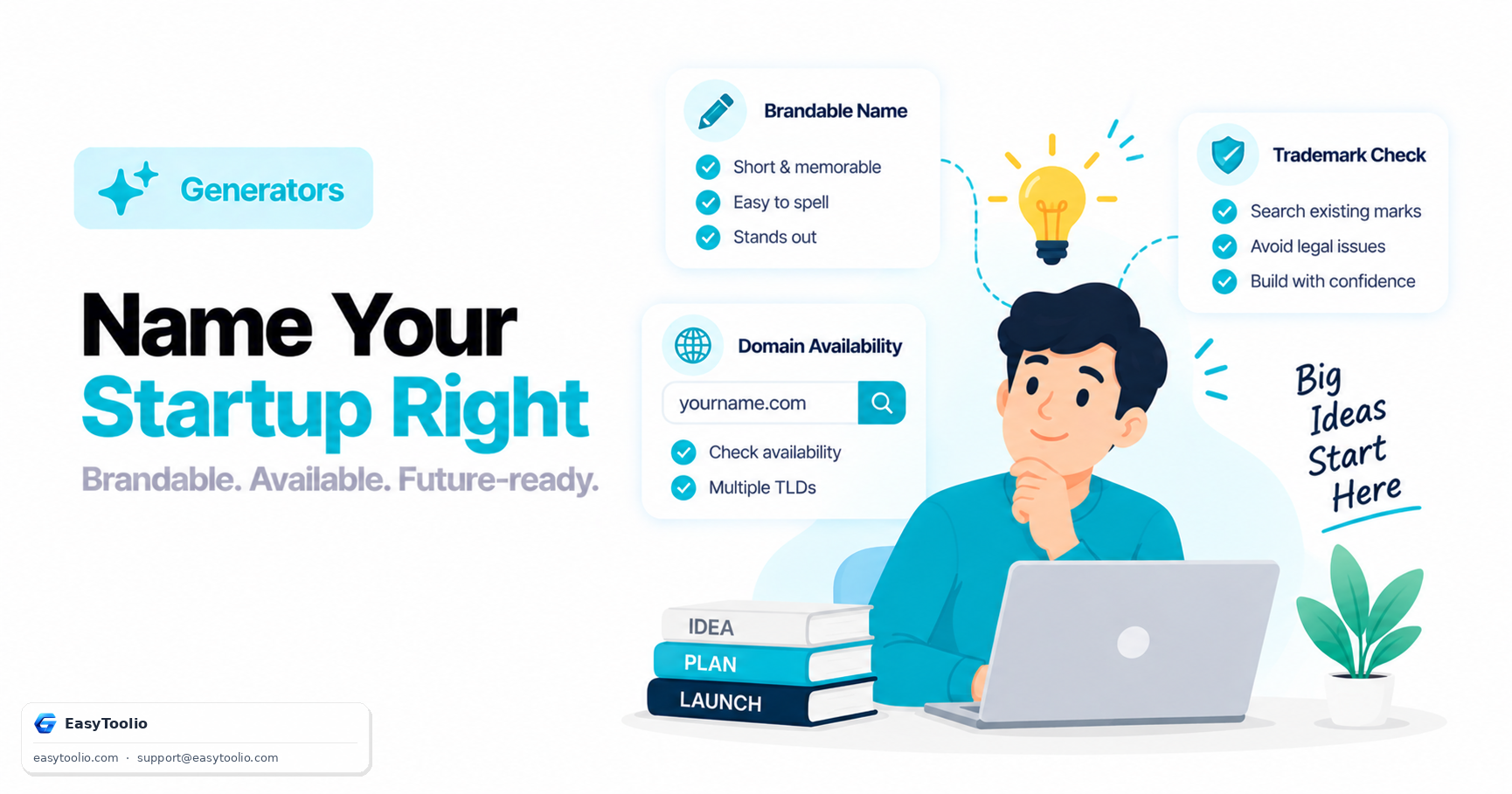
Direct Answer: A brandable startup name is short (ideally one or two words, ideally under three syllables), easy to spell correctly the first time it's heard aloud, distinct enough to avoid confusion with existing companies in your space, and free of unintended negative meanings in other languages your business might expand into. Before committing, confirm the exact or close-variant domain is available, run a basic trademark search in your business category, and check that a reasonably close social handle is available across your key platforms.
What Makes a Name Brandable
Short names are simply faster to say, type, and remember — every additional syllable is friction repeated across every future interaction with your brand, from a cold email subject line to a verbal pitch.
Easy to spell from hearing it matters enormously for word-of-mouth growth and for anyone typing your name into a search bar after hearing about you secondhand. A clever but unconventional spelling (swapped or dropped letters, unusual phonetics) looks distinctive on a logo but actively loses potential customers who can't find you again.
Distinct means it doesn't sound like, or get easily confused with, an existing well-known company — both for competitive differentiation and to reduce trademark conflict risk, discussed below.
Evokes the right feeling is softer but real: a name's sound and connotation shape first impressions before a customer knows anything else about the company. A playful, informal name signals something different than a clinical, technical-sounding one, and mismatching that tone against your actual product creates a quiet friction in first impressions.
Domain-First vs Name-First Naming
There are two defensible approaches to sequencing the naming process, and most founders land somewhere between them:
| Approach | How It Works | Trade-off |
|---|---|---|
| Domain-first | Start from available .com domains (or a chosen alternative TLD) and pick the best available option |
Guarantees domain availability; can limit you to less-ideal names since the most obvious names are usually already taken |
| Name-first | Choose the ideal name based on brand fit, then find the best available domain variant | Prioritizes brand quality; may require settling for a different TLD, a modified spelling, or a "get" / "try" prefix domain |
Neither approach is objectively correct — early-stage bootstrapped startups often lean domain-first for speed and cost reasons, while well-funded startups with room for a bigger domain acquisition budget more often go name-first and negotiate for the exact domain they want, sometimes at real expense.
Basic Trademark Search Steps
Before treating any name as final, even at an early stage:
- Search the relevant trademark database for your country (in the US, the USPTO's TESS database) for exact and phonetically similar marks registered in your business category — trademark conflicts are generally assessed within related industries, not globally across every possible use.
- Run a plain web and social search for the name combined with your industry, to catch existing businesses that may not have a formal trademark registration but could still create market confusion or an existing-use conflict.
- Check domain and social handle availability as a practical proxy — if a name is heavily used elsewhere, it's both a legal risk signal and a branding dilution risk even absent a formal trademark.
- Consult a trademark attorney before filing or heavily investing in a name once you've narrowed to a shortlist — a DIY search is a useful early filter, not a substitute for professional legal clearance before a real commitment.
This is a preliminary screening process, not a substitute for formal legal clearance, but it catches the majority of obvious conflicts before you spend money on branding assets for a name you'd have to abandon.
Common Startup Naming Mistakes
- Too literal or descriptive — a name that's just a generic description of the product ("CloudFileStorage Inc.") is hard to trademark, hard to differentiate from competitors, and boxes you in if the product evolves.
- Hard to pronounce or spell — an invented word optimized purely for domain availability, with no consideration for how it sounds spoken aloud, creates ongoing friction for word-of-mouth referrals.
- Negative or awkward meaning in another language — a name that sounds fine in your home market can be an unfortunate word, or simply mean nothing coherent, in a market you plan to expand into; a quick translation check across your likely future markets is cheap insurance.
- Too close to an existing brand — beyond the legal trademark risk, sounding too similar to an established company invites constant confusion and comparison you didn't choose.
- Picking a name before checking availability anywhere — falling in love with one name before confirming the domain, trademark landscape, and social handles are workable wastes time and creates a harder emotional break if it has to be abandoned.
Generate a batch of brandable name candidates for your business idea with our free startup name generator, then cross-check availability with our domain name generator before you commit to one.
Frequently Asked Questions
Do I need the exact .com domain for my startup name?
It's ideal but not mandatory. Many successful startups launched on alternative TLDs, a modified spelling, or a "get/try/use" prefix domain, and later acquired the exact .com once they had revenue to justify the cost. What matters more early on is that your chosen domain isn't confusing or hard to communicate verbally.
How do I know if a name is too similar to an existing trademark?
Similarity is judged not just on exact spelling but on sound, meaning, and overall commercial impression within the same or closely related industry — two very different-looking names can still conflict if they'd be pronounced similarly and sold in the same market. This is precisely the judgment call a trademark attorney is trained to make, which is why a DIY search is a first filter, not a final answer.
Should my startup name describe what the company does?
It can help early awareness and SEO, but purely descriptive names are generally weaker trademarks (harder to legally defend and register) and box you in if your product line expands beyond the literal description. A more abstract, brandable name paired with a clear tagline often ages better than a name your future product might outgrow.
How many name candidates should I generate before deciding?
There's no fixed number, but reviewing a reasonably wide set — enough to compare different naming patterns (invented words, compound names, descriptive names) — before narrowing to a shortlist for availability checking tends to produce a better final choice than fixating on the first name that feels right.
References: USPTO guidance on trademark search and likelihood-of-confusion factors; general branding and naming conventions from startup accelerator resources (e.g., Y Combinator's public startup library on naming).