You've got the content idea and the equipment ready, and you're stuck on the one decision that feels permanent: the channel name. It's a reasonable thing to agonize over — changing it later means losing accumulated brand recognition, breaking old links people bookmarked, and potentially confusing search results that had started to associate your old name with your content.
Direct Answer: A strong YouTube channel name is short enough to type and remember without effort, clearly hints at your content niche (directly or through tone), is easy to spell correctly from hearing it spoken aloud, and is available — or close enough to available — as a matching handle, domain, and social media username so your brand stays consistent across platforms. Names that fail on any one of these tend to create friction that quietly costs subscriber growth over time.
The Core Naming Principles
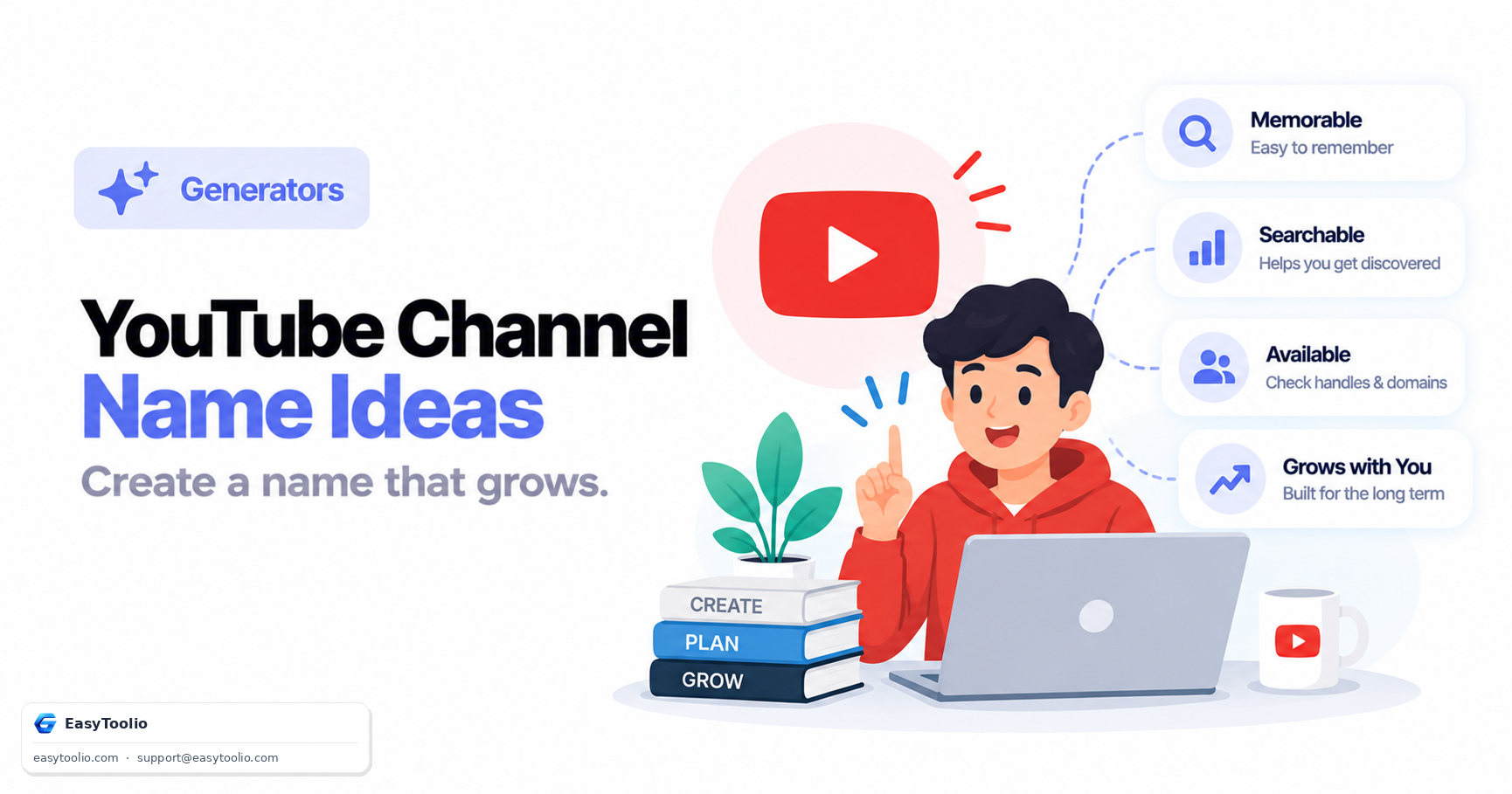
Memorable means a viewer who watches one video can recall your channel name a week later without looking it up. Short names, invented words, and names with a rhythm or alliteration tend to stick better than long, generic descriptive phrases.
Searchable means someone who half-remembers your name, or is searching for content in your niche, can actually find you. A name that's a real, distinctive word or phrase performs better in YouTube's and Google's search than a name that's a generic term already saturated by thousands of other results, or a deliberately unusual spelling that people can't guess.
Niche-relevant doesn't require literally naming your topic — plenty of successful channels use an invented brand name with no topical hint at all — but if you do choose a descriptive name, it should accurately signal what a viewer will get, since a mismatched name creates a first-impression gap that costs you the click.
Consistently available means the same or a close-enough variant of the name is free as a YouTube handle, a domain name if you plan a companion website, and your key social handles (Instagram, TikTok, X). Fragmented branding — a different name or handle on every platform — makes it measurably harder for viewers to find and follow you across platforms.
Common Naming Patterns
| Pattern | Example Structure | Trade-off |
|---|---|---|
| Personal name + niche word | "[Name] Cooks", "[Name] Codes" | Easy to build personal brand loyalty; limits pivoting to unrelated topics later |
| Invented/coined word | A made-up brandable word | Highly ownable and trademark-friendly; requires more marketing to establish recognition initially |
| Keyword-first, SEO-oriented | Literal topic words combined ("DailyTechReviews") | Easier for search discovery early on; can feel generic and harder to differentiate |
| Wordplay/pun on the niche | A pun tied to the content category | Memorable and shareable when it lands; risks feeling gimmicky if the content tone is serious |
| Tone/personality word | A word evoking energy, humor, or expertise without naming the topic | Flexible for future content pivots; requires more context for a first-time viewer to understand the channel |
Keyword-first names can genuinely help early discoverability, since YouTube and Google both weigh channel names in search relevance to some degree, but the trade-off is a name that's harder to trademark, harder to differentiate from competitors doing the same, and awkward to pivot away from later.
Length and Pronunciation Pitfalls
A channel name that's hard to pronounce correctly from hearing it in a video, a podcast mention, or word-of-mouth referral loses a meaningful share of the audience who would otherwise have searched for it — they either misspell the search or give up. The same applies to names using unconventional spelling for stylistic reasons (swapped letters, unnecessary numbers, or symbols); it can look distinctive on-screen but actively works against someone trying to find you again later purely from memory.
As a practical guideline, names under roughly three syllables that use standard spelling tend to survive the "heard it once, can I find it again" test far better than longer or intentionally-misspelled alternatives.
Checking Availability Before You Commit
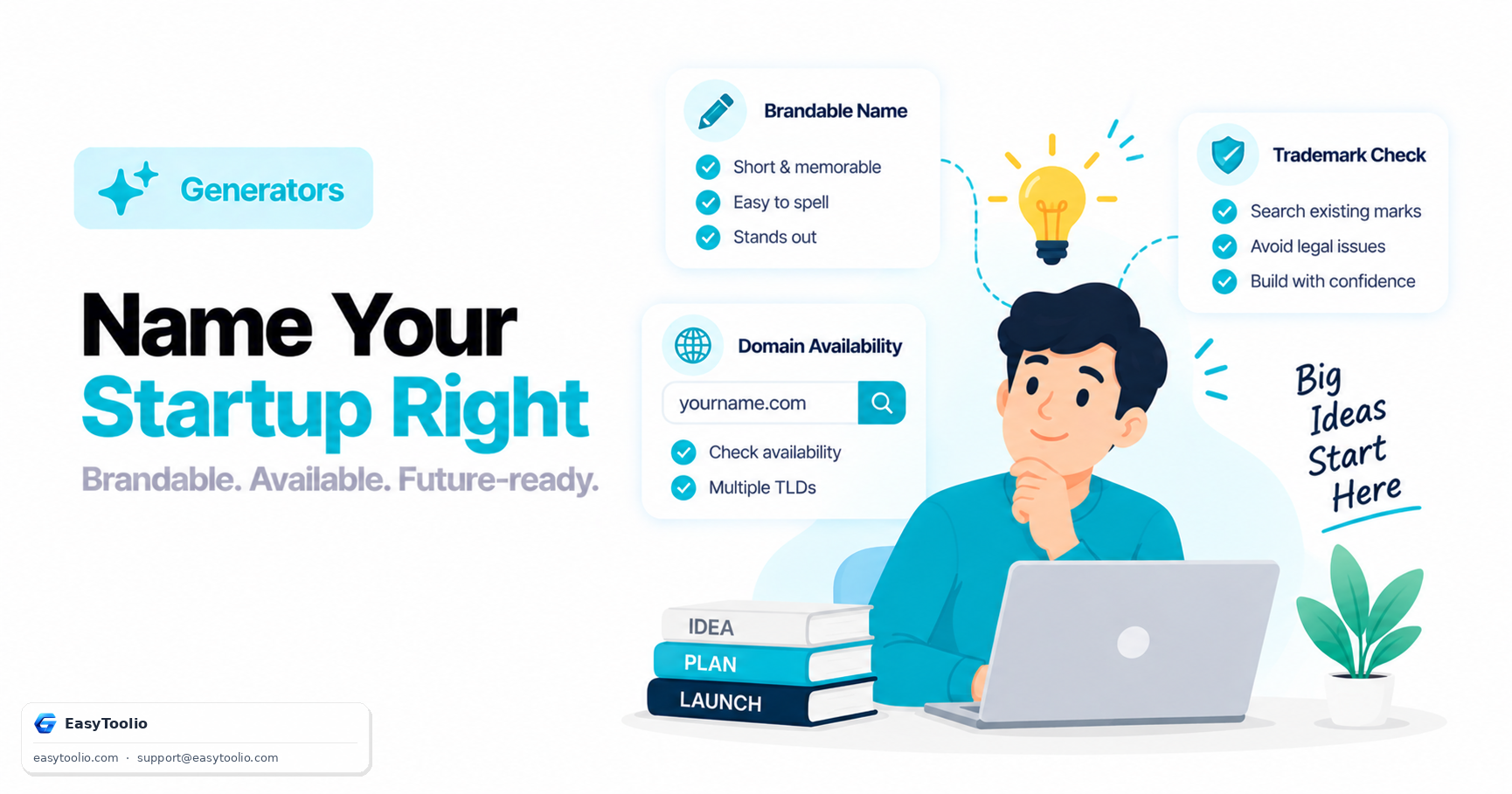
Before finalizing any name, check it across every surface where consistency matters:
- YouTube handle — search directly on YouTube to confirm the exact handle isn't taken.
- Matching domain — even if you don't need a website immediately, securing the domain early prevents someone else from claiming it once your channel gains traction.
- Key social handles — Instagram, TikTok, and X at minimum, since cross-promotion is central to most channel growth strategies.
- A basic trademark search — a quick search of existing registered trademarks in your content category avoids a costly rename down the line if a similarly-named, already-trademarked brand objects later.
Generating a batch of name candidates first, then filtering by availability, is far more efficient than falling in love with one name and discovering afterward that it's taken everywhere that matters. Generate dozens of on-brand name ideas instantly with our free YouTube channel name generator and check them for availability before you commit.
Frequently Asked Questions
Can I change my YouTube channel name later without losing subscribers?
Yes, technically — your subscriber count carries over when you rename a channel. However, existing brand recognition, external links using your old handle, and any accumulated word-of-mouth referencing the old name are disrupted, so frequent renaming does have a real growth cost even though the subscriber number itself doesn't reset.
Should my channel name include keywords for SEO?
It can help modestly with search discoverability, but YouTube's recommendation and search algorithms weigh video titles, descriptions, tags, and watch-time signals far more heavily than the channel name itself. A keyword-stuffed channel name is a minor discoverability boost at best, and a real cost to brandability and memorability if pursued too literally.
How long should a YouTube channel name be?
There's no hard rule, but names in the roughly 2-4 syllable range tend to be easiest to remember, pronounce, and search for correctly. YouTube's technical character limit for handles is generous, but usability, not the platform's technical cap, should be the actual constraint you're designing around.
What if the exact name I want is already taken?
Try a close variant with a different word order, a niche-specific modifier, or a different but related word, rather than adding random numbers or underscores, which tend to look unintentional and hurt memorability. If a strong variant still isn't available, it's often worth reconsidering the name entirely rather than settling for an awkward workaround.
References: YouTube Creator Academy guidance on branding and channel discoverability; general trademark search practices via USPTO's public trademark database.