Sovereign Guaranteed Tax-Free Savings
What is Public Provident Fund (PPF)?
The Public Provident Fund (PPF) is a popular long-term savings-cum-investment scheme introduced by the Ministry of Finance in India. Designed to mobilize small savings and offer tax security, PPF accounts are backed by the central government, meaning the principal amount and accrued interest are fully guaranteed.
PPF features the highly coveted Exempt-Exempt-Exempt (EEE) status. The money invested qualifies for deduction under Section 80C, the interest earned compounds annually tax-free, and the entire maturity proceeds are completely exempt from wealth and income tax. However, it requires a mandatory 15-year lock-in.
Flexible Tenure Capital Preserver
What is a Fixed Deposit (FD)?
A Fixed Deposit (FD) is a financial instrument offered by commercial banks, cooperative banks, and NBFCs. It enables investors to deposit a lump sum amount for a fixed period—ranging from 7 days up to 10 years—at a pre-determined, guaranteed interest rate that is higher than regular savings accounts.
Unlike PPF, Fixed Deposits offer excellent liquidity as they can be broken prematurely in times of emergency. However, FDs do not come with sovereign backing (instead, they are insured by the DICGC up to ₹5 Lakh per bank) and the interest earned is fully taxable according to your marginal tax slab rate, which can drag down net returns.
Returns & Annual Compounding Comparison
PPF rates are regulated by the Government of India and remain uniform across all banks and post offices. Interest compounds annually and is calculated on the lowest balance in your PPF account between the 5th and the last day of each month. Therefore, to maximize returns, PPF savers should deposit their funds before the 5th of the month or in a single lump sum at the start of the financial year (April 1st to 5th).
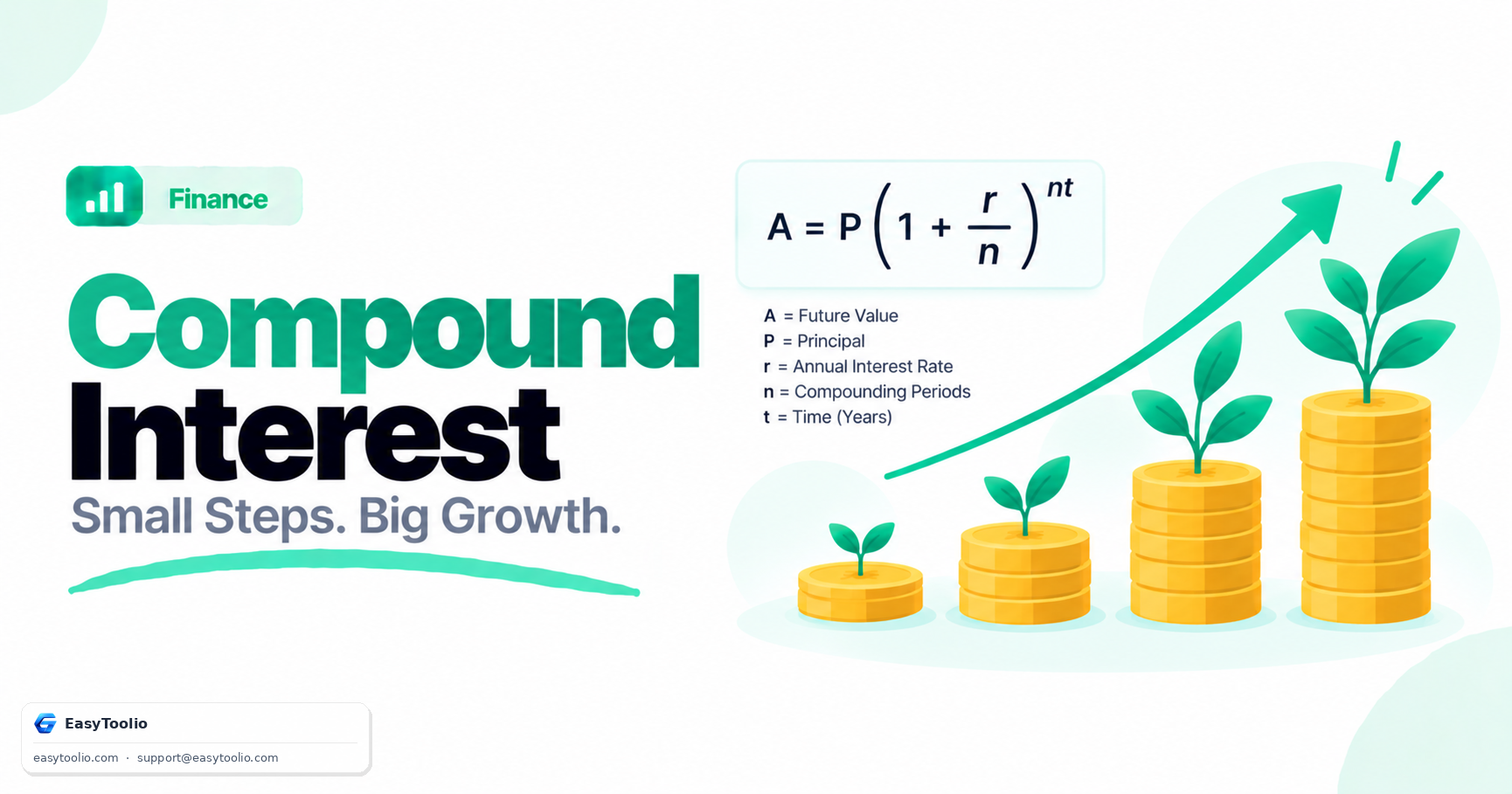
Bank FDs, on the other hand, compound quarterly. While quarterly compounding generates a slightly higher effective annual yield compared to annual compounding for the same nominal rate, the taxable nature of FD interest severely dampens its compounding velocity over long horizons.
Tax Benefits Comparison: EEE vs EET/Taxable
The single biggest differentiator is taxation. PPF is one of the very few savings instruments in India that enjoys Exempt-Exempt-Exempt (EEE) status. This means:
1. Investment is exempt: You can deduct contributions from your taxable income up to ₹1.5 Lakhs.
2. Interest is exempt: All interest earned over the 15-year tenure is completely tax-free.
3. Maturity is exempt: When you withdraw the accumulated corpus at maturity, you pay ₹0 in taxes.
Bank FDs are taxed under the EET category or are fully taxable. Interest earned on a standard FD is added to your annual income and taxed at your marginal slab rate (up to 30%+ surcharge and cess). Furthermore, banks deduct 10% TDS if interest income across the bank branches exceeds ₹40,000 (₹50,000 for senior citizens). Even for 5-Year Tax Saver FDs, the 80C deduction applies only to the investment amount, while the yearly interest earned remains fully taxable.
Liquidity, Lock-in Periods & Extensions
If flexibility is your primary requirement, bank FDs outperform PPF. FDs allow premature closure at any point. If you need cash, you can close the FD instantly online or through your branch, accepting a small interest rate reduction penalty (usually 0.5% to 1.0%).
PPF enforces a strict lock-in of 15 years. You cannot close the account prematurely unless 5 financial years have completed, and only for specific circumstances (medical treatment, higher education, or change in residency status) subject to a 1% interest rate reduction penalty. However, you can make partial withdrawals up to 50% of the account balance at the end of the 4th preceding year or the preceding year (whichever is lower) starting from the 7th financial year.
Risk and Safety Comparison: Sovereign vs Bank Guarantee
PPF holds the highest possible safety rating in India because it is established by an Act of Parliament and backed by a Sovereign Guarantee. The government cannot default on its PPF obligations, making your capital completely risk-free. Moreover, a PPF account balance cannot be attached by any decree or order of a court in respect of any debt or liability.
Bank FDs are backed by the strength of the issuing bank. To protect depositors, the RBI insures bank deposits up to a maximum of ₹5,00,000 per depositor per bank (covering both principal and interest) through the DICGC. Deposits exceeding ₹5 Lakh at a single bank carry default risk in the rare event of bank failure.
Long-Term Wealth Creation & Inflation Impact
Inflation constantly erodes the purchasing power of your money. If inflation averages 6.0% and your bank FD returns 7.0%, your real pre-tax return is only 1.0%. After paying a 30% tax, your post-tax return is 4.9%, meaning you are actually losing purchasing power (-1.1% real return) in a bank FD.
Because PPF is tax-exempt, a 7.1% interest rate translates directly to a 7.1% post-tax return. Against a 6.0% inflation rate, PPF preserves and slowly grows your purchasing power (+1.1% real return) over its 15-year period. Over a long tenure, this positive real yield compounded annually builds a significantly larger retirement nest egg.
PPF vs FD: Which is Better?
The ideal investment choice between PPF and bank FD depends heavily on your investment horizon, tax bracket, and liquidity needs.
When to Choose PPF
- You are in the 20% or 30% tax slab and want to save taxes.
- You want risk-free, long-term wealth creation with a sovereign backing.
- You are investing for long-term goals (child's education, marriage, retirement).
- You can lock away your capital for 15 years without needing immediate liquidity.
- You want a disciplined annual or monthly savings mechanism.
When to Choose Fixed Deposit (FD)
- You have short-to-medium-term goals (under 5-7 years).
- You want high liquidity and the option to withdraw funds instantly.
- You have a lump sum windfall larger than ₹1,50,000 to invest.
- You fall into the 0% or 10% tax slab, where tax drag is negligible.
- You are a senior citizen seeking regular monthly/quarterly interest payouts.