Official Definition
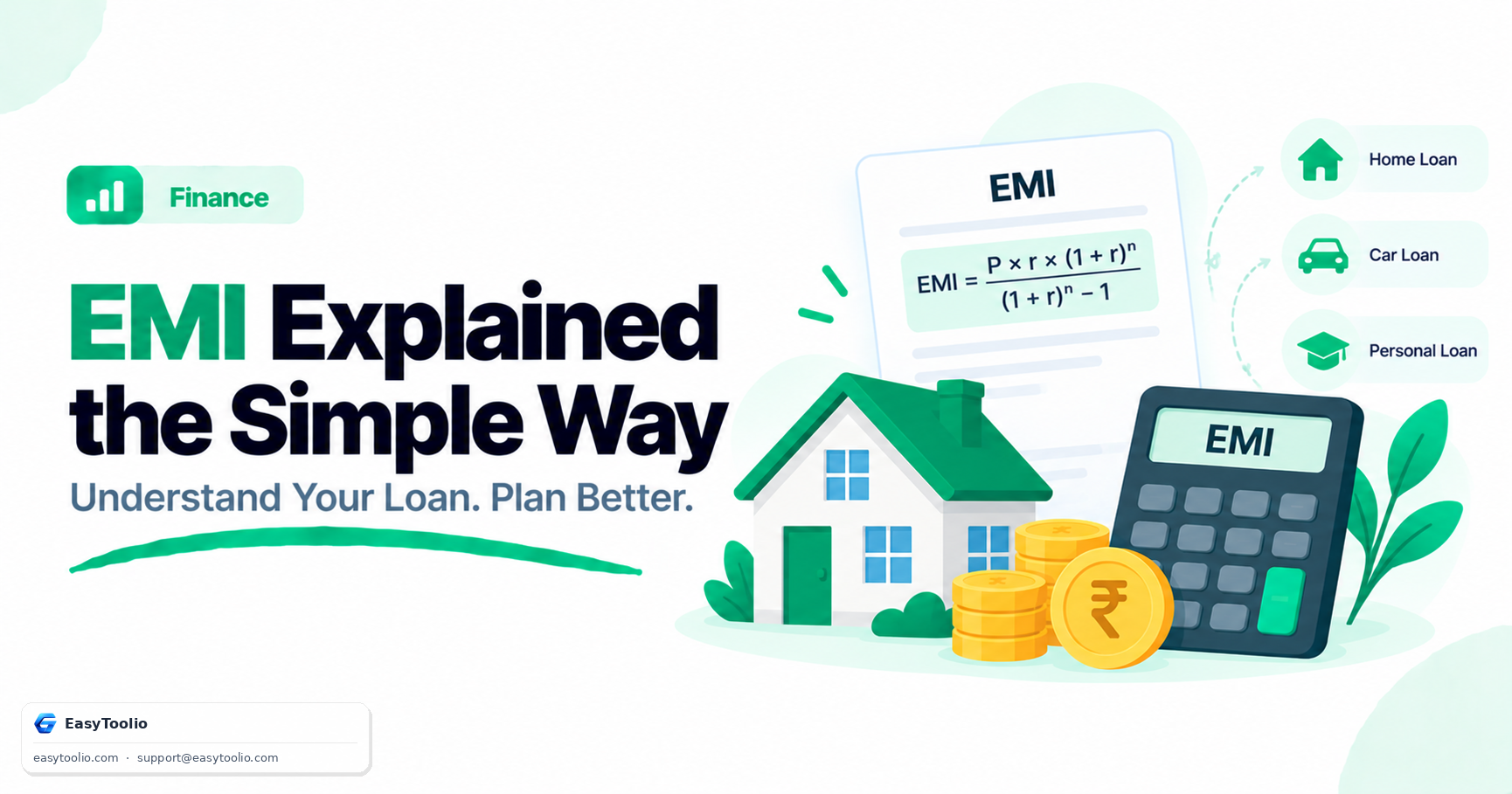
An Equated Monthly Installment (EMI) is a fixed payment amount made by a borrower to a lender at a specified date each calendar month.
Detailed Explanation
In-Depth Guide
Key Takeaway
An Equated Monthly Installment (EMI) is the fixed payment amount paid by a borrower to a lender at a specified date every month until a loan is paid off in full. EMIs are designed to provide financial predictability, allowing individuals to spread large purchases like homes, cars, or education over manageable monthly installments.
Every EMI payment is split into two components: the principal amount (the actual money borrowed) and the interest charge (the lender's fee). In the initial years of a long-term loan, a major portion of your EMI goes toward interest rather than principal. As the outstanding loan balance decreases over time, a larger share of each EMI starts reducing your principal.
Understanding how EMIs are calculated helps you compare loan offers from different banks, choose the right tenure, and decide when to make partial prepayments. Prepaying principal early in the loan lifecycle significantly reduces your total interest burden and shortens your overall loan duration.