Official Definition
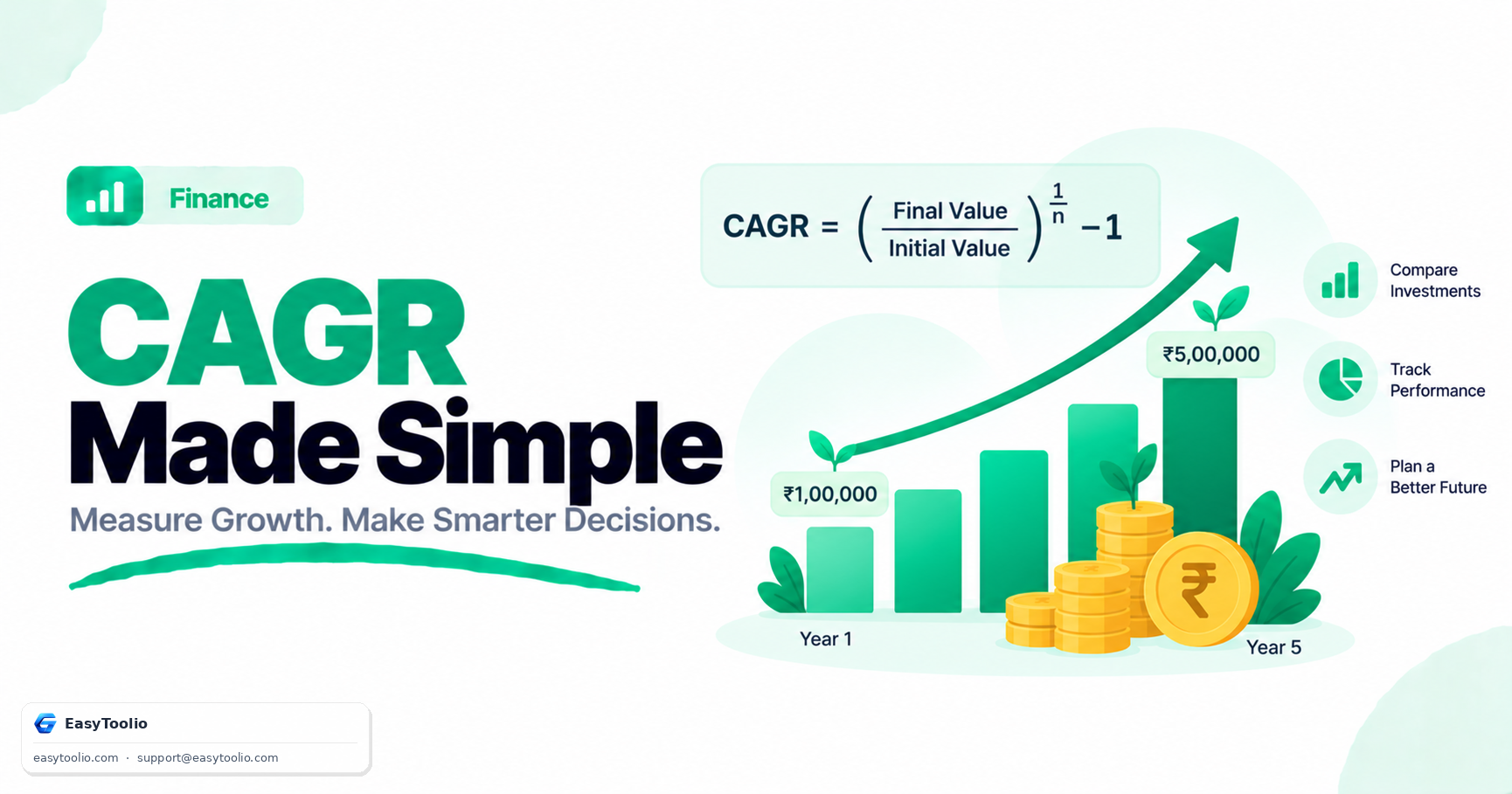
Compound Annual Growth Rate (CAGR) is the geometric progression ratio that provides a constant rate of return over a specified time period.
Detailed Explanation
In-Depth Guide
Key Takeaway
Compound Annual Growth Rate (CAGR) is a metric that measures the annualized geometric growth rate of an investment over a multi-year time horizon. It tells you the exact constant rate at which an investment would have grown if it expanded at a steady rate each year, compounding earnings annually.
In real-world financial markets, investment growth is rarely smooth; portfolio values fluctuate wildly year-to-year. CAGR smooths out these market peaks and valleys into a single annualized percentage, making it easy to compare the true performance of different assets—such as stocks, mutual funds, real estate, or gold—over 3, 5, or 10 years.
While CAGR provides a clear benchmark for long-term growth, it is important to remember that it is a historical representation. It assumes a steady annual growth path and does not account for mid-period volatility or periodic cash infusions (for which XIRR is used).