
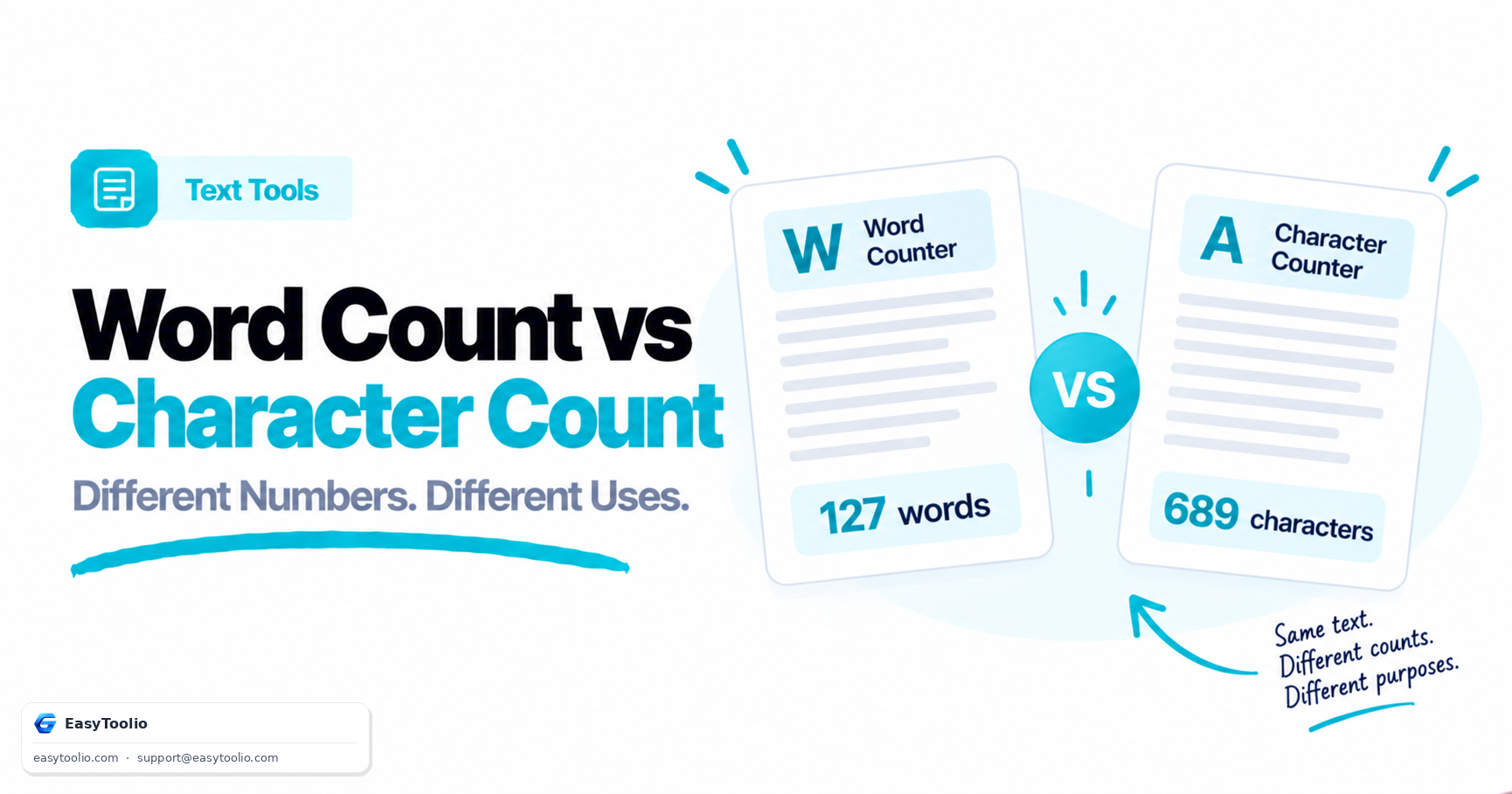
Word Counter vs Character Counter: Which One Do You Need and When
Word count and character count measure different things and matter for different tasks, from SEO meta tags to tweet limits. Here is exactly when to use each one, with real examples.

Published on November 10, 2026 • Last updated November 10, 2026
Tap a star to rate Meta Tags.
Meta tags are HTML elements placed inside the <head> section of a webpage that convey structured metadata—such as character encoding, viewport settings, and indexing directives—to search engines and browsers.
Meta tags provide crucial instructions about a webpage that are not visible in the document body.
Core standard tags include the viewport meta tag (which enables responsive layout on mobile screens), character encoding declarations (UTF-8), and robot indexing rules (index, follow, noindex).
In search engine optimization, the meta description tag provides the two-line summary shown beneath the page title on Google search engine result pages (SERPs), directly impacting organic click-through rates.
No. Major search engines, including Google, stopped using the meta keywords tag in ranking algorithms years ago because of spam. However, meta descriptions remain critical for click-through rate.
Between 140 and 160 characters. Descriptions exceeding 160 characters are usually truncated with an ellipsis in search result snippets.
Without a viewport meta tag, mobile browsers default to desktop dimensions (~980px) and scale down the page, making text unreadable without manual zooming.
Search 276+ free tools by name, or pick a category below. Every one runs instantly in your browser — no signup, nothing to install.