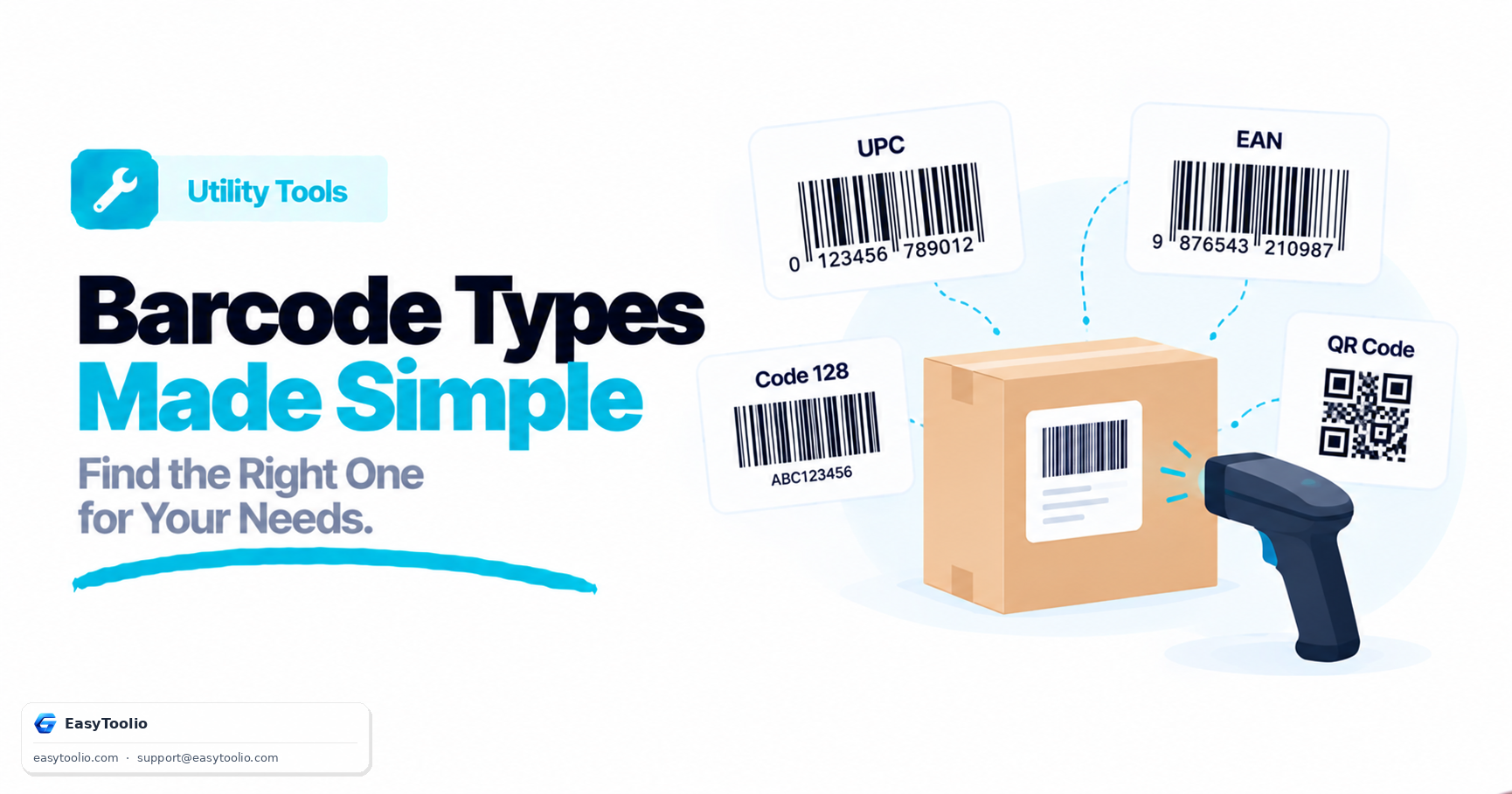
Barcodes are the unsung heroes of global logistics, retail, and manufacturing. By encoding data into a machine-readable format, barcodes eliminate manual input errors and accelerate checkout speeds.
While barcodes look similar at first glance, there are dozens of different standards (known as symbologies). Using the wrong barcode type can lead to rejected retail inventory, shipping delays, or compatibility issues with scanners. Here is an educational guide explaining the primary barcode standards, their features, and how to select the right one.
1. Linear (1D) Barcodes
Linear barcodes encode data along a single horizontal axis using a series of parallel black bars and white spaces of varying widths. They typically hold a small amount of data (usually a product ID) that references a database record.
UPC-A (Universal Product Code)
- Description: The standard retail barcode used in the United States and Canada.
- Capacity: Exactly 12 numeric digits.
- Primary Use: Scanning grocery items and consumer goods at the Point of Sale (POS).
EAN-13 (European Article Number)
- Description: The international equivalent of the UPC-A barcode, standard in Europe, Asia, and globally outside North America.
- Capacity: Exactly 13 numeric digits.
- Primary Use: Retail packaging outside the US/Canada.
Code 128
- Description: A highly dense, versatile alphanumeric barcode capable of encoding the entire ASCII character set (letters, numbers, and symbols).
- Capacity: Variable length, high density.
- Primary Use: Logistics, shipping labels (e.g. FedEx and UPS), warehousing, and supply chain tracking.
Code 39
- Description: An older barcode standard that supports uppercase letters, numbers, and a few symbols. It is less dense than Code 128, meaning the barcode is physically wider for the same amount of text.
- Capacity: Variable length, lower density.
- Primary Use: Military logistics, automotive manufacturing, and internal inventory tracking.
2. Two-Dimensional (2D) Barcodes
2D barcodes encode data both horizontally and vertically using patterns of squares, dots, or hexagons. They can hold significantly more data than 1D barcodes in a fraction of the space and can be scanned from any angle.
QR Code (Quick Response Code)
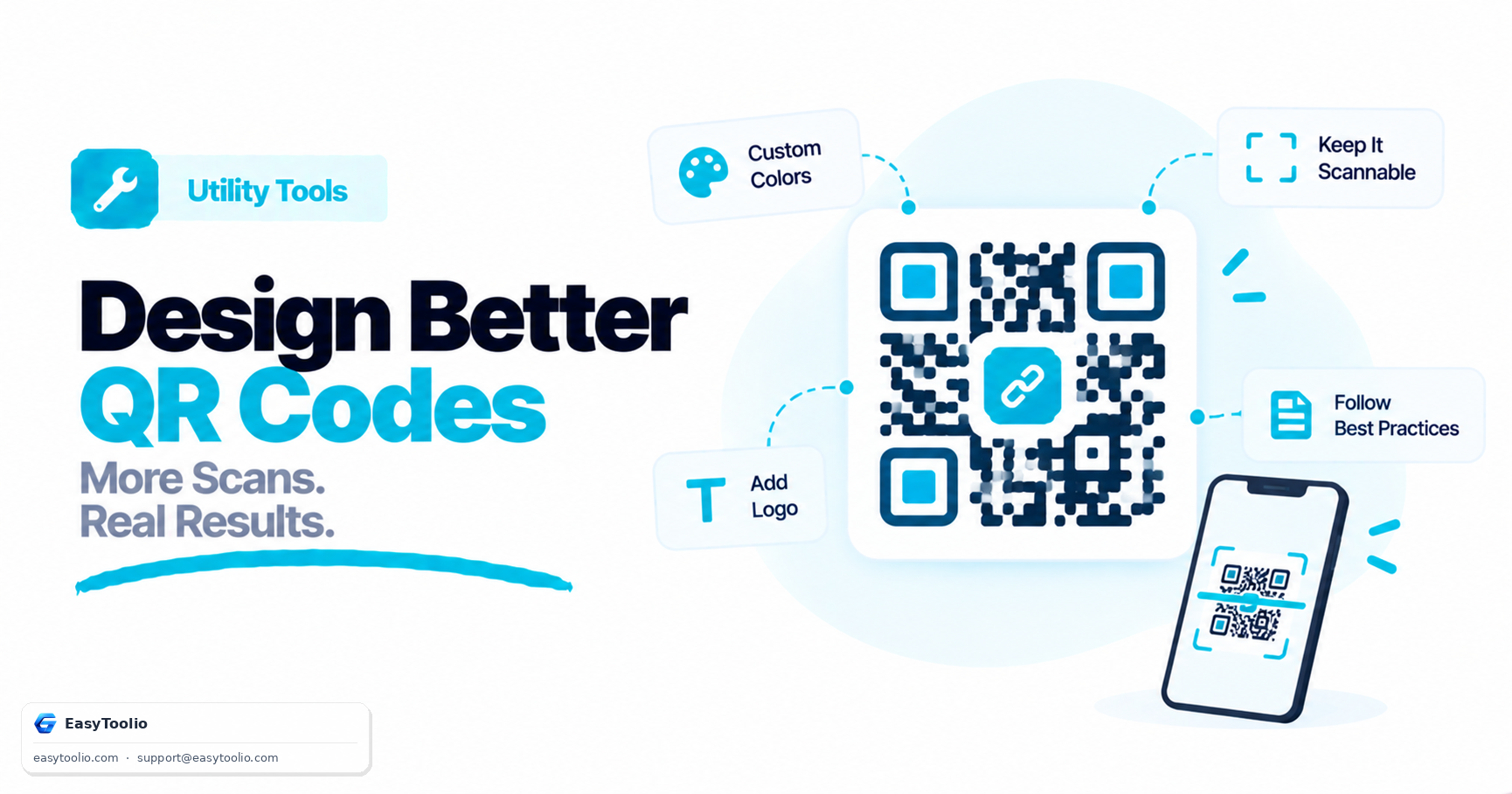
- Description: The most famous 2D barcode, recognizable by its three large locator squares in the corners. It can be scanned by any smartphone camera.
- Capacity: Up to 7,089 numeric characters or 4,296 alphanumeric characters.
- Primary Use: Marketing, restaurant menus, website URLs, Wi-Fi access, and digital payments.
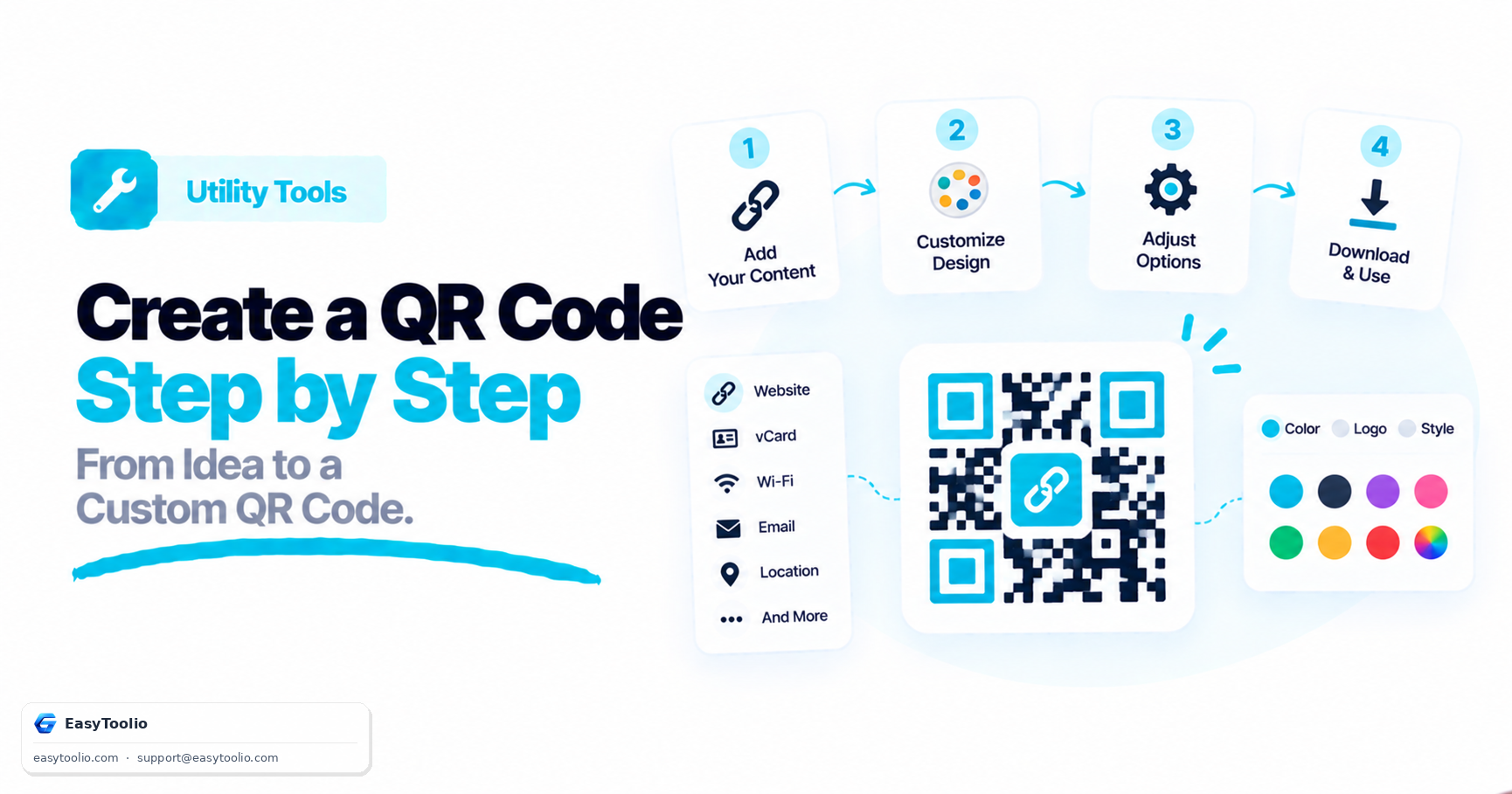
- Learn More: For a complete tutorial on generating these codes, check our step-by-step guide: How to Create a QR Code: A Step-by-Step Customization Guide.
Data Matrix
- Description: A compact 2D barcode composed of black and white cells arranged in a square or rectangular pattern. It lacks the large locator patterns of QR codes, allowing it to fit into micro-spaces.
- Capacity: Up to 3,116 numeric characters.
- Primary Use: Marking microchips, surgical instruments, and small aerospace/automotive components.
PDF417
- Description: A stacked linear barcode that can store massive amounts of structured text.
- Capacity: Up to 1,850 alphanumeric characters.
- Primary Use: Driver's licenses, identification cards, boarding passes, and commercial shipping labels.
Symbology Selection Matrix
| Use Case | Recommended Symbology | Type | Why? |
|---|---|---|---|
| Retail Products (US/Canada) | UPC-A | 1D | Required by POS scanners in North America |
| Retail Products (Global) | EAN-13 | 1D | Standard retail format globally |
| Shipping & Logistics | Code 128 | 1D | Compact, alphanumeric, industry-standard |
| Internal Inventory | Code 39 or Code 128 | 1D | Easy to generate, works with legacy hardware |
| Website Links & Menus | QR Code | 2D | Readable by standard consumer smartphones |
| Tiny Component Tracking | Data Matrix | 2D | Highest data density in extremely small areas |
| Personal Identification | PDF417 | 2D | Capable of storing full name and address offline |
Best Practices for Printing Barcodes
To ensure your barcodes scan reliably:
- Maintain the Quiet Zone: Every barcode requires a clean margin of empty space around it. If text or borders touch the barcode pattern, scanners cannot decode it.
- Color Contrast: Always use black or very dark bars on a white or light background. Avoid red, yellow, or light grey bars, as barcode scanners use red light and cannot read these colors.
- Print Resolution: Print barcodes at a minimum of 300 DPI using vector formats (like SVG or PDF) to avoid blurry, pixelated edges.
Frequently Asked Questions
Q: What is the difference between UPC-A and EAN-13 barcodes? A: UPC-A encodes exactly 12 numeric digits and is the standard in the US and Canada, while EAN-13 encodes 13 digits and is the international retail standard used everywhere else.
Q: Why won't my barcode scan even though it looks fine when printed? A: Common causes are a missing quiet zone (clean margin around the barcode), low-contrast colors like red or light grey that scanners' red light can't read, or print resolution below 300 DPI causing blurry edges.
Q: Which barcode type should I use for shipping labels? A: Code 128, since it's a compact, alphanumeric symbology used by carriers like FedEx and UPS for logistics and supply chain tracking.