
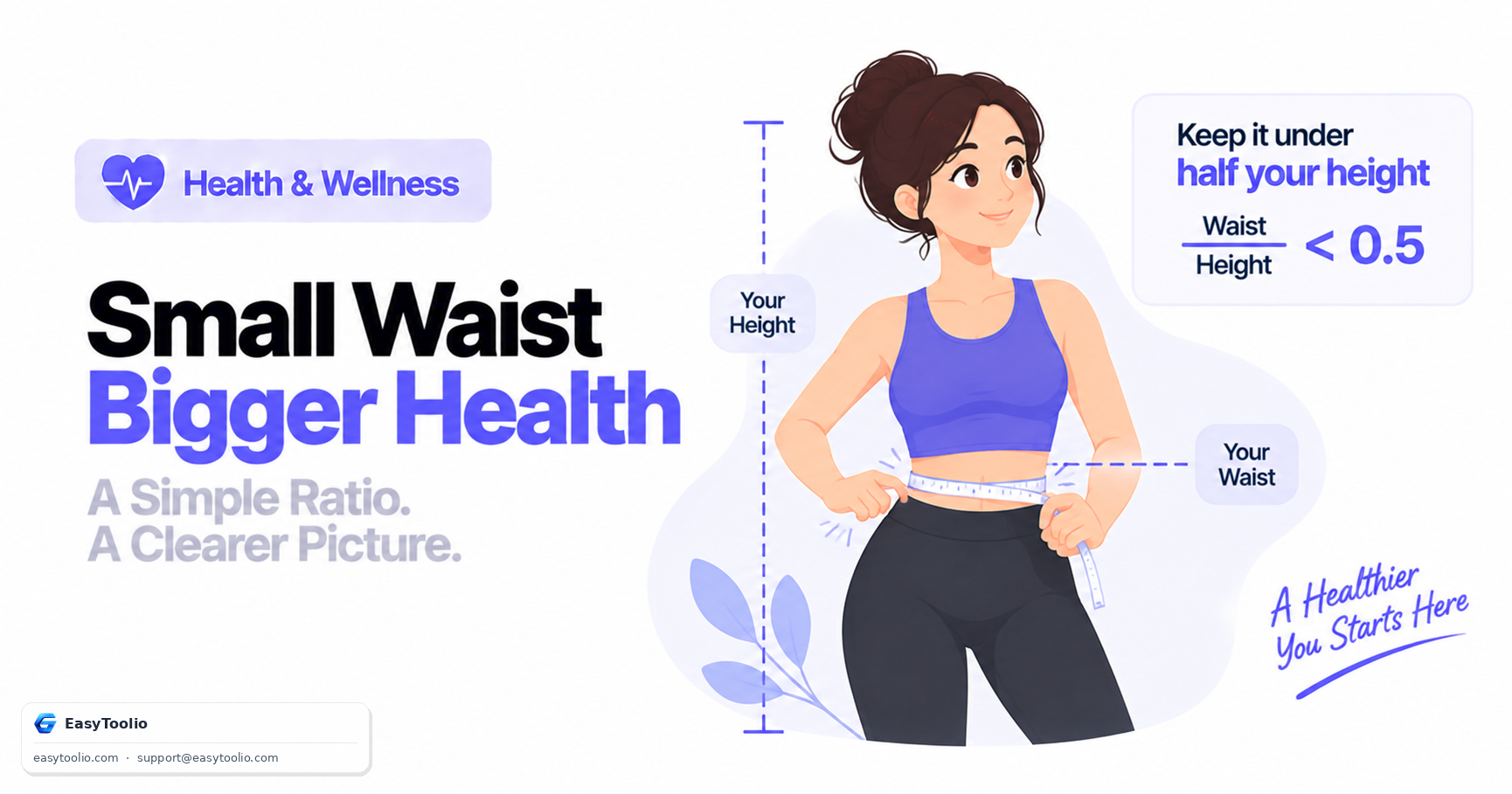
Waist-to-Height Ratio Formula

Health Formula • Published on July 30, 2026 • Last updated July 30, 2026

Mathematical Equation

$$WHtR = \frac{\text{Waist Circumference}}{\text{Height}}$$

Variable Definitions

Waist Circumference

Measured at the navel, in the same unit as height

Height

Standing height, in the same unit as waist circumference

Detailed Explanation

In-Depth Guide

Waist-to-Height Ratio is a simple screening tool for central obesity, based on the guideline of keeping your waist circumference below half your height. Unlike BMI or Waist-to-Hip Ratio, it doesn't require separate male/female cutoffs, making it a more universally applicable single-threshold measure of cardiometabolic risk across genders, ages, and even ethnicities.

How to Calculate: Step-by-Step

1. Measure waist circumference at the navel. 2. Measure standing height in the same unit. 3. Divide waist circumference by height to get the ratio. 4. Compare against the 0.5 guideline — a ratio below 0.5 (waist less than half your height) is generally considered healthy.

Worked Calculation Example

Height = 170 cm, Waist = 80 cm: - WHtR = 80 / 170 ≈ 0.47 - Ideal Max Waist = 170 × 0.5 = 85 cm - Since 80 cm is below the 85 cm threshold and the ratio (0.47) falls in the 0.43-0.52 "Healthy Range" band, this indicates healthy central fat levels.

Common Use Cases

  • Quick self-screening for central obesity without needing gender-specific cutoffs
  • Tracking abdominal fat changes over time using a single, simple ratio
  • Comparing cardiometabolic risk across people of different heights fairly

Frequently Asked Questions

Research by Margaret Ashwell and others found that a waist-to-height ratio below 0.5 is associated with substantially lower cardiometabolic risk across a wide range of ages, heights, and ethnic groups, making it a simple, memorable public health message.

Several studies suggest WHtR may be a better predictor of cardiovascular and diabetes risk than BMI because it specifically reflects abdominal fat, which is more metabolically harmful than fat stored elsewhere, whereas BMI cannot distinguish where fat is distributed.

What do you need to work out next?

Search 190+ free tools by name, or pick a category below. Every one runs instantly in your browser — no signup, nothing to install.