Notification
Go to Home All Tools Compare Glossary Blog Contact

Meta Tag Analyzer

Analyze website HTML metadata online. Check title tags, meta descriptions, canonical URLs, robots directives, Open Graph, Twitter cards, and JSON-LD structured data in real time.

SEO & Website Diagnostics

Meta Tag Analyzer

Audit title tags, meta descriptions, canonicals, robots, Open Graph, Twitter cards, and JSON-LD — then preview Google and social snippets instantly.

Health score Live SERP lab Social cards JSON-LD

Target Website

SSRF Protected
Try a sample:

Analysis runs in-memory. HTML is never stored, private IPs are blocked, and target URLs are not tracked.

Ready to inspect webpage metadata

Enter any public URL or paste HTML to see a health score, Google snippet, social cards, and a tag-by-tag audit.

Google SERP lab

Pixel-accurate title and description meters with live editing.

Social cards

Facebook, LinkedIn, and X previews from Open Graph and Twitter tags.

Fix-first audit

Issues, warnings, and passes with a copyable recommendation on each.

JSON-LD & tags

Schema types, raw tags, canonicals, robots, and hreflang in one place.

SEO Optimization

AI Meta Tag & Content Advisor

Ask AI
Education

Comprehensive Guide to Meta Tags, Open Graph & Webpage SEO Analysis

01

Title Tags & Optimal Length Constraints

The <title> tag is one of the single most important on-page SEO signals. Google typically displays the first 50–60 characters (or ~580 pixels) of a title tag in search results. Titles that are too short miss keyword opportunities, while overly long titles get truncated with an ellipsis (...).
02

Meta Descriptions & Search Snippet CTR

The meta description provides a concise summary of a webpage (recommended length: 120–160 characters). While not a direct ranking factor, a well-crafted description with a clear call-to-action significantly increases Click-Through Rates (CTR) from Search Engine Results Pages (SERPs).

03

Canonical URLs & Duplicate Content Prevention

The rel="canonical" link tag specifies the authoritative master URL for duplicate or similar pages. It prevents duplicate content penalties caused by URL parameters, HTTP/HTTPS variants, trailing slashes, or syndicated content.

04

Open Graph (OG) Meta Tags for Social Sharing

Open Graph protocols (og:title, og:description, og:image, og:url) control how your webpage appears when shared across Facebook, LinkedIn, Discord, and WhatsApp. Featuring a high-quality 1200x630px image drastically boosts social engagement.

05

Twitter Card Metadata

Twitter/X uses twitter:card, twitter:title, twitter:description, and twitter:image tags to format rich media tweets. Summary cards with large images (summary_large_image) perform best for blog posts and product pages.

06

JSON-LD Structured Data (Schema.org)

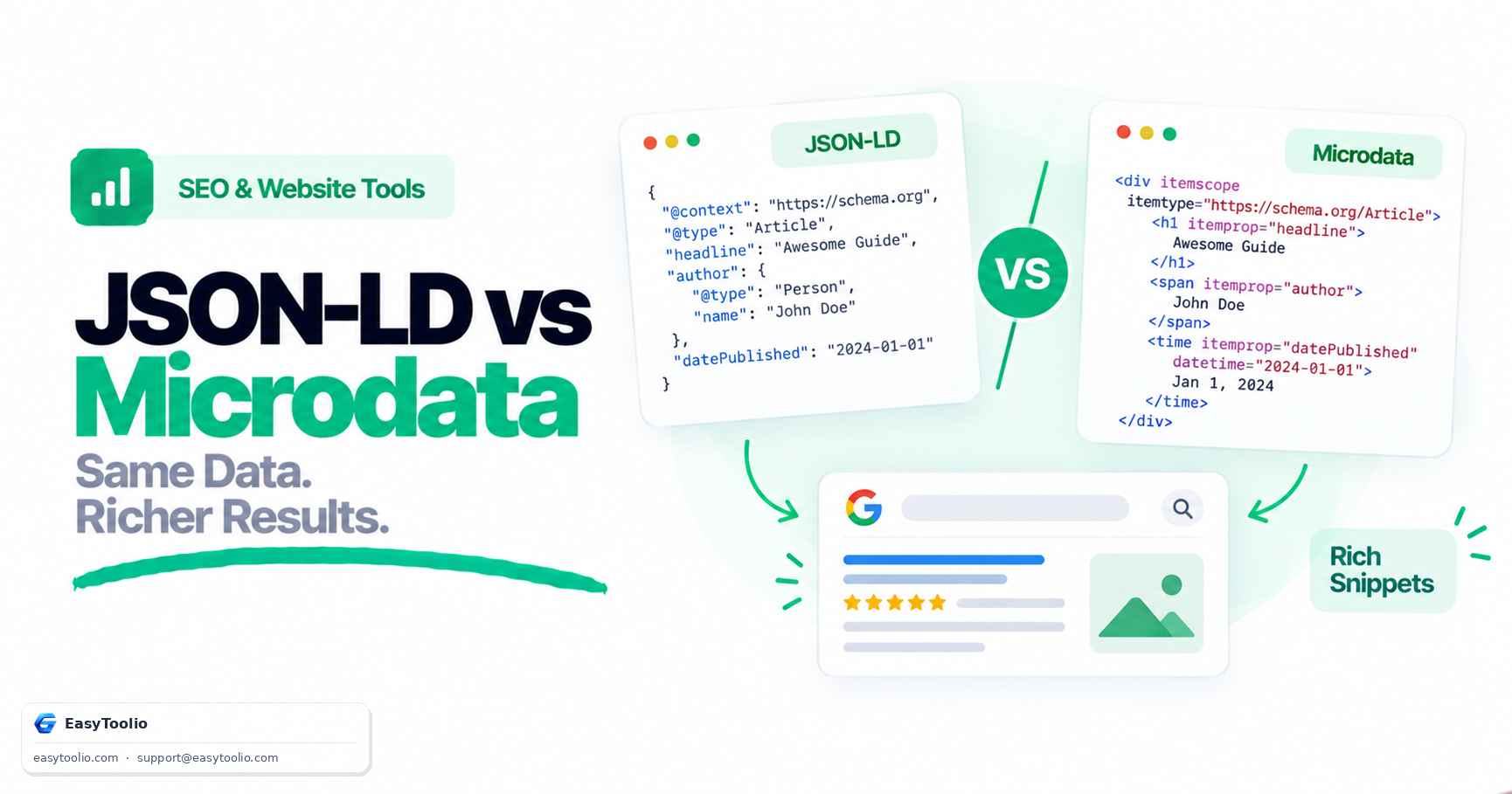
JSON-LD (JavaScript Object Notation for Linked Data) embeds structured schemas directly in your HTML to trigger Rich Snippets in Google search, such as star ratings, FAQ accordions, breadcrumbs, articles, or product prices.

Good to know

Questions, answered

Quick answers about how this tool works.

A Meta Tag Analyzer is an online SEO diagnostic tool that inspects the <head> HTML markup of a website. It extracts and evaluates title tags, meta descriptions, canonical links, robots directives, viewport settings, Open Graph social tags, Twitter cards, and JSON-LD structured data.

Simply enter the full webpage URL (e.g., https://example.com) into our search input and click "Analyze Meta Tags". Our secure backend fetches the HTML, evaluates the metadata tags, and displays a comprehensive health report along with live SERP and social media preview cards.

The recommended title tag length is generally between 50 and 60 characters (or under 600 pixels on desktop viewport displays). Keep in mind that character limits are not rigid ranking rules—search engines may truncate or rewrite titles depending on query context.

Meta descriptions are typically recommended to be between 120 and 160 characters. Descriptions longer than 160 characters may be truncated in desktop search results. Google often dynamically rewrites meta descriptions using page content matching user search queries.

What do you need to work out next?

Search 244+ free tools by name, or pick a category below. Every one runs instantly in your browser — no signup, nothing to install.