Notification
Go to Home All Tools Compare Glossary Blog Contact

Savings Goal Calculator

Find out how much you need to save regularly to reach your financial goal.

Goal inputs
₹

₹5,00,000

₹
Yrs

Goal date: September 2029

%

Illustrative assumption. Use an expected annual return as an assumption for planning. Actual returns can vary.

Contribution frequency

Required monthly saving

₹0

Required monthly saving

₹0

Based on the assumptions you entered.

Goal amount

₹5,00,000

Current savings

₹0

Estimated growth

₹0

Total contributions

₹0

Target date

—

Surplus

₹0

Return convention: Effective annual return converted to the selected contribution period.

Calculations run in your browser. This is not financial advice.

Shared links can contain the values used in this calculation.

What if I save more?

₹

This calculator provides an illustrative projection based on the assumptions you enter. Actual investment returns, inflation and timing may differ. It is not financial advice.

How the Savings Goal Calculator Works

A savings goal plan answers one question: how much do you need to set aside, and for how long, to reach a target amount. The calculator starts with your goal, any money you already have, the time available, and an assumed annual return. It then solves for the regular contribution that fills the remaining gap.

How much should I save each month?

First the current savings are grown to the target date. Any scheduled lump sums are grown as well. The leftover amount is the future value that recurring contributions must produce. That leftover is converted into a regular saving using the selected frequency and contribution timing.

How current savings affect your goal

Money already saved reduces the amount you still need to add. If current savings already cover the goal, required recurring saving is shown as ₹0 — never as a negative number — and any surplus is listed separately.

How expected returns affect savings goals

A higher assumed return lowers the required contribution because growth covers more of the gap. A 0% return reduces the plan to dividing the remaining amount across the contribution periods. The rate you enter is an assumption, not a forecast.

Inflation and future goals

If inflation is switched on, the target is increased first: future goal = current goal × (1 + inflation)^years. The same nominal return is then used. Inflation is not subtracted from return in the same run, which would double-count it. Real return is shown separately as (1 + nominal) / (1 + inflation) − 1.

Step-up savings and lump sums

An optional annual increase raises the contribution after each full year. Optional lump sums are added at the start of the year you choose. Both are included in the projection table rather than approximated as a flat average.

Contribution timing

End of period means the deposit is added after that period’s growth. Beginning of period means it is added first and then earns return for that period. The default is end of period.

Savings goal formula

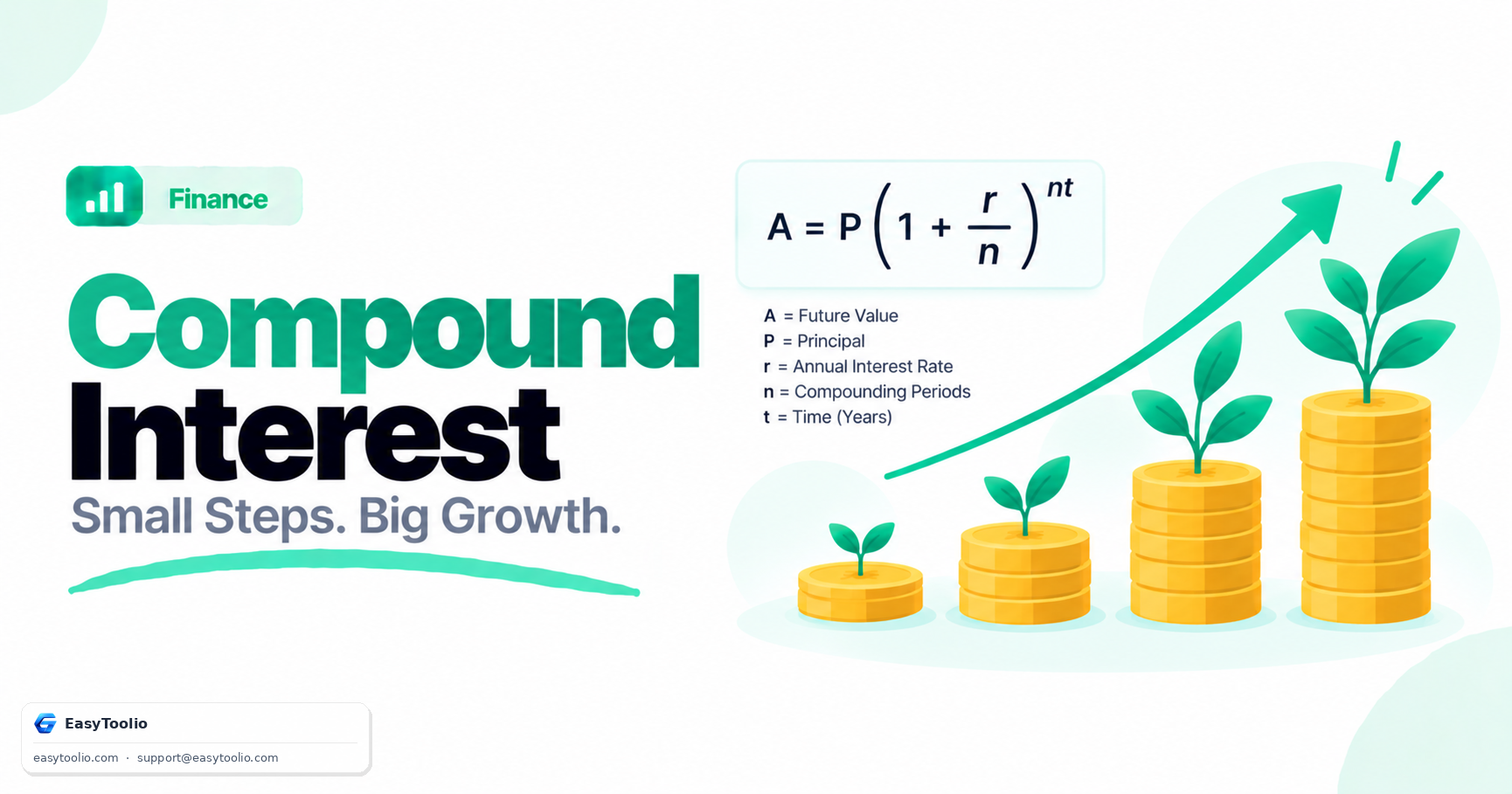
Periodic rate i = (1 + r)^(1/m) − 1, where r is the effective annual return and m is contributions per year. Required contribution = (target − future value of current savings and lump sums) / future value of a unit contribution schedule. With 0% return this becomes (target − current savings) / number of periods.

How to use the calculator

Use Save for a Goal when you know the target and date. Use When Will I Reach My Goal? when you know how much you can save. Use How Much Will I Have? to project a contribution plan without a fixed target.

Education

How a Savings Goal Is Calculated

01

Current savings growth

Your starting balance is compounded at the same periodic rate as later deposits. That grown balance is subtracted from the target before the calculator solves for a regular contribution, so a larger starting amount always reduces the required saving.

02

Recurring contributions

Monthly, quarterly, half-yearly or yearly deposits are modelled period by period. The selected timing (end or beginning of period) is applied consistently in the result, chart, table and exports.

03

Return and inflation assumptions

Expected return is an illustrative annual assumption converted with i = (1 + r)^(1/m) − 1. Inflation, when enabled, scales the goal first. The tool does not recommend products or treat any rate as guaranteed.

04

Related planning tools

Use the SIP Calculator when you already know a market-linked installment and want future value. Use Compound Interest or the Fixed Deposit Calculator for a single lump sum. Use Net Worth to list what you already own.

Good to know

Questions, answered

Quick answers about how this tool works.

It depends on the target amount, how much you already have, how long you have, contribution frequency, and the return assumption you enter. The Save for a Goal mode solves for the regular amount that fills the remaining gap after current savings are grown to the target date.

Yes. Current savings are grown to the goal date first. Only the leftover amount needs to come from new contributions, so a larger starting balance reduces the required regular saving.

A higher assumed annual return lowers the required contribution because growth covers more of the gap. A 0% return divides the remaining amount evenly across the contribution periods. The rate is an illustrative assumption, not a guaranteed outcome.

If current savings already cover the goal, required recurring saving is shown as zero — never as a negative amount — and any surplus is listed separately.

What do you need to work out next?

Search 244+ free tools by name, or pick a category below. Every one runs instantly in your browser — no signup, nothing to install.

More Finance tools