Notification
Go to Home All Tools Compare Glossary Blog Contact

Schema Markup Validator & Analyzer

Validate and analyze Schema markup, JSON-LD, Microdata, and RDFa from public website URLs or pasted code snippets. Inspect syntax errors, entity relationships, and property rules.

Structured Data & JSON-LD Diagnostics

Schema Markup Validator & Analyzer

Validate and analyze Schema markup, JSON-LD, Microdata, and RDFa from public website URLs or pasted code snippets. Find syntax errors, entity relationships, and property rules online.

Sample Presets:
SSRF & Privacy Protected

URL fetching features automatic SSRF IP validation blocking private and loopback networks. Pasted code snippets and fetched HTML are parsed in memory and never stored.

Ready to Validate Structured Data

Enter any public website URL or paste a JSON-LD snippet on the left to extract @type entities, verify required properties, and detect syntax errors.

Schema

AI Structured Data Advisor

Ask AI

Deep Dive: Master Schema Markup & JSON-LD Structured Data

Schema markup provides search engine crawlers with structured context about your content. Using JSON-LD script blocks, webmasters can define Articles, Products, Organizations, and Breadcrumbs to enhance search engine visibility and rich snippets.

Education

Understanding Schema.org Structured Data & JSON-LD Rich Snippets

01

What is Schema.org Structured Data?

Schema.org is a collaborative vocabulary created by Google, Microsoft, Yahoo, and Yandex to define structured metadata on web pages. Implementing Schema.org markup helps search engines understand page context and unlock Rich Snippets in search results.
02

JSON-LD vs Microdata vs RDFa

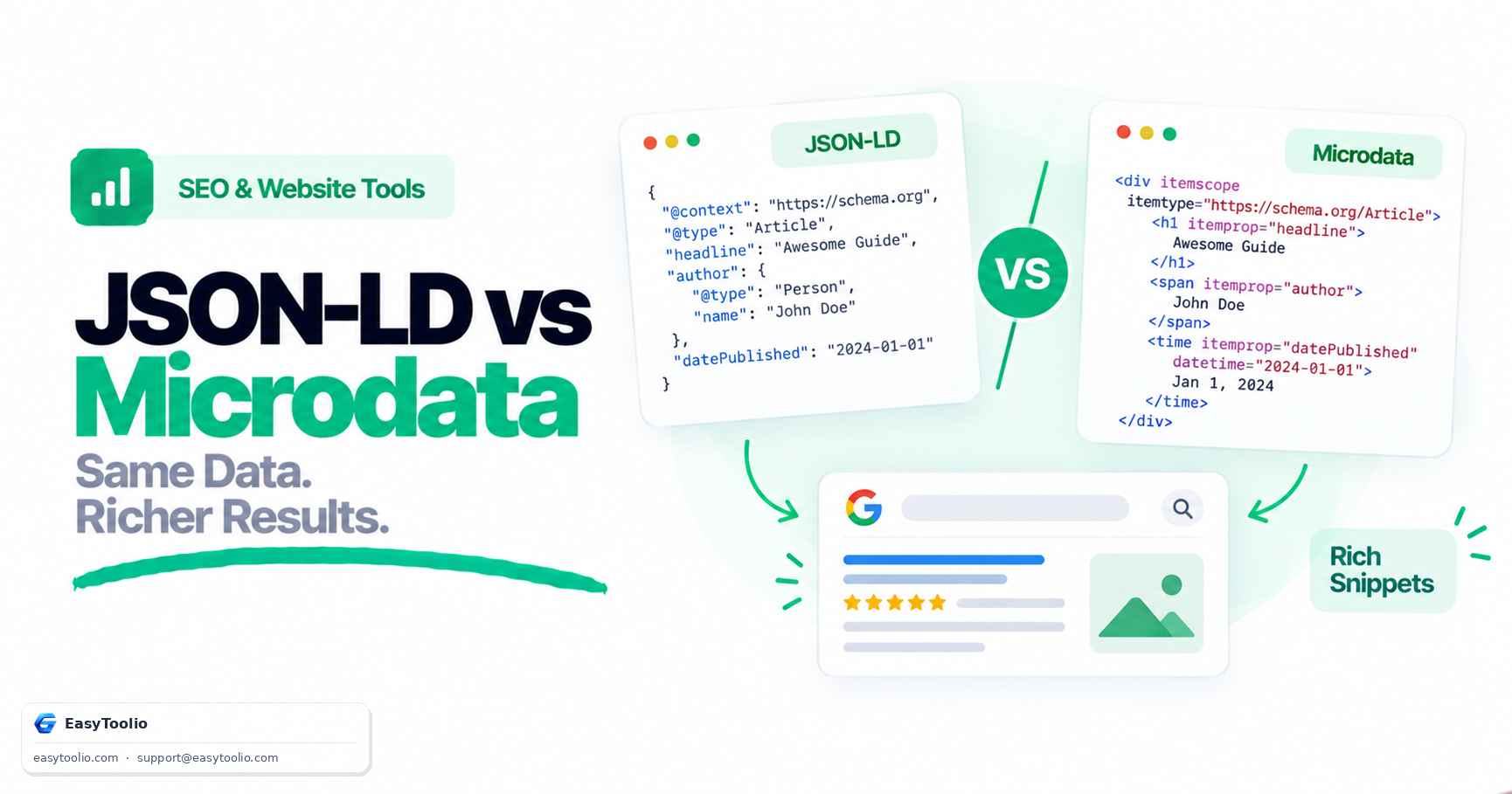
Google explicitly recommends JSON-LD (JavaScript Object Notation for Linked Data) over Microdata or RDFa. JSON-LD scripts are embedded cleanly inside <script type="application/ld+json"> blocks in the document <head> or <body>, separating data schemas from visual HTML.

03

Common Schema Types (Article, Product, FAQPage, Organization)

Popular schema types include Organization/LocalBusiness for brand details, Article/BlogPosting for editorial content, Product & Offer for e-commerce pricing, FAQPage for collapsible search accordions, and BreadcrumbList for rich SERP navigation paths.

04

Schema Validation & Rich Result Eligibility

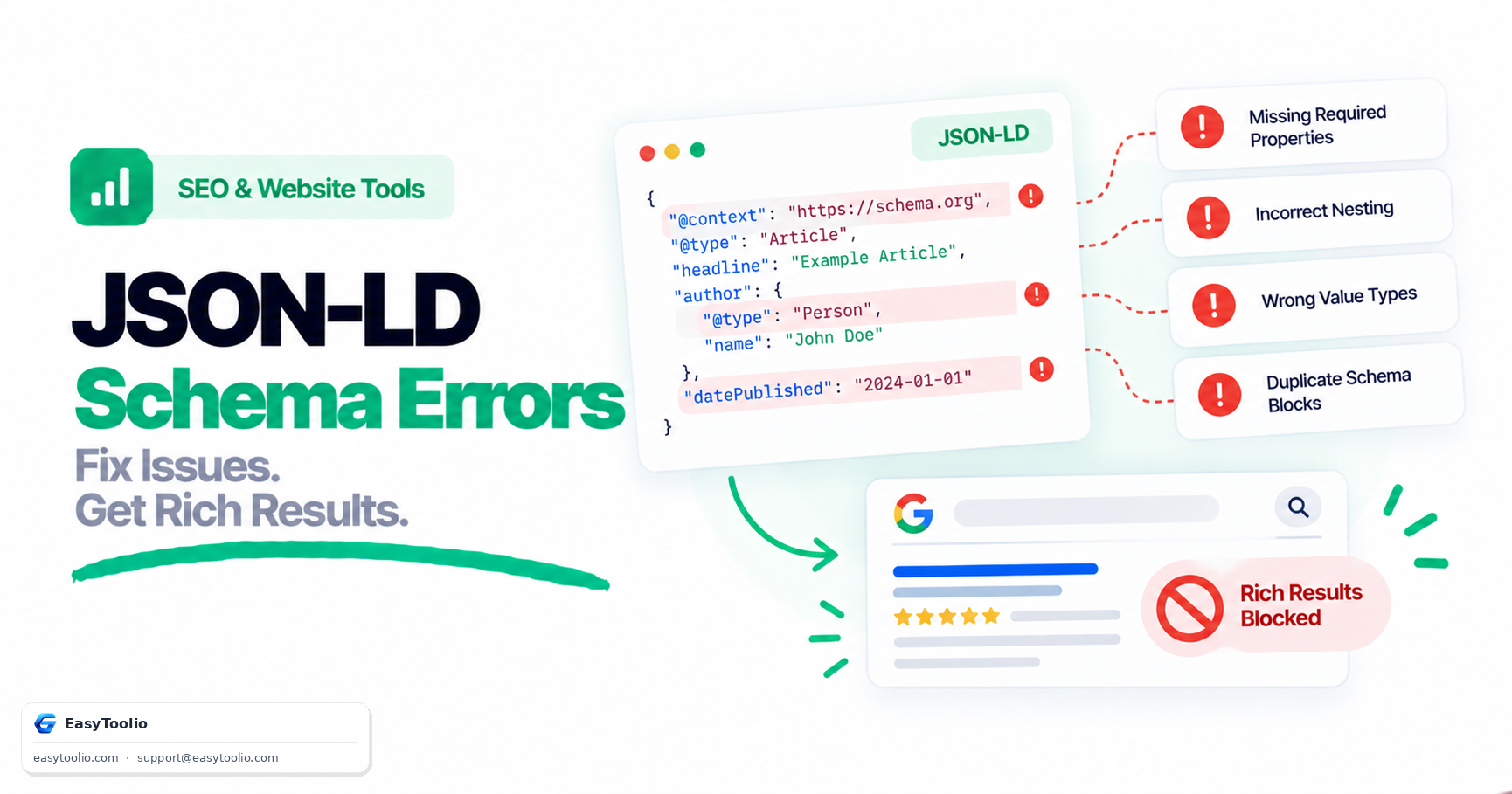
Validating JSON syntax and required Schema.org @type properties ensures search engines parse your markup without syntax errors. Missing required fields (such as image in Article or price in Offer) may prevent rich snippet eligibility.

Good to know

Questions, answered

Quick answers about how this tool works.

A Schema Markup Validator is an online diagnostic tool that inspects structured data (JSON-LD, Microdata, RDFa) embedded within webpage HTML or pasted code snippets. It verifies syntax correctness, identifies detected schema entities (@type), and checks for missing required or recommended properties.

JSON-LD (JavaScript Object Notation for Linked Data) is a lightweight data format used to encode structured metadata in `<script type="application/ld+json">` blocks. Google and major search engines recommend JSON-LD over Microdata or RDFa because it keeps schema metadata decoupled from HTML styling.

In JSON-LD, `@type` defines the Schema.org entity category (e.g. Article, Product, Organization), `@id` specifies a unique URI identifier for cross-referencing nodes, and `@graph` allows bundling multiple related entities into a single structured array.

Syntax Valid means the JSON code is syntactically correct without parsing errors. Schema.org Valid means the `@type` and properties conform to official Schema.org vocabularies. Rich Results Eligibility indicates whether the markup fulfills search engine requirements for special search displays.

What do you need to work out next?

Search 244+ free tools by name, or pick a category below. Every one runs instantly in your browser — no signup, nothing to install.