Ask a Vedic astrologer what a birth chart "says" and they won't start with your sun sign — they'll start with the houses. The 12 houses, or bhavas, divide life into distinct domains, and where your planets sit among them is what actually shapes a reading, far more than which zodiac sign the sun happened to occupy at birth.
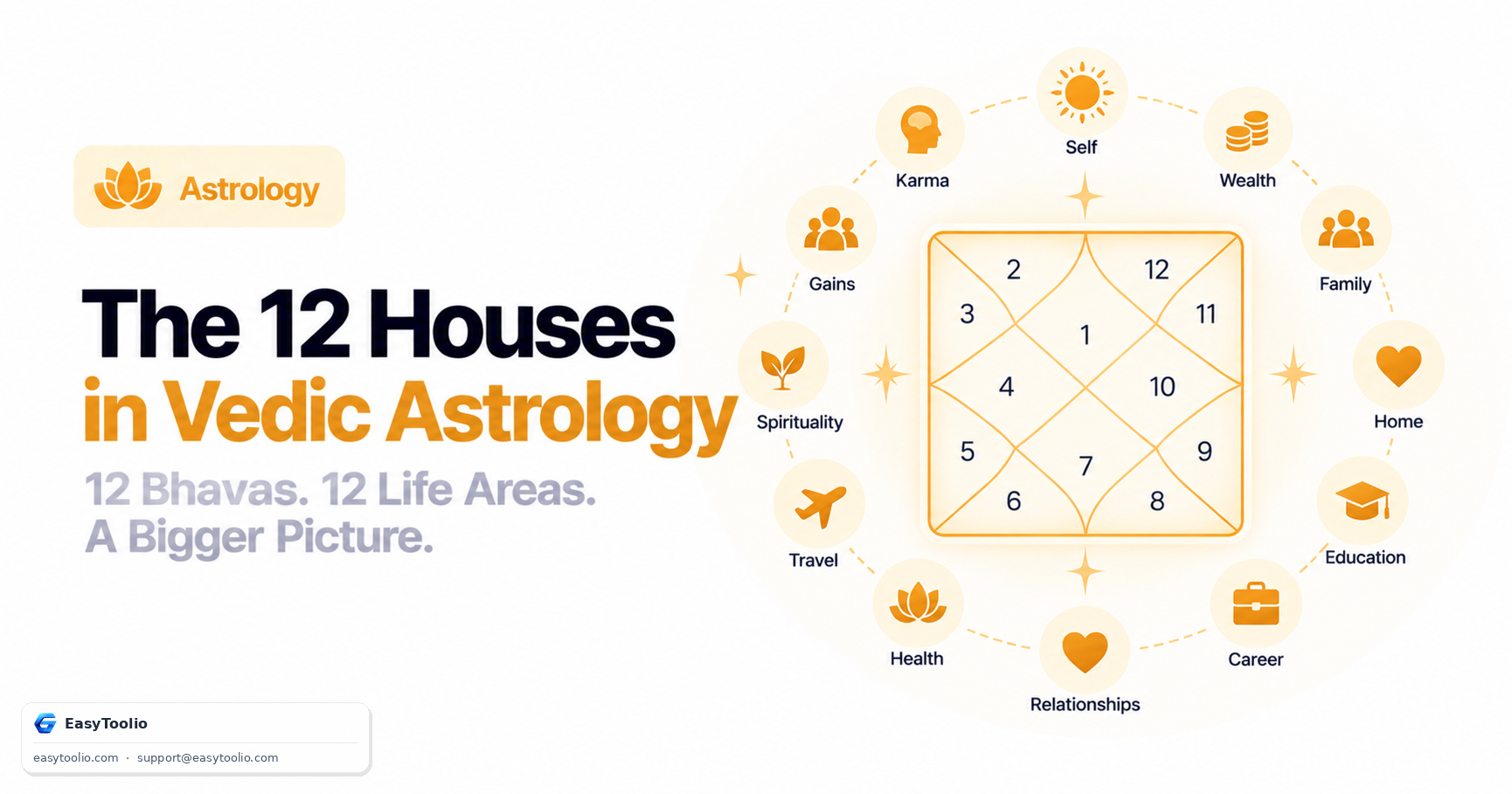
Direct Answer: In Vedic astrology, a birth chart (kundli) is divided into 12 houses (bhavas), each governing a specific life domain: 1st house = self/personality, 2nd = wealth and family, 3rd = courage and siblings, 4th = home and mother, 5th = children and creativity, 6th = health and obstacles, 7th = marriage and partnerships, 8th = transformation and longevity, 9th = fortune and higher learning, 10th = career and public life, 11th = gains and social circle, 12th = loss and spirituality. A full reading combines which planets sit in each house with which planet rules that house, which is why a proper kundli analysis — like the one produced by a kundli matching calculator — looks far beyond a single sun sign.
The 12 Houses and What Each One Governs
| House | Sanskrit Term | Governs |
|---|---|---|
| 1st | Tanu Bhava | Self, physical body, personality, overall vitality |
| 2nd | Dhana Bhava | Wealth, family, speech, accumulated resources |
| 3rd | Sahaja Bhava | Courage, siblings, short journeys, communication |
| 4th | Sukha Bhava | Home, mother, emotional foundation, property |
| 5th | Putra Bhava | Children, creativity, intelligence, romance |
| 6th | Ripu Bhava | Health, enemies, debts, daily obstacles |
| 7th | Kalatra Bhava | Marriage, business partnerships, spouse |
| 8th | Ayur/Randhra Bhava | Transformation, longevity, sudden events, inheritance |
| 9th | Dharma Bhava | Fortune, father, higher learning, spirituality, long journeys |
| 10th | Karma Bhava | Career, public reputation, authority, life's work |
| 11th | Labha Bhava | Gains, income, friendships, social networks, aspirations |
| 12th | Vyaya Bhava | Loss, expenditure, foreign travel, spiritual liberation |
Why Houses, Not Just Sun Signs, Drive a Reading
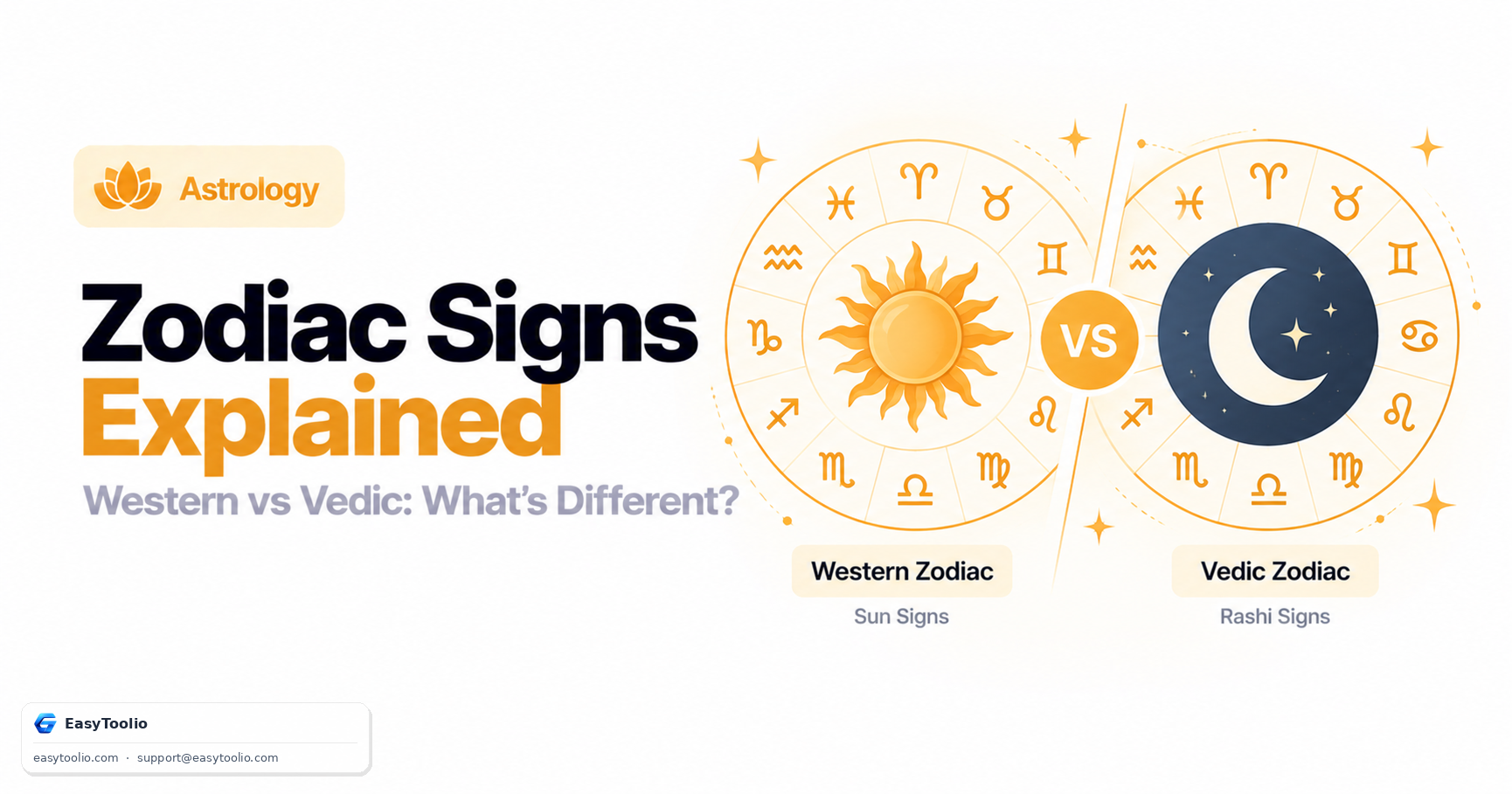
Western sun-sign astrology assigns one broad personality theme based purely on which zodiac sign the sun occupied at birth. Vedic astrology treats the sun as just one of nine grahas (planets/luminaries) that each sit in one of the 12 houses in your individual chart — meaning two people born under the same sun sign can have entirely different readings, because their sun (and every other planet) may occupy completely different houses depending on the exact time and place of birth.
This is also why Vedic astrology places heavy emphasis on accurate birth time — the houses are calculated from the ascendant (lagna), the zodiac sign rising on the eastern horizon at the exact moment of birth, and even a small error in birth time can shift the entire house framework.
How Planet Placement and House Rulership Both Matter
A full reading considers two layers simultaneously, and conflating them is one of the most common beginner mistakes:
- Which planets occupy a given house — for example, Jupiter placed in the 7th house is traditionally read as bringing wisdom, growth, and stability to marriage and partnerships.
- Which planet rules (owns) a given house, based on which zodiac sign sits on that house's cusp — the placement and condition of that ruling planet elsewhere in the chart also colors how strongly that house's themes manifest.
For example, if Venus rules your 7th house (marriage) but Venus itself sits in your 12th house (loss, foreign travel), a Vedic reading would consider both facts together — the 7th house's themes filtered through wherever its ruling planet actually sits, not read in isolation from house 7 alone.
Why a Full Kundli Reading Goes Beyond Any Single House
Because houses interact — the state of your 10th house (career) is also shaped by which planets aspect it, which planet rules it, and where that ruling planet sits — serious Vedic astrology readings (kundli analysis, matchmaking, or life-event timing) evaluate the chart as an interconnected system rather than reading any single house or sign in isolation. This is part of why kundli matching for marriage compatibility looks at multiple houses (7th for partnership, 2nd for family harmony, 4th for domestic life) together rather than relying on sun-sign compatibility alone.
Common Misunderstandings
- Treating the 1st house the same as a "sun sign" — the 1st house is actually governed by the ascendant/rising sign, a separate calculation from the sun's zodiac position.
- Reading a single planet-in-house placement in isolation — ignoring which planet rules that house and where the ruling planet sits produces an incomplete picture.
- Assuming house meanings are identical across all astrology systems — Western astrology's house system and interpretations differ from the Vedic (Jyotish) system in both calculation method and traditional meaning.
- Skipping accurate birth time — since houses are calculated from the rising sign at the exact birth moment, an inaccurate birth time shifts every house boundary in the chart.
Frequently Asked Questions
What's the difference between a house and a zodiac sign in Vedic astrology?
A zodiac sign (rashi) is a fixed 30-degree segment of the sky; a house (bhava) is one of 12 life-domain divisions of your personal chart, calculated relative to your exact birth time and location. Signs and houses overlap in every chart, but they answer different questions — the sign shows the "how," the house shows the "where in life."
Which house is considered most important for marriage compatibility?
The 7th house (Kalatra Bhava) is the primary house for marriage and partnerships, but a thorough compatibility reading also considers the 2nd house (family harmony) and 4th house (domestic happiness) alongside it, rather than relying on the 7th house alone.
Can two people born on the same day have different house placements?
Yes — house placements depend on the exact time and location of birth (which determines the ascendant), so even people born on the same calendar day in different cities, or at different times of day, can have meaningfully different house frameworks.
Why does Vedic astrology emphasize the ascendant (rising sign) so heavily?
The ascendant determines which zodiac sign occupies the 1st house, which in turn sets the order of all remaining 11 houses around the chart. It's the anchor point for the entire house system, which is why an accurate birth time is considered essential.
Is Vedic astrology's house system the same as Western astrology's?
No — while both systems use 12 houses conceptually, the calculation methods, house systems (whole-sign vs. Placidus, for example), and traditional interpretations differ between Vedic (Jyotish) and Western astrology, so readings from each system aren't directly interchangeable.
References: Classical Jyotish (Vedic astrology) texts including Brihat Parashara Hora Shastra, as commonly referenced in traditional Vedic astrology practice.