Notification
Go to Home All Tools Compare Glossary Blog Contact

Blood Sugar & Diabetes Risk Calculator

Classify your blood glucose reading, estimate your type 2 diabetes risk factors, and get general care recommendations.

Informational Reference & Privacy Notice
Notice
This calculator runs locally. No glucose levels, age profiles, or clinical health markers are saved or shared. Outputs follow standard ADA screening metrics and are for informational purposes only. Do **not** use results as a replacement for formal lab tests or doctor diagnoses.

Input Vitals

mg/dL
Min: 40 mg/dL Max: 400 mg/dL
mg/dL
Min: 50 mg/dL Max: 500 mg/dL
years
Body Metrics System
Do you have a parent or sibling diagnosed with diabetes?
Do you get at least 30 minutes of physical activity most days?

Assessment Presets

Quickly evaluate typical blood glucose ranges and demographic risks:

Calculated Glucose Analysis

Awaiting Blood Sugar Inputs

Input your fasting, post-meal glucose, height, and lifestyle habits to calculate categories, BMI factors, and type 2 diabetes risk scoring.

ADA Diagnostic Reference Matrix

Blood sugar thresholds and clinical metrics established by the American Diabetes Association.

Glucose Range Benchmarks

Category Fasting Glucose Post-Meal Glucose
Normal < 100 mg/dL (< 5.6 mmol/L) < 140 mg/dL (< 7.8 mmol/L)
Prediabetes 100 – 125 mg/dL (5.6 – 6.9 mmol/L) 140 – 199 mg/dL (7.8 – 11.0 mmol/L)
Diabetes ≥ 126 mg/dL (≥ 7.0 mmol/L) ≥ 200 mg/dL (≥ 11.1 mmol/L)

HbA1c Glycated Hemoglobin Ranges

HbA1c Level Percentage (%) Estimated Avg. Glucose (eAG)
Normal < 5.7% < 117 mg/dL (< 6.5 mmol/L)
Prediabetes 5.7% – 6.4% 117 – 137 mg/dL (6.5 – 7.6 mmol/L)
Diabetes ≥ 6.5% ≥ 140 mg/dL (≥ 7.8 mmol/L)

Glucose Metabolism & Insulin Resistance

Understanding blood sugar dynamics, type 2 diabetes risk factors, and proactive health adaptations.

Insulin Resistance

Insulin resistance occurs when cells in your muscles, fat, and liver do not respond properly to insulin, the hormone responsible for moving glucose from blood into cells. The pancreas works overtime to produce more insulin, keeping blood sugar normal initially. Over years, the pancreas cannot keep up, resulting in elevated blood glucose (prediabetes and type 2 diabetes).

Core Risk Factors

Type 2 diabetes risk increases due to a combination of genetic and lifestyle factors. Major influences include being over the age of 45, carrying excess visceral fat (higher waist circumference and BMI), sitting for long periods, having a primary relative with diabetes, and having a history of gestational diabetes or high blood pressure.

Prevention Protocols

Most cases of type 2 diabetes are preventable or delayable. Clinical trials prove that a moderate weight loss of 5% to 7% of body weight, combined with 150 minutes of brisk walking or moderate physical activity per week, reduces diabetes incidence by up to 58% in high-risk groups. Nutrition plans emphasizing complex carbohydrates, fibers, and lean proteins are vital.

Wellness & Health Coach

AI Advisor Health Advisor

Ask AI
Education

How Blood Sugar & Diabetes Risk Are Scored

01

ADA Glucose Classification Thresholds

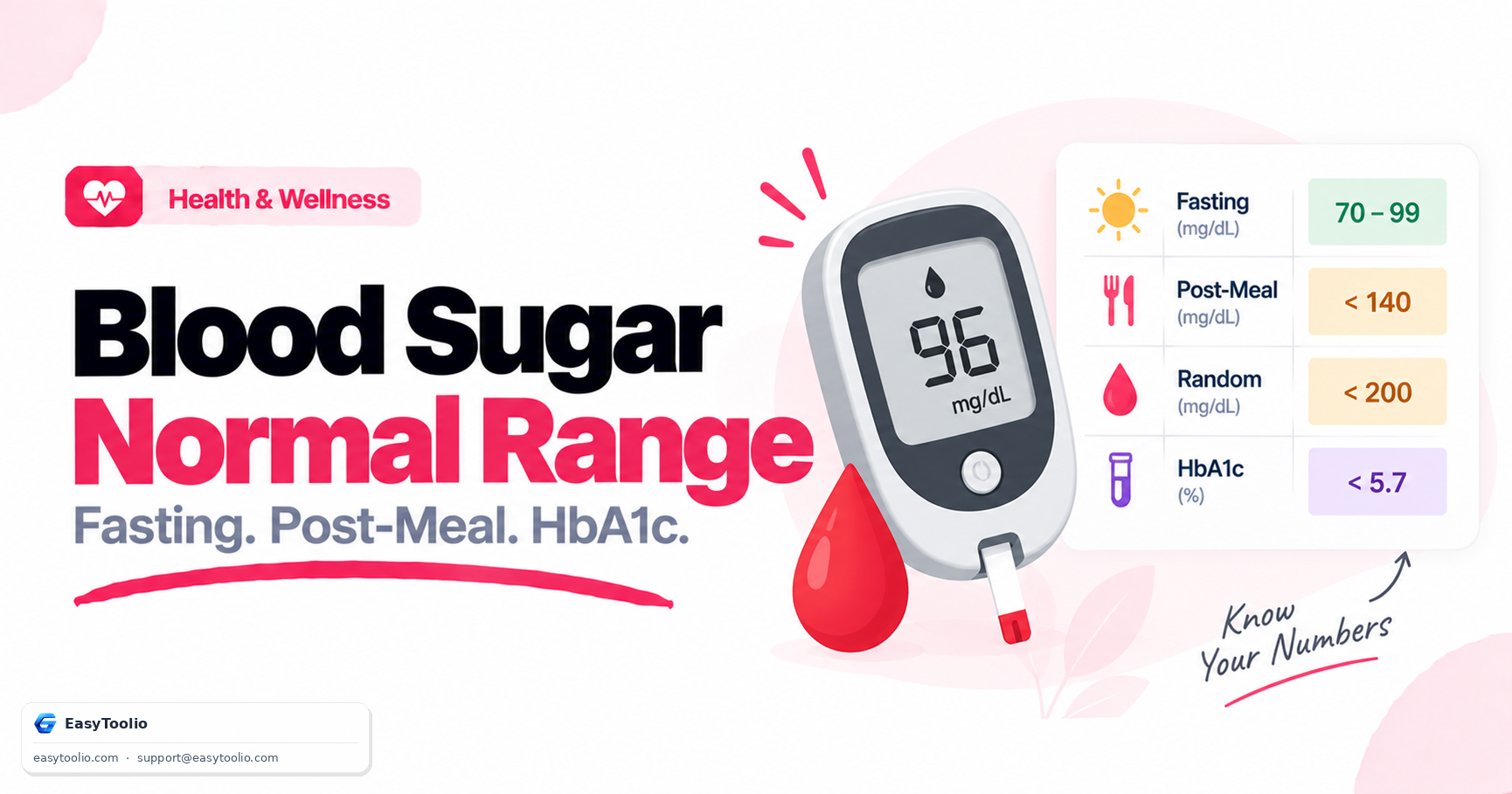
This calculator applies American Diabetes Association benchmarks: fasting glucose under 100 mg/dL is Normal, 100-125 mg/dL is Prediabetes, and 126 mg/dL or above is Diabetes; post-meal glucose under 140 mg/dL is Normal, 140-199 mg/dL is Prediabetes, and 200 mg/dL or above is Diabetes. The overall category shown is always the highest-risk tier reached by any single measurement entered.
02

Estimating HbA1c From Average Glucose

When an HbA1c value is not entered directly, the tool estimates it from the rearranged ADA formula HbA1c = (estimated average glucose + 46.7) / 28.7, using the average of your fasting and post-meal readings as a stand-in for estimated average glucose. This is only an approximation of the true 2-3 month average that a lab HbA1c test measures directly from red blood cells.

03

Worked Example

For a fasting reading of 118 mg/dL and a post-meal reading of 155 mg/dL, the estimated average glucose is (118 + 155) / 2 = 136.5, giving an estimated HbA1c of (136.5 + 46.7) / 28.7, or about 6.4%. Both the fasting value (100-125 mg/dL) and the estimated HbA1c (5.7-6.4%) fall in the Prediabetes range in this example.

04

Points-Based Diabetes Risk Score

Beyond glucose classification, the calculator adds risk points for age (up to 3 points), low physical activity (1 point), family history of diabetes (1 point), elevated BMI (up to 3 points), and the glucose category itself (up to 4 points), then sorts the total into Low, Moderate, or High risk tiers. For a broader picture, pair this with the BMI Calculator and Blood Pressure Calculator, since obesity and hypertension frequently co-occur with insulin resistance.

Good to know

Questions, answered

Quick answers about how this tool works.

Fasting blood sugar is measured after not eating for at least 8 hours (usually overnight). Post-meal (postprandial) blood sugar is measured 2 hours after the start of a meal, showing how effectively your body processes glucose after eating.

HbA1c (glycated hemoglobin) measures the average percentage of blood sugar bound to red blood cells over the past 2 to 3 months. It provides a long-term picture of blood sugar control and is a primary tool for diagnosing prediabetes and diabetes.

Blood glucose can be measured in milligrams per deciliter (mg/dL) or millimoles per liter (mmol/L). To convert mmol/L to mg/dL, multiply by 18.0182. To convert mg/dL to mmol/L, divide by 18.0182. This calculator does this automatically.

Insulin resistance is a condition where body cells do not respond effectively to insulin, a hormone that helps glucose enter cells. As a result, the pancreas produces more insulin, but over time, blood glucose levels rise, which can lead to prediabetes and type 2 diabetes.

Yes, prediabetes is often reversible. Making structural lifestyle changes—such as losing 5% to 7% of body weight, engaging in at least 150 minutes of moderate physical activity weekly, eating a fiber-rich diet, and reducing refined carbohydrates—can delay or prevent type 2 diabetes.

Popular Tools on EasyToolio

Swipe

What do you need to work out next?

Search 190+ free tools by name, or pick a category below. Every one runs instantly in your browser — no signup, nothing to install.