Blood sugar (glucose) testing isn't a single number — it's four different measurements, each capturing something different about how your body handles glucose. Understanding which test is which, and what range each one considers normal, is the first step to making sense of a lab report.
This article is educational information only and does not diagnose diabetes or prediabetes. A proper diagnosis requires lab-confirmed testing interpreted by a doctor.
The Four Ways Blood Sugar Is Measured
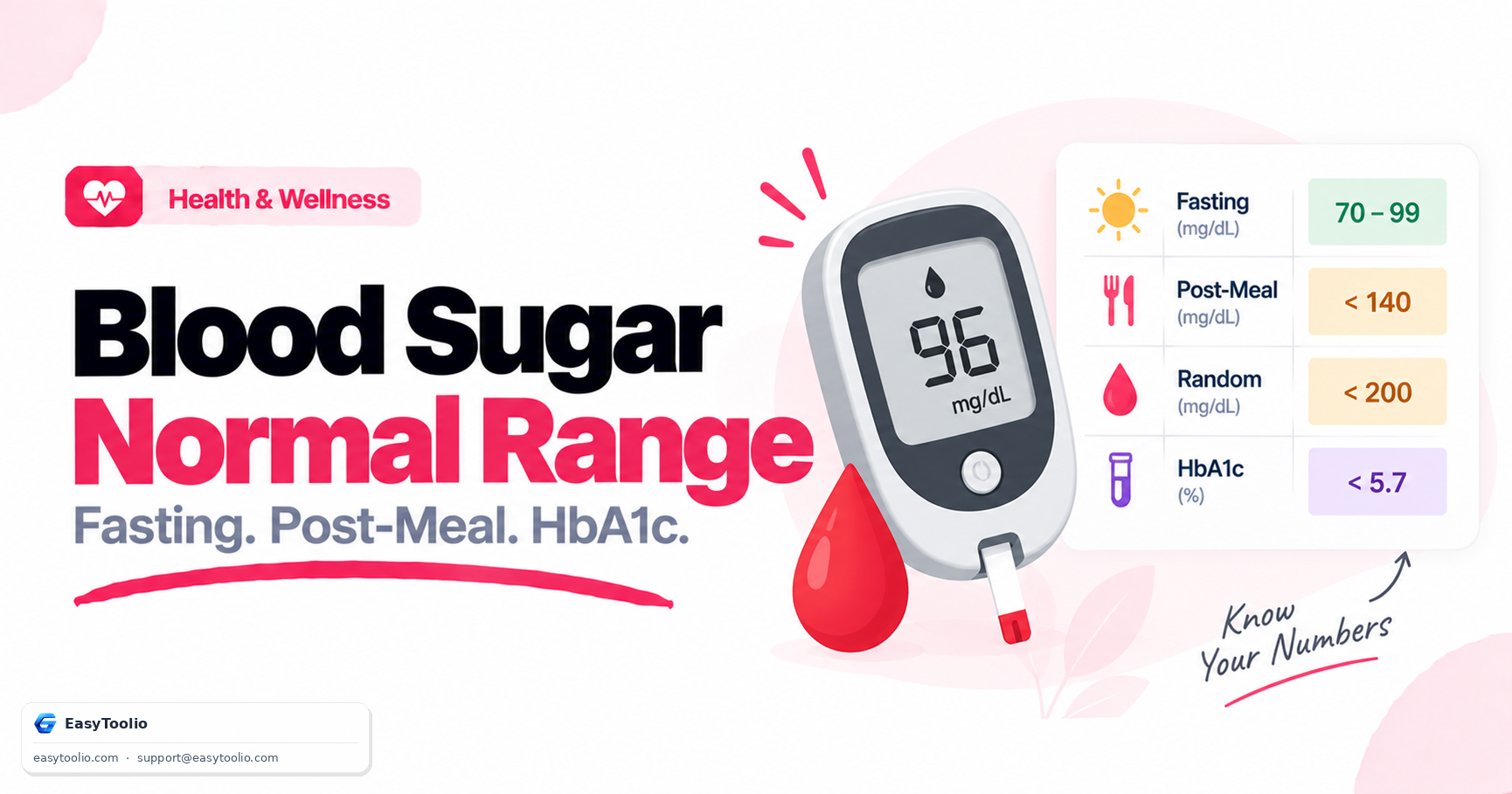
- Fasting Blood Sugar (FBS): Measured after at least 8 hours without food, typically first thing in the morning. It reflects your baseline glucose level without any recent meal influencing it.
- Post-Prandial Blood Sugar (PPBS): Measured 2 hours after eating a meal. It shows how efficiently your body clears glucose from a meal — a key indicator of insulin response.
- Random Blood Sugar (RBS): Taken at any time of day, regardless of when you last ate. Useful as a quick screening check but less precise than fasting or post-meal tests.
- HbA1c (Glycated Hemoglobin): A blood test that reflects your average blood sugar over the past 2–3 months, based on how much glucose has attached to hemoglobin in your red blood cells.
Estimate where your numbers fall using the Blood Sugar Calculator — it's a helpful educational reference, though it does not replace a lab test.
Normal, Prediabetic, and Diabetic Ranges
| Test | Normal | Prediabetes | Diabetes |
|---|---|---|---|
| Fasting Blood Sugar | Below 100 mg/dL | 100–125 mg/dL | 126 mg/dL or higher |
| Post-Prandial (2-hr) | Below 140 mg/dL | 140–199 mg/dL | 200 mg/dL or higher |
| Random Blood Sugar | Below 140 mg/dL | 140–199 mg/dL (with symptoms, investigate) | 200 mg/dL or higher (with symptoms) |
| HbA1c | Below 5.7% | 5.7%–6.4% | 6.5% or higher |
These ranges follow standard ADA (American Diabetes Association) reference values used widely in clinical practice. A single reading outside the normal range is not, on its own, a diagnosis — doctors typically confirm with repeat testing.
Why HbA1c Is Considered the Most Reliable Indicator
Fasting and post-meal tests are snapshots — they capture your glucose at one specific moment, which can be affected by what you ate the day before, stress, sleep, or even minor illness. HbA1c, by contrast, reflects a running average over roughly 90 days, because red blood cells live about that long and accumulate glucose molecules proportional to average blood sugar exposure during that period.
This is why doctors treat HbA1c as the gold-standard indicator for diagnosing and monitoring diabetes — a single bad day of eating won't meaningfully move it, but a genuine pattern of elevated blood sugar over months will.
Worked example: If a person's fasting glucose is measured at 118 mg/dL on one day (in the prediabetic range), but their HbA1c comes back at 5.4% (normal), this suggests that particular day's reading was likely influenced by a temporary factor rather than a sustained pattern — which is exactly why doctors often order both tests together.
Common Causes of Temporary Blood Sugar Spikes
Not every high reading means diabetes. Blood sugar can spike temporarily due to:
- Acute stress or anxiety, which triggers cortisol and adrenaline release, both of which raise blood glucose.
- Illness or infection, even something as minor as a cold, since the immune response releases stress hormones that elevate glucose.
- Certain medications, including steroids, some decongestants, and certain blood pressure medications.
- Poor sleep the night before testing, which is well documented to reduce insulin sensitivity temporarily.
- A recent high-carbohydrate meal, particularly if the fasting window before a "fasting" test wasn't fully observed.
Home Glucose Meters vs Lab Blood Tests
Many people first encounter a blood sugar number from a home glucose meter (glucometer) rather than a lab. Both have a place, but they aren't perfectly interchangeable:
- Home glucometers use capillary blood from a fingerstick and are convenient for frequent day-to-day monitoring, but are generally accepted to have somewhat more variability than a laboratory venous blood draw, and their accuracy depends on proper technique, clean hands, and unexpired test strips.
- Lab blood tests (venous draws) are the reference standard used for formal diagnosis, since they are processed under controlled, standardized conditions.
- HbA1c is almost always measured via a lab test rather than a home meter, since it requires a different kind of analysis than a single glucose snapshot.
If a home reading looks unusually high or low and doesn't match how you feel, it's reasonable to retest and, if the pattern continues, discuss it with a healthcare provider rather than relying on a single home reading alone.
Factors That Can Skew a Reading Before You Even Test
Because fasting and post-meal tests are snapshots, several everyday factors can shift a result without reflecting your underlying glucose control:
- An incomplete fasting window — eating or drinking anything other than water shortly before a "fasting" test can elevate the result.
- Dehydration, which can concentrate blood glucose and other measured values.
- Intense exercise shortly before testing, which affects glucose differently depending on timing and intensity.
- Caffeine, which for some people has a measurable short-term effect on glucose and insulin response.
None of these turn a truly normal glucose pattern into diabetes on their own, but they're worth ruling out before treating a single unusual reading as significant — which is also why doctors lean on HbA1c and repeat testing rather than any one reading in isolation.
Continuous Glucose Monitors: A Newer Alternative
Continuous glucose monitors (CGMs) are wearable sensors that track glucose trends throughout the day and night rather than at single points in time, originally developed for people managing diabetes but increasingly used more broadly for general glucose-trend awareness. Unlike a single fasting or post-meal reading, a CGM shows the shape of your glucose response — how quickly it rises after a meal and how long it takes to return to baseline — which a one-time fingerstick or lab draw cannot show. As with any testing method, interpreting CGM data in the context of a diagnosis or treatment plan is something to do with a healthcare provider rather than by comparing raw numbers to a general chart.
Frequently Asked Questions
Q: What is considered a normal fasting blood sugar level? A: A fasting blood sugar below 100 mg/dL is considered normal. Readings between 100–125 mg/dL fall into the prediabetic range, and 126 mg/dL or higher on repeated testing indicates diabetes.
Q: Why do doctors rely on HbA1c instead of just one fasting test? A: HbA1c reflects your average blood sugar over roughly the past 2–3 months, making it far less sensitive to a single day's stress, illness, or diet than a one-time fasting or random glucose reading.
Q: Can stress alone cause a high blood sugar reading without diabetes? A: Yes. Acute stress, illness, poor sleep, and certain medications can all temporarily raise blood glucose even in people without diabetes, which is why doctors usually confirm a diagnosis with repeat testing and HbA1c rather than a single reading.
Q: Are home glucometer readings as accurate as a lab test? A: Home meters are useful for everyday monitoring but are generally considered to have more variability than a standardized lab venous draw, and their accuracy also depends on proper technique and unexpired test strips. A lab test remains the reference standard for formal diagnosis.
Q: Should I be worried about a single high reading? A: Not necessarily. A single reading can be influenced by an incomplete fast, recent exercise, dehydration, illness, or stress. Doctors typically look for a repeated pattern, often confirmed with HbA1c, rather than diagnosing anything from one isolated number — and any concerning or persistent pattern is best discussed with a healthcare provider.