Notification
Go to Home All Tools Compare Glossary Blog Contact
Be the first to rate
Health & Wellness

Steps to Calories Calculator

Steps to Calories Calculator

Convert daily step counts to calories burned, distance covered, and active walking time. Compare metrics with common step goals and exercise equivalents.

Secure Physical Step Computations

Calculations run locally in client-side Javascript. No step history, bodily stat parameters, or logs are uploaded to servers.

Step Parameters

kg
cm
Biological Gender

Example Presets

Load preset targets to check step translations:

Conversion Results

Awaiting Steps Parameters

Fill in your steps count, body stats, and pace to calculate distance, calories, and duration.

Common Step Target Comparisons

Approximate distances and active walk times based on standard heights and biological strides.

Steps Goal Est. Distance (Men) Est. Distance (Women) Walking Time (3.0 mph / 4.8 km/h) Activity Class
5,000 steps ~3.6 km (2.2 mi) ~3.3 km (2.1 mi) ~45 minutes Low Active
8,000 steps ~5.8 km (3.6 mi) ~5.3 km (3.3 mi) ~1 hour 12 mins Somewhat Active
10,000 steps ~7.2 km (4.5 mi) ~6.6 km (4.1 mi) ~1 hour 30 mins Active (Target)
15,000 steps ~10.8 km (6.7 mi) ~9.9 km (6.2 mi) ~2 hours 15 mins Highly Active
20,000 steps ~14.4 km (8.9 mi) ~13.2 km (8.2 mi) ~3 hours Highly Active

Daily Movement & Cardiovascular Health

Why step tracking is the baseline support for metabolic speed and fat loss.

What is NEAT?

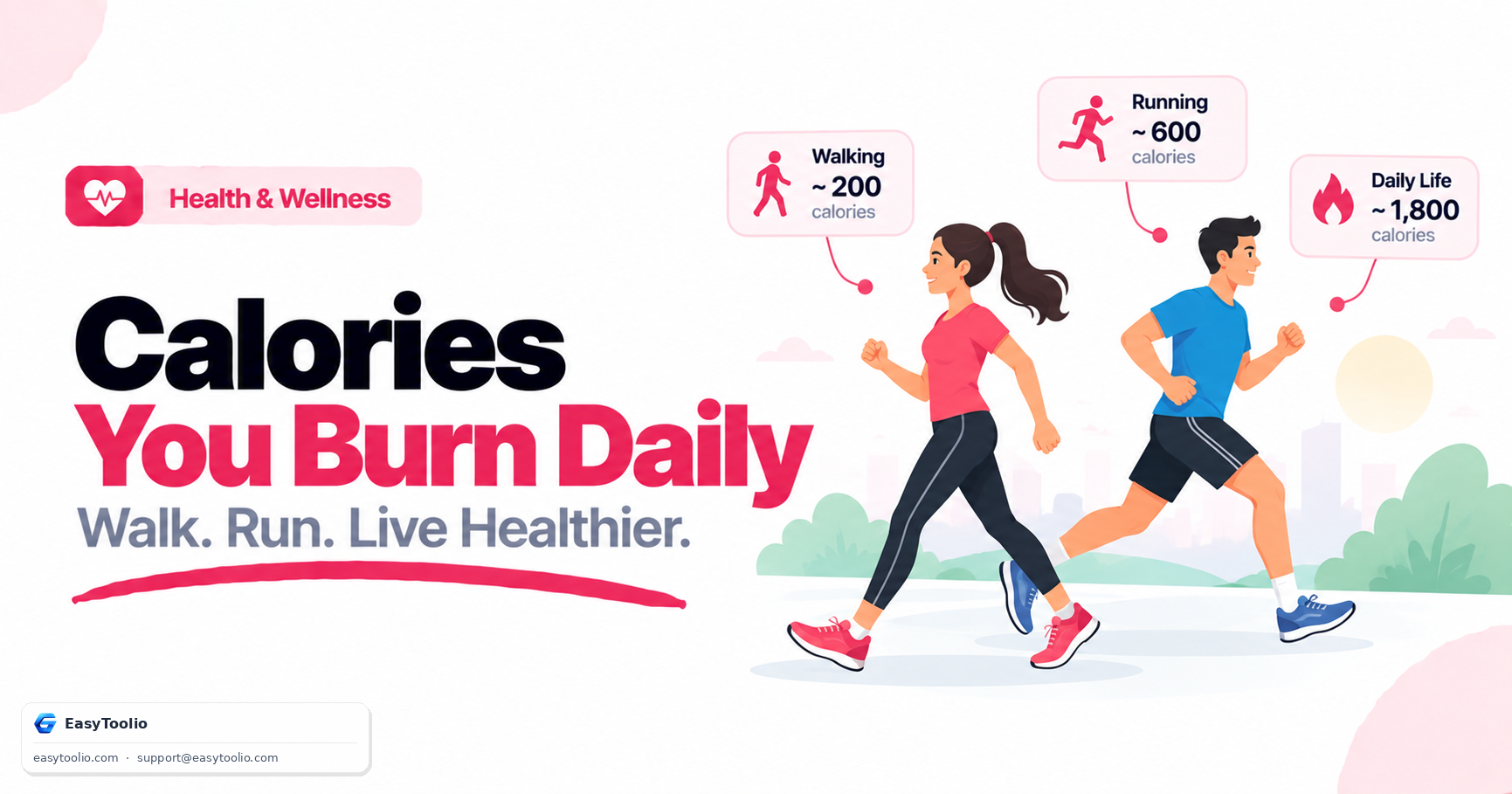
**Non-Exercise Activity Thermogenesis (NEAT)** represents the energy expended for everything we do that is not sleeping, eating, or structured sports exercise. It includes walking, typing, cooking, and standard daily movement. Daily steps constitute the vast majority of NEAT, which can account for up to **15-30% of total daily energy expenditure** in active individuals.

Step Conversion Science

Stride length varies depending on height and biological gender. When converting steps, standard clinical indexes assume that **walking 2,000 steps covers roughly 1 mile (1.6 km)** and burns about **100 calories** for a 70kg (154 lb) individual. Walking faster raises oxygen intake demands, pushing up the MET coefficient and burning more energy per step.

Steps for Weight Loss

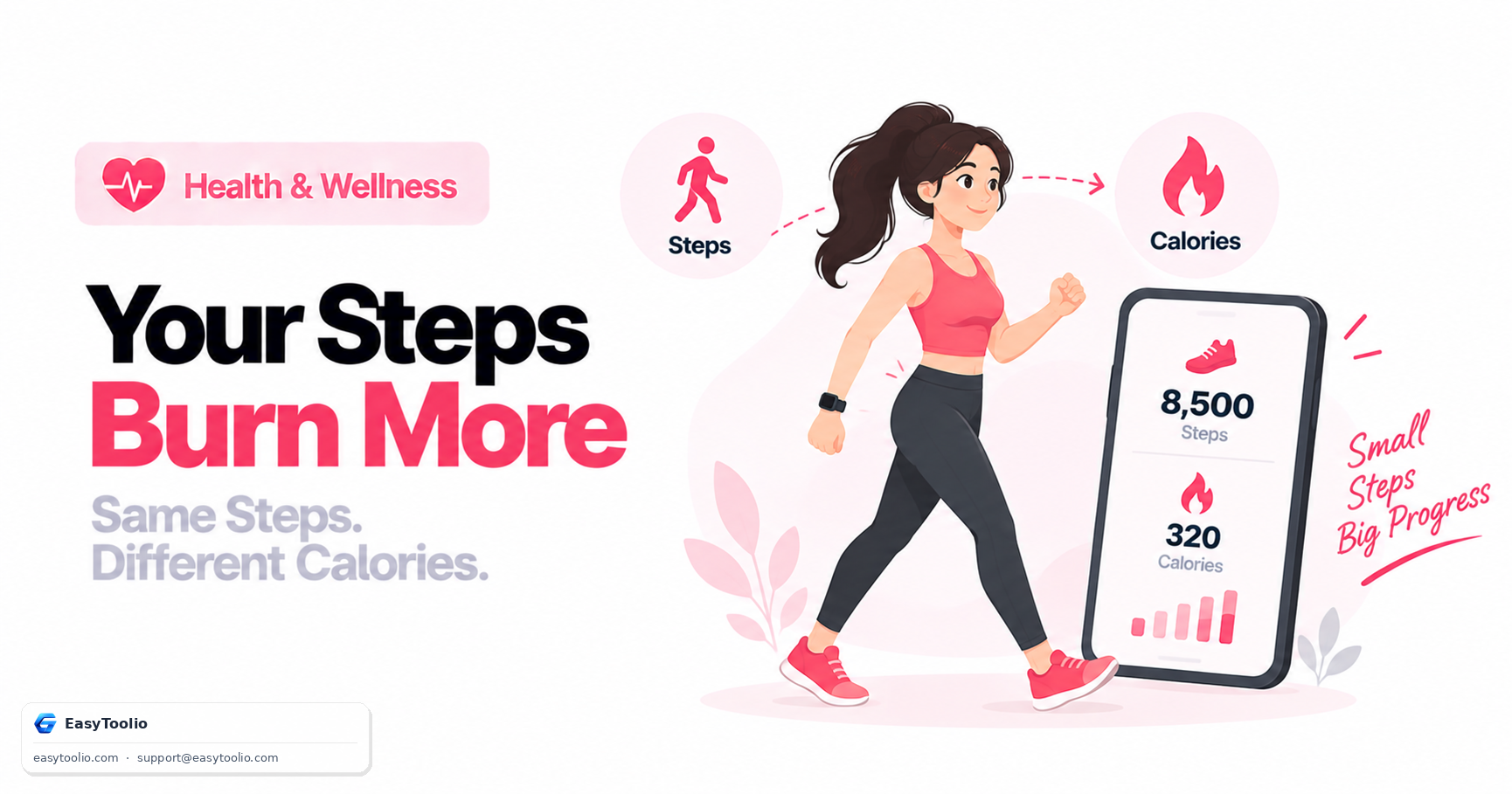
Walking 10,000 steps daily burns between **300 and 500 calories** depending on weight. Accumulating this step count daily creates a steady weekly energy gap of up to 3,500 calories. This can lead to burning about **1 pound (0.45 kg) of stored body fat weekly** when paired with a balanced calorie-maintenance nutritional program.

Wellness & Health Coach

AI Advisor Health Advisor

Get personalized advice on fitness routines, diet plans, and understanding your health metrics better.

Topics this feature will cover:

🥗 Diet & Nutrition 🏃 Fitness Routines 🩺 Understanding Metrics

Be first to access it when it launches.

We'll notify you the moment AI Advisor goes live. One email, no spam.

FAQs

Frequently Asked Questions

First, your stride length is estimated based on your height and biological gender. The calculator then computes the total distance covered. Based on your walking or running pace, the calculator estimates the duration spent active. Finally, calories are calculated using the MET formula: Calories = MET * Weight (kg) * Duration (hours).

An adult's average stride length is roughly 2.2 feet (26.4 inches or 67 cm) for women, and 2.5 feet (30 inches or 76 cm) for men. Stride length is highly correlated with stature, so the calculator uses a multiplier of 0.413 for females and 0.415 for males multiplied by height to estimate personal stride length.

For an average adult, walking 1 mile takes approximately 2,000 to 2,500 steps, while walking 1 kilometer takes roughly 1,250 to 1,500 steps. Muscular height and stride length variations will slightly increase or decrease these values.

The 10,000 steps target originated in Japan in 1965 as a marketing campaign for a pedometer. However, modern scientific studies indicate that walking between 7,500 and 10,000 steps daily is strongly associated with decreased all-cause mortality, cardiovascular health, and healthy weight maintenance.

Walking faster increases the MET (Metabolic Equivalent of Task) coefficient, which represents energy intensity. For instance, walking at a slow pace of 2.5 mph has a MET of 2.8, while power walking at 4.0 mph has a MET of 5.0—burning nearly double the energy per unit of time.

Articles

Related Guides & Insights

Read our in-depth articles and guides related to this tool to help you make smarter decisions.

Workflow Suggestions

Recommended for Your Workflow

Category Showcase

More from Health & Wellness

Platform Spotlight

Popular Tools on EasyToolio

Explore More Tools Like Steps to Calories Calculator

Loved the Steps To Calories Calculator? Explore our suite of related utilities to boost your productivity even further.