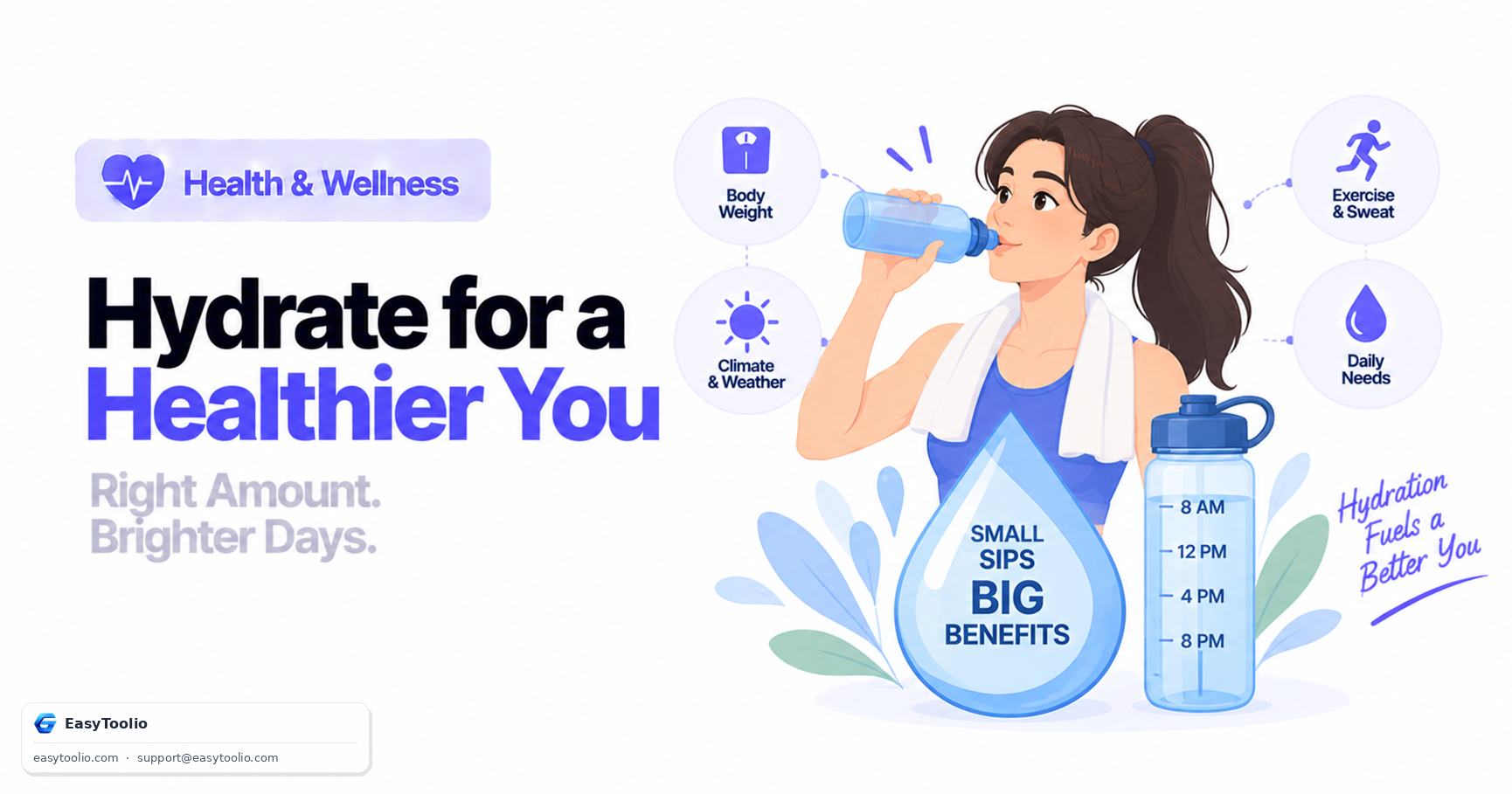
Proper hydration is fundamental to cellular function, thermoregulation, kidney filtration, and cognitive performance. However, popular health advice often repeats generic rules—such as the "8x8 rule" (eight 8-ounce glasses per day)—ignoring individual physiological requirements.
Direct Answer: There is no single universal daily water intake requirement. Baseline fluid needs scale primarily with total body weight, physical activity level, ambient climate, and physiological status (such as pregnancy or lactation). A standard baseline guideline recommended by health institutions (such as the National Academies of Sciences, Engineering, and Medicine) suggests a total daily fluid intake of approximately 3.7 Liters (125 oz) for adult men and 2.7 Liters (91 oz) for adult women, of which ~20% typically comes from water contained in food and ~80% from plain drinking water and beverages.
Health & Medical Disclaimer: Hydration recommendations in this article serve general educational purposes and do not replace personalized medical advice. Individuals with congestive heart failure, chronic kidney disease (CKD), or those taking diuretics must follow fluid restriction guidelines provided by their attending physician.
1. Hydration Calculation Baseline & Activity Modifiers
Fluid requirements can be estimated using body weight baseline equations adjusted for activity sweat loss:
1. Weight-Based Baseline Formula:
Baseline Fluid (fl oz) = Body Weight (lbs) × 0.50 OR Baseline Fluid (mL) = Body Weight (kg) × 35 mL
2. Exercise Sweat Loss Addition:
Additional Fluid = +12 to 16 fl oz (350–500 mL) for every 30 minutes of moderate-to-intense exercise
To estimate your daily fluid baseline and workout adjustments, calculate target intake on the Water Intake Calculator.
2. Practical Calculation Example
Consider a 180 lb (81.6 kg) adult who performs 60 minutes of vigorous cardio in a warm climate:
Baseline Fluid:     180 lbs × 0.50 oz/lb = 90 fl oz (2.66 Liters)
Workout Fluid:      60 minutes workout   = +28 fl oz (0.83 Liters)
Climate Adjustment: Hot/Humid (+15%)     = +13.5 fl oz (0.40 Liters)
----------------------------------------------------------------------
Total Recommended Daily Fluid Target:      131.5 fl oz (~3.88 Liters)
From this total fluid target, approximately 105 fl oz (~3.1 Liters) should be consumed as plain drinking water, with the remainder supplied by fruits, vegetables, and dietary meals.
3. Total Fluid Intake vs Drinking Water & Key Hydration Factors
| Factor | Physiological Mechanism | Hydration Adjustment |
|---|---|---|
| Dietary Food Intake | Fruits (watermelon, strawberries ~90% water) and soups contribute ~20% of daily fluids. | Reduce plain drinking target if consuming high-water whole foods. |
| High Heat & Humidity | Thermoregulatory sweating increases to cool body temperature via evaporation. | Increase fluid intake by 15%–25% in ambient temperatures above 30°C (86°F). |
| Altitude Exposure | Respiration rate increases in dry, high-altitude air, escalating insensible water loss. | Increase intake by 500–1000 mL at altitudes above 2,500m (8,000 ft). |
| Pregnancy & Lactation | Blood volume expansion and breast milk production (~87% water) increase needs. | Add +300 mL/day during pregnancy; +700–1000 mL/day during lactation. |
| Older Adults (65+) | Reduced thirst sensation and lower total body water percentage increase dehydration risk. | Schedule fluid intake at regular times rather than relying on thirst cues alone. |
| Illness (Fever, Vomiting, Diarrhea) | Direct fluid and electrolyte losses accelerate dehydration. | Increase intake and consider oral rehydration solutions with electrolytes. |
To align hydration metrics with daily energy expenditure and metabolic rate, cross-reference calorie needs on the Calorie Calculator.
4. Daily Fluid Balance: Intake vs Output
Hydration status is ultimately governed by a balance equation: total fluid intake must roughly match total fluid output to maintain stable body water. Understanding both sides of the ledger clarifies why "just drink water" is an incomplete picture:
| Fluid Intake Sources | Approx. Daily Contribution | Fluid Output Routes | Approx. Daily Loss |
|---|---|---|---|
| Plain drinking water & beverages | ~80% of total intake | Urine (kidneys) | ~50%–60% of total output |
| Water content in food (fruits, vegetables, soups) | ~20% of total intake | Skin (sweat + insensible loss) | ~20%–25% of total output |
| Metabolic water (produced internally during nutrient metabolism) | Small but nonzero contribution | Respiration (water vapor exhaled) | ~10%–15% of total output |
| — | — | Feces | ~4%–5% of total output |
When output routes increase — through heavier sweating, higher respiration rate at altitude, fever, or gastrointestinal illness — intake must rise correspondingly to maintain fluid balance, which is the physiological basis for the climate and exercise adjustments described above.
5. Recognizing Under- and Over-Hydration
Both insufficient and excessive fluid intake carry risks, and the useful working target sits between these two extremes:
- Mild Dehydration (1%–2% body weight fluid loss): Thirst, dry mouth, reduced urine output, dark yellow urine, mild fatigue, and reduced concentration.
- Moderate-to-Severe Dehydration: Dizziness, rapid heartbeat, very dark urine, muscle cramping, and confusion — this warrants prompt fluid and electrolyte replacement, and medical attention if symptoms are severe or persistent.
- Overhydration / Hyponatremia (rare but serious): Drinking extreme volumes of plain water in a short period — most often seen in endurance athletes during long events — can dilute blood sodium levels faster than the kidneys can excrete the excess, causing dangerous hyponatremia. This is why endurance sports nutrition guidance generally recommends fluid replacement paired with electrolytes rather than plain water alone during prolonged intense exercise.
6. Frequently Asked Questions (FAQs)
Does coffee or tea count toward my daily water intake total?
Yes. Despite caffeine's mild diuretic effect, the net fluid contributed by coffee, tea, and other caffeinated beverages still counts positively toward total daily fluid intake. The old belief that caffeinated drinks cause a net fluid deficit is not supported by modern hydration research.
How can I tell if I'm actually drinking enough water day to day?
The weight-based and activity formulas in this guide give a useful starting target, but pale-yellow urine color, infrequent thirst, and normal urination frequency (roughly every 3–4 hours) are simple daily indicators of adequate hydration. Dark yellow urine or persistent thirst signal that fluid intake should be increased.
Do athletes and people who exercise heavily need more than the baseline formula suggests?
Yes. The baseline weight-based formula only covers resting fluid needs; it must be layered with the exercise sweat-loss addition (12–16 fl oz per 30 minutes of moderate-to-intense activity) and the climate adjustment (+15%–25% in hot or humid conditions) described above, since sweat losses during vigorous training can substantially exceed resting-state requirements.
Can I drink too much water?
Yes, though it is uncommon outside of endurance sports or deliberate extreme overconsumption. Drinking very large volumes of plain water in a short window can dilute blood sodium and cause hyponatremia, as noted above. For most people going about normal daily activity and following the weight-based and activity-adjusted targets in this guide, overhydration is not a practical concern — the far more common issue is under-drinking relative to activity and climate demands.