Direct Answer
The short answer depends on where your buyers are located and which platform you choose:
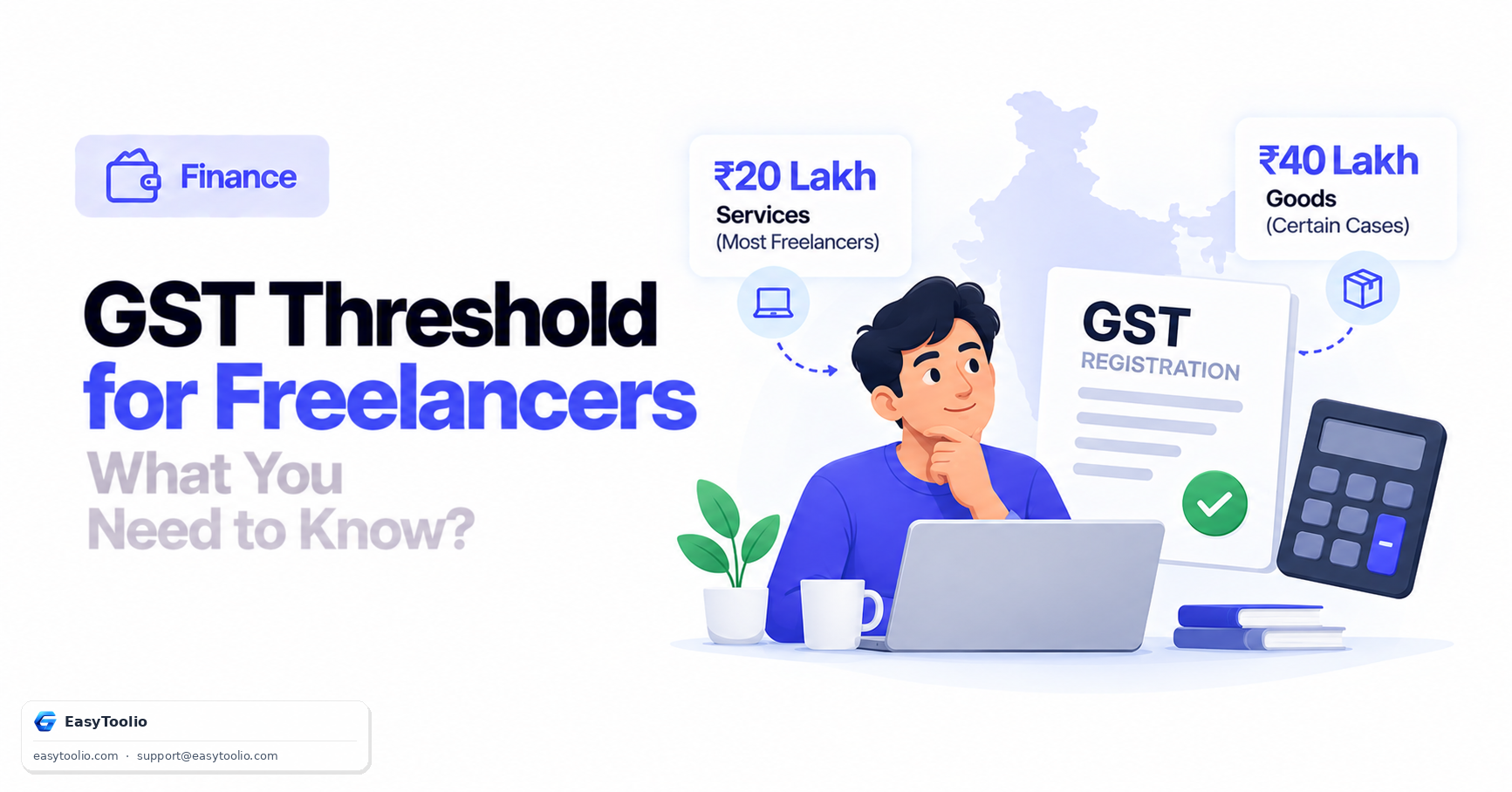
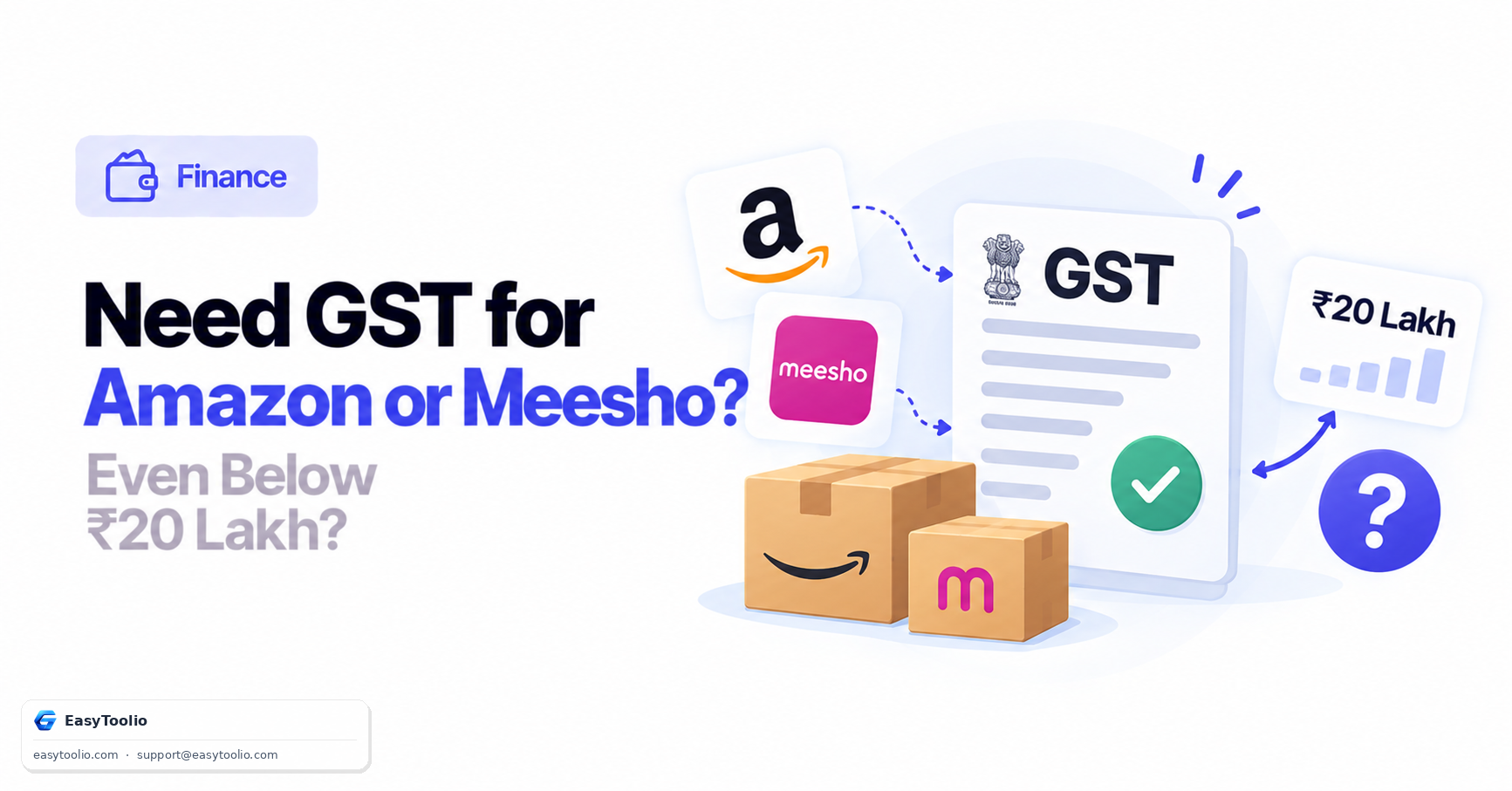
- On Meesho (Intra-State Only): NO, you do not need a full GSTIN if your sales remain below the statutory threshold (₹40 lakh for exclusive goods in most states, or ₹20 lakh/₹10 lakh in specified states). Under Notification No. 34/2023-Central Tax (effective 1 October 2023), small sellers can enroll with a 15-character Enrolment Number (Enrolment ID) generated on the GST portal and sell within their own state without obtaining a regular GST registration.
- On Amazon or Flipkart (Pan-India): YES, you practically always need a regular GSTIN. Amazon's marketplace infrastructure, Fulfillment by Amazon (FBA) warehouses, and nationwide Prime delivery involve shipping products to buyers across state borders (inter-state supplies). Under Section 24(i) of the CGST Act, any person making an inter-state supply of taxable goods is legally required to obtain compulsory GST registration, even if their total sales are just ₹1,000.
Track your turnover headroom using the GST Registration Threshold Tracker. For order fulfilment and transport checks, consult the E-way Bill GST Checker and format direct orders with the WhatsApp Order Slip Generator.
The Legal Backdrop: Section 24(ix) vs The 2023 Exemption
Under the original design of the Goods and Services Tax system, small brick-and-mortar retailers enjoyed a turnover exemption of up to ₹40 lakh (under Section 22 and Notification 10/2019-CT), but small online sellers were treated far more strictly:
- The Old Rule (Section 24(ix) CGST Act): Anyone selling goods through an E-Commerce Operator (ECO) who is required to collect Tax Collected at Source (TCS) under Section 52 was subject to compulsory registration from day one, with zero threshold exemption.
- The Parity Movement: This created a severe disparity between offline shopkeepers and home-based micro-entrepreneurs trying to launch on e-commerce platforms.
- The Historic Reform (Notification No. 34/2023-Central Tax): Following decisions at the 47th and 48th GST Council meetings, the Central Board of Indirect Taxes and Customs (CBIC) issued Notification 34/2023-CT, effective 1 October 2023. This notification exempts persons making supplies of goods through an ECO from mandatory registration, provided they satisfy specific statutory conditions.
5 Mandatory Conditions to Sell Online Without a GSTIN
To operate as an unregistered supplier on an e-commerce platform under Notification 34/2023-CT, you must satisfy all five conditions:
- Strictly Intra-State Supplies: You can only sell goods to customers located within the same State or Union Territory where your business is based. You cannot dispatch goods to another state.
- No Inter-State GST Registration: You must not hold a valid GSTIN in any other State or Union Territory under the same PAN.
- Turnover Under Section 22(1) Limits: Your aggregate turnover in the current and preceding financial years must not exceed the threshold limit (₹40 lakh for exclusive goods in standard states; ₹20 lakh in states that opted out of the higher ceiling, such as Telangana and Uttarakhand; and ₹10 lakh in Manipur, Mizoram, Nagaland, and Tripura).
- Mandatory GST Enrolment ID: You must obtain an official 15-character Enrolment Number on the GST common portal (
gst.gov.in) before making any online supplies. - Single Enrolment per State: You can only hold one Enrolment Number per State or Union Territory.
If any of these conditions is violated—for instance, if an order is inadvertently dispatched to a buyer across state borders—the exemption ceases immediately, and Section 24 mandatory registration takes effect.
Why Meesho Supports Non-GST Sellers While Amazon Usually Requires GST
The divergence between Meesho and Amazon is not an arbitrary corporate policy; it stems directly from the logistical and technological architecture of the two marketplaces.
| Parameter | Meesho (Intra-State Seller) | Amazon India / Flipkart (National Marketplace) |
|---|---|---|
| GST Requirement | Enrolment ID allowed (no GSTIN required below ₹40L/₹20L) | Full GSTIN practically mandatory for all sellers |
| Customer Reach | Buyers located inside seller's home state only | Nationwide (Pan-India across all 28 states and 8 UTs) |
| Order Routing | Geofenced intra-state logistics | Multi-tier national logistics, inter-state air/surface hubs |
| Warehousing / Fulfillment | Seller ships directly from their workshop/home | Amazon FBA (requires adding warehouse as APOB) or Easy Ship |
| Statutory Rule Applied | Notification 34/2023-Central Tax | CGST Act s.24(i) (mandatory inter-state goods registration) |
| TCS Deduction (s.52) | Platform reports under special unregistered return | Standard 1% TCS collected and credited to seller's GSTIN |
How Meesho Implemented the Scheme
Meesho built dedicated geofencing algorithms into its catalog and order assignment engines. When an unregistered supplier lists inventory with an Enrolment ID, Meesho displays those products solely to shoppers residing within that seller's home state. An artisan in Jaipur, Rajasthan, will only receive orders from customers with Rajasthan delivery PIN codes.
Why Amazon Requires GSTIN
Amazon operates a centralized, nationwide logistics grid. Features like Fulfillment by Amazon (FBA), Prime 1-day/2-day delivery, and Easy Ship rely on inventory distributed across regional fulfillment centres. Even if you list via Self-Ship, Amazon customers order from all over India. The moment a shipment crosses a state line, it is an inter-State supply of goods, and Section 24(i) of the CGST Act mandates registration irrespective of turnover. Furthermore, placing goods in an Amazon fulfillment centre requires registering that warehouse as an Additional Place of Business (APOB) on your GST certificate.
How to Get a GST Enrolment ID on the GST Portal
Generating an Enrolment Number is free and does not require hiring a tax professional:
- Navigate to the Official GST Portal: Visit
www.gst.gov.in. - Access the Enrolment Tool: Click on Services > User Services > Generate User Id for Unregistered Applicant (or select "Enrolment for E-commerce Sellers").
- Select Reason for Application: Choose "To apply for enrolment as a supplier through e-commerce operator".
- Identity Verification: Enter your Legal Name (as per PAN), PAN Number, Email ID, and Mobile Number. Validate both via the one-time passwords (OTPs).
- Business Address Details: Enter your business address located within your state. This address must match the dispatch location.
- Obtain Enrolment Number: Once verified, the portal issues a unique 15-character alphanumeric Enrolment ID (formatted similar to a GSTIN with state-code prefix).
- Submit to Marketplace: Copy this Enrolment ID and enter it into the supplier verification portal on Meesho or any participating intra-state marketplace.
The Hidden Downsides of Selling Without GST
While launching without a GSTIN saves upfront compliance time, sellers should understand the trade-offs:
- Loss of Input Tax Credit (ITC): When you buy raw materials, packaging boxes, printing labels, and pay courier fees, you pay 5%, 12%, or 18% GST. As an unregistered seller, you cannot claim this tax back as ITC. It becomes a sunk operational expense that cuts directly into profit margins.
- Severely Restricted Market Size: If you are based in a small or sparsely populated state, selling only intra-state eliminates over 90% of potential online buyers.
- Threshold Surveillance: If your cumulative sales across online platforms and offline counters reach the threshold limit (₹40 lakh, or ₹20 lakh/₹10 lakh depending on state), the Enrolment ID becomes void. You have 30 days to obtain a regular GSTIN under Section 25.
- No B2B Bulk Selling: Corporate buyers and registered retailers on Amazon Business require GST tax invoices to claim ITC; an unregistered seller cannot issue tax invoices.
Use the GST Registration Threshold Tracker to monitor your monthly sales progression, and test price margins with the GST Calculator.
What About Selling Services on E-Commerce Platforms?
If you provide services rather than physical goods through an e-commerce platform (for example, freelance consulting, tutoring, or technical design on an aggregator platform), different rules apply:
- Under Notification No. 65/2017-Central Tax, suppliers of services through an e-commerce operator are exempt from compulsory registration under Section 24(ix) up to the ₹20 lakh threshold (₹10 lakh in special category states).
- Section 9(5) Operators: For specific categories—such as passenger transport (Ola, Uber), restaurant food delivery (Swiggy, Zomato), and housekeeping services (Urban Company)—the e-commerce operator itself is statutory liable to pay the GST under Section 9(5). In such cases, individual drivers or home cleaners are not required to obtain GST registration.
Practical Checklist for E-Commerce Sellers
- Selling strictly locally via Meesho? Obtain a free Enrolment ID on
gst.gov.in, stay under the state threshold, and pack shipments using standard order slips generated with the WhatsApp Order Slip Generator. - Planning to sell on Amazon, Flipkart, or your own Shopify store? Apply for a regular GSTIN from the outset so you can sell nationwide, use FBA warehouses, and claim full Input Tax Credit on inventory and packaging.
- Monitoring shipping compliance? Verify consignment thresholds with our E-way Bill GST Checker before moving high-value consignments.