Someone reads their daily horoscope, feels like barely half of it applies to them, and concludes astrology "doesn't work" — without realizing the horoscope column only ever covers one of three placements that are conventionally read together. A sun sign alone was never meant to carry the whole personality profile.
The "Big Three" is a popular shorthand for the three most load-bearing placements in a chart: the Sun, the Moon, and the Ascendant (rising sign). Each answers a different question, and none of the three substitutes for the other two.
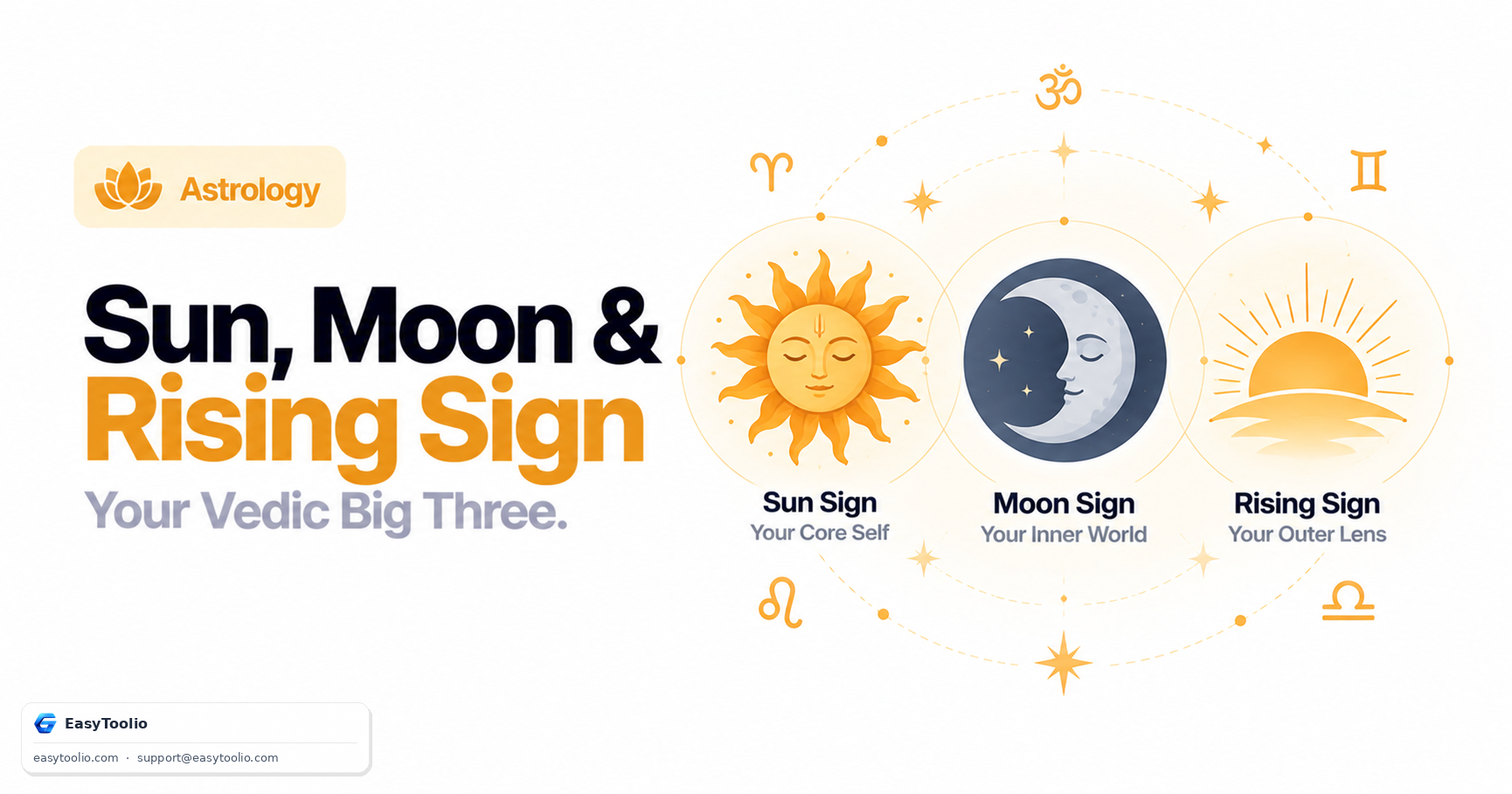
Direct Answer: Your Sun sign — what most people mean by "my zodiac sign" — represents your core identity, ego, and the self you're consciously growing toward; it's calculated from the Sun's position in the zodiac on your birth date. Your Moon sign represents your emotional inner world, instinctive reactions, and what makes you feel secure; because the Moon moves through the entire zodiac in about 27–28 days, it changes roughly every 2–2.5 days, so it requires an accurate birth date (and ideally time) to pin down correctly. Your Rising sign (Ascendant) represents the "mask" you present to the world in first impressions and how others tend to perceive you on meeting; it's the zodiac sign that was rising on the eastern horizon at your exact birth time and place, so it changes roughly every two hours and is the most time-sensitive of the three. Reading all three together explains why a person can seem outwardly confident (rising sign) while privately anxious (moon sign) despite having a supposedly bold sun sign.
1. What Each Placement Actually Describes
| Placement | Governs | How Fast It Changes | What It Needs to Calculate |
|---|---|---|---|
| Sun sign | Core identity, ego, conscious will, life direction | ~1 sign per month | Birth date only |
| Moon sign | Emotions, instincts, comfort, subconscious reactions | ~1 sign every 2–2.5 days | Birth date + reasonably accurate birth time |
| Rising sign (Ascendant) | Outward persona, first impressions, how you approach new situations | ~1 sign every ~2 hours | Exact birth time + birth location |
Notice the pattern: the Sun changes slowest, so knowing only your birthday tells you your Sun sign with certainty. The Moon and especially the Ascendant are far more time-sensitive — this is exactly why "just tell me my zodiac sign from my birthday" websites can only ever answer the Sun-sign third of the question, and why a proper moon sign calculator and rising sign calculator both ask for birth time and place, not just a date.
2. Why the Same Sun Sign Can Feel Completely Different in Two People
Consider two people both born with the Sun in Leo — conventionally associated with confidence, warmth, and a desire to be seen. If one has Moon in Cancer and Rising in Libra, they may come across as diplomatic and easygoing on first meeting (Libra rising), while privately needing a lot of emotional reassurance and quiet time to recharge (Cancer moon) — a much softer presentation than "typical Leo" stereotypes suggest. If the other has Moon in Aries and Rising in Scorpio, they may come across as intense and guarded to new acquaintances (Scorpio rising), with quick, impulsive emotional reactions under the surface (Aries moon) — a far more forceful presentation of the same Sun sign.
Both are genuinely "Leo" at the core-identity level, but the Moon and Rising placements are doing most of the work in how each person actually feels day-to-day and how each comes across to strangers. This is the central argument for reading the Big Three together rather than stopping at the Sun sign: the Sun describes the destination you're growing toward, not the vehicle you show up in.
3. Vedic Sidereal vs. Western Tropical: Why Signs Can Differ
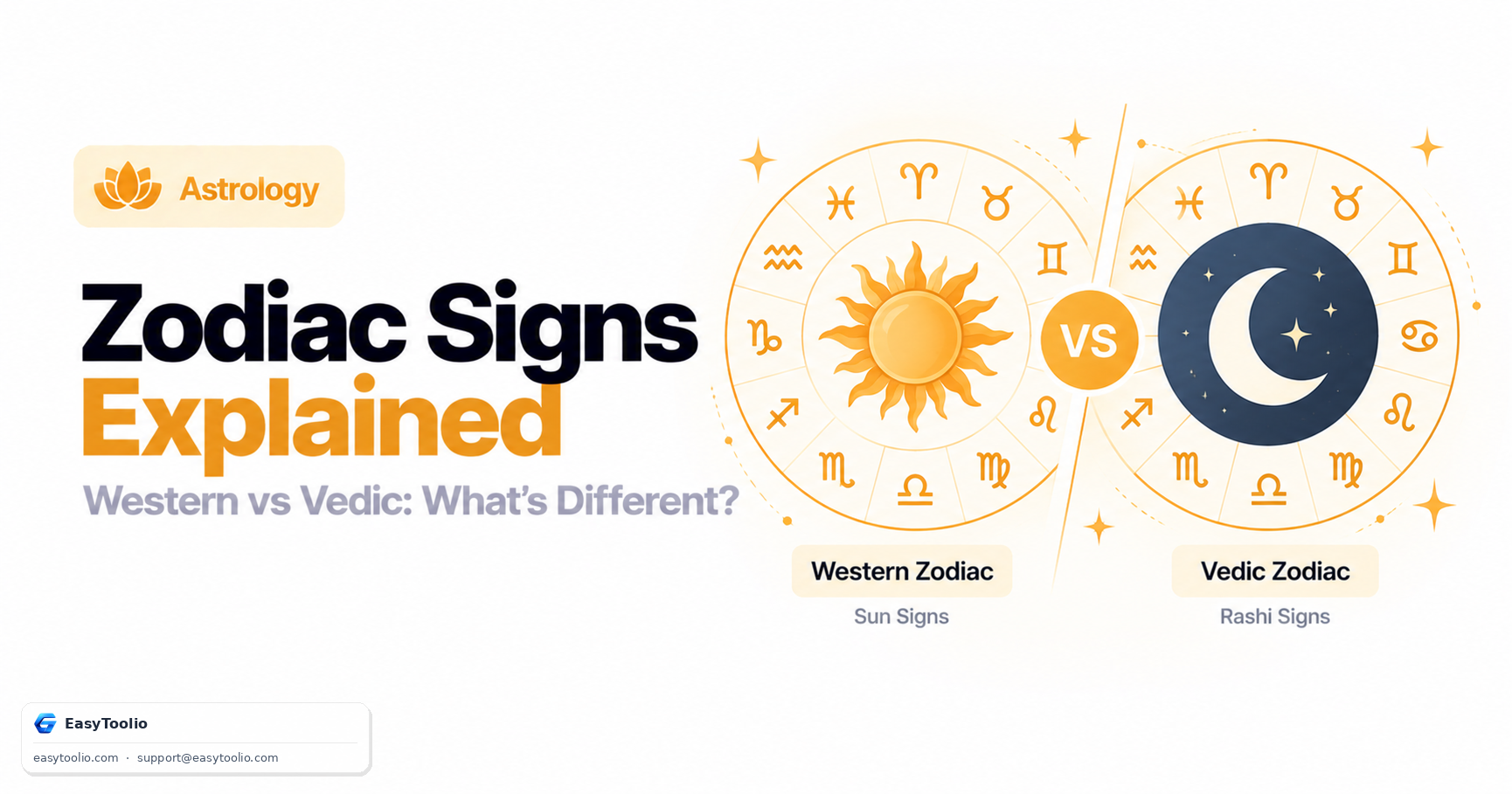
A complicating factor for anyone comparing a Western horoscope app to a Vedic reading is that the two systems use different zodiacs. Western astrology uses the tropical zodiac, anchored to the seasons (0° Aries is fixed at the spring equinox). Vedic (Jyotish) astrology uses the sidereal zodiac, anchored to the actual fixed background of stars. Because of a slow wobble in Earth's rotational axis called precession, the two zodiacs have drifted apart by roughly 24 degrees over the centuries — a gap called the ayanamsa.
The practical effect: a person born, say, in the last few days of what Western tropical astrology calls Scorpio may find their Vedic sidereal Sun sign has already shifted back into Libra, since the sidereal zodiac lags behind the tropical one by close to a full sign in some cases. This is not a calculation error in either system — they are deliberately measuring against different reference points — but it is the single most common reason someone's "sign" looks different depending on which calculator or tradition they check. A zodiac sign calculator built for Vedic use applies the sidereal correction; a typical Western horoscope app does not.
4. Reading the Big Three as a System, Not Three Separate Facts
Astrologers who use this framework generally treat the three placements as layered rather than competing: the Sun is the core script, the Moon is the emotional soundtrack running underneath it, and the Rising sign is the costume and staging the audience sees first. A chart reading that only reports the Sun sign is, in this framing, roughly equivalent to describing a film by its genre alone and skipping the actual plot and cinematography.
In practice this means a full personal profile requires three separate inputs pulled from the same accurate birth data — date for the Sun, date plus approximate time for the Moon, and exact time plus location for the Rising sign — rather than one date fed into three different labels.
Frequently Asked Questions
Which of the Big Three matters most?
None is considered inherently "more important" — they describe different layers (core identity, emotional inner life, outward presentation) and are conventionally read together rather than ranked against each other.
Can my Moon sign be the same as my Sun sign?
Yes — since the two are calculated independently, it's entirely possible for the Sun and Moon to fall in the same sign, which some traditions read as a more internally consistent or intensified expression of that sign's themes.
Do I need my exact birth time to know my Big Three?
You need it for the Rising sign with certainty and it's strongly recommended for the Moon sign, since the Moon can change signs within a single day. The Sun sign is reliable from birth date alone in the vast majority of cases.
Why does my Western horoscope app show a different sign than a Vedic reading?
Western astrology uses the tropical zodiac (anchored to the seasons) while Vedic astrology uses the sidereal zodiac (anchored to the fixed stars), and the roughly 24-degree gap between them, called the ayanamsa, can shift a placement into the adjacent sign.
Is the Rising sign the same as the "Ascendant"?
Yes — Rising sign and Ascendant are two names for the same placement: the zodiac sign on the eastern horizon at the exact moment and location of birth.
Can two people born on the same day have different Big Threes?
Yes, if they're born in different locations or at different times of day — the Sun sign will typically match, but the Moon sign (if born on a day the Moon changes signs) and almost certainly the Rising sign will differ.
References: Traditional Jyotish (Vedic astrology) placement conventions for Surya (Sun), Chandra (Moon), and Lagna (Ascendant); sidereal vs. tropical zodiac and ayanamsa as documented in comparative astrological reference texts.