Search "pregnancy calculator" while trying to conceive and you'll land on two genuinely different tools that get lumped together constantly: one tells you when you're most likely to conceive, the other tells you when you're likely to deliver. Confusing the two — or worse, using only one for the entire journey — is exactly why so many people misjudge their own timeline by weeks.
Direct Answer: An ovulation calculator is used before conception to identify the roughly 6-day fertile window each cycle (the five days before ovulation plus ovulation day itself), based on cycle length and the date of your last period. A pregnancy due date calculator is used after a positive test to estimate delivery timing, typically counting 40 weeks (280 days) from the first day of your last menstrual period, or by adding 266 days to a known conception date. Couples actively trying to conceive typically use the ovulation tool every cycle until a positive test, then switch entirely to the due date tool for the remaining ~9 months — they are sequential tools for sequential stages, not interchangeable ones. This content is for general informational purposes only and does not replace guidance from an OB-GYN or fertility specialist.
Two Different Questions, Two Different Tools
The core confusion is that both tools ask for similar inputs — last period date, cycle length — but answer completely different questions:
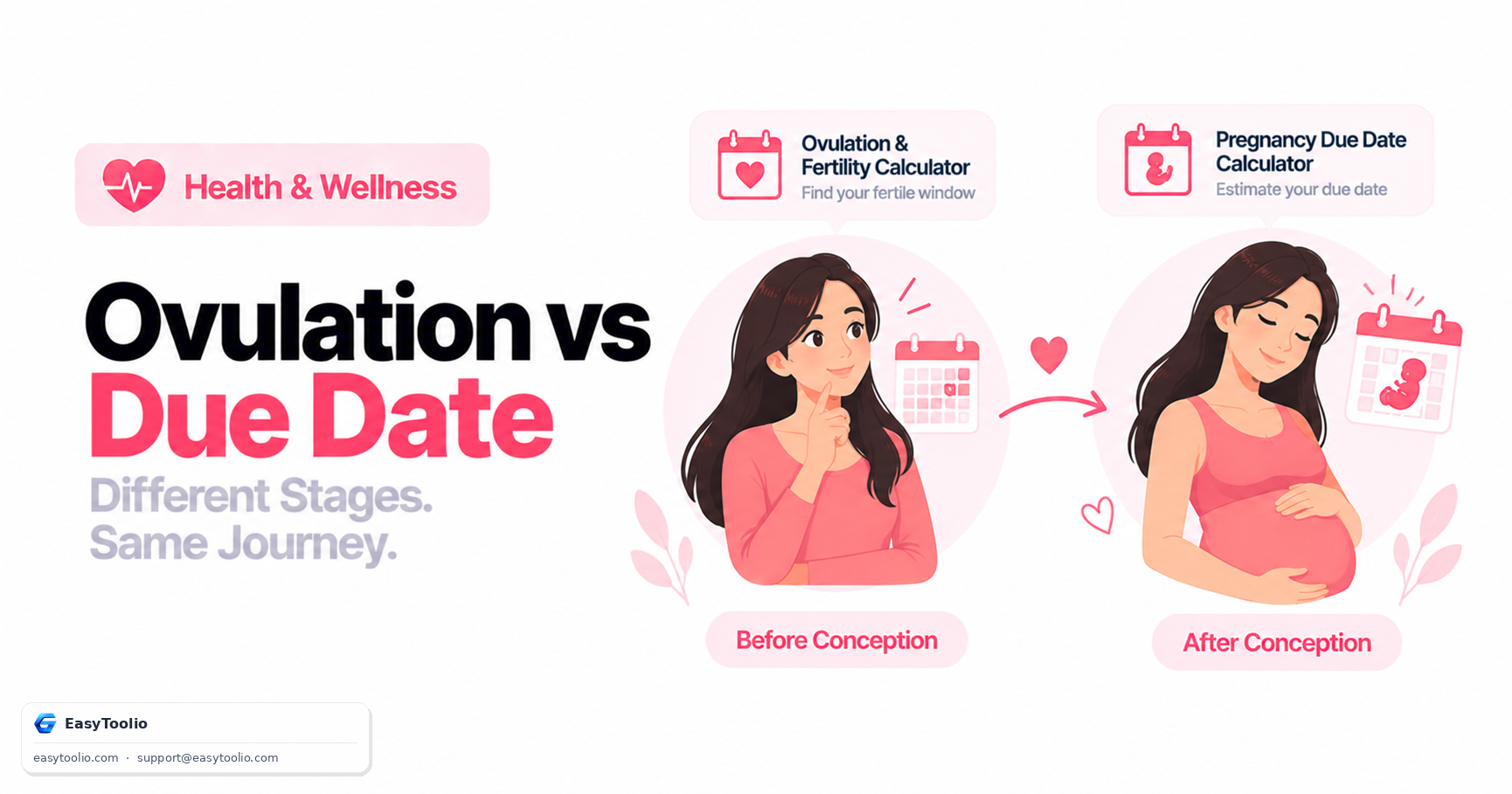
| Ovulation Calculator | Due Date Calculator | |
|---|---|---|
| Question answered | "When am I most fertile this cycle?" | "When is my baby likely to arrive?" |
| Used when | Before conception, every cycle while trying | After a confirmed pregnancy |
| Key input | Last period start date + average cycle length | Last period start date, or known conception/IVF transfer date |
| Output window | A ~6-day fertile window per cycle | A single estimated due date, ± a 2-week normal range |
| Typical usage frequency | Recalculated monthly until pregnant | Calculated once, refined at ultrasound |
Run the ovulation and fertility calculator during the trying-to-conceive phase, then switch to the pregnancy due date calculator the moment a home test turns positive — using the wrong tool for the wrong stage is the single most common mix-up in this process.
How Ovulation Tracking Actually Works
Ovulation typically occurs around day 14 of a standard 28-day cycle, but that "day 14 rule" is a population average, not a personal guarantee — cycle length varies significantly between individuals and even cycle to cycle for the same person. An ovulation calculator adjusts for this by working backward from your reported average cycle length:
Estimated ovulation day ≈ Cycle length − 14
Fertile window ≈ 5 days before ovulation, through ovulation day itself
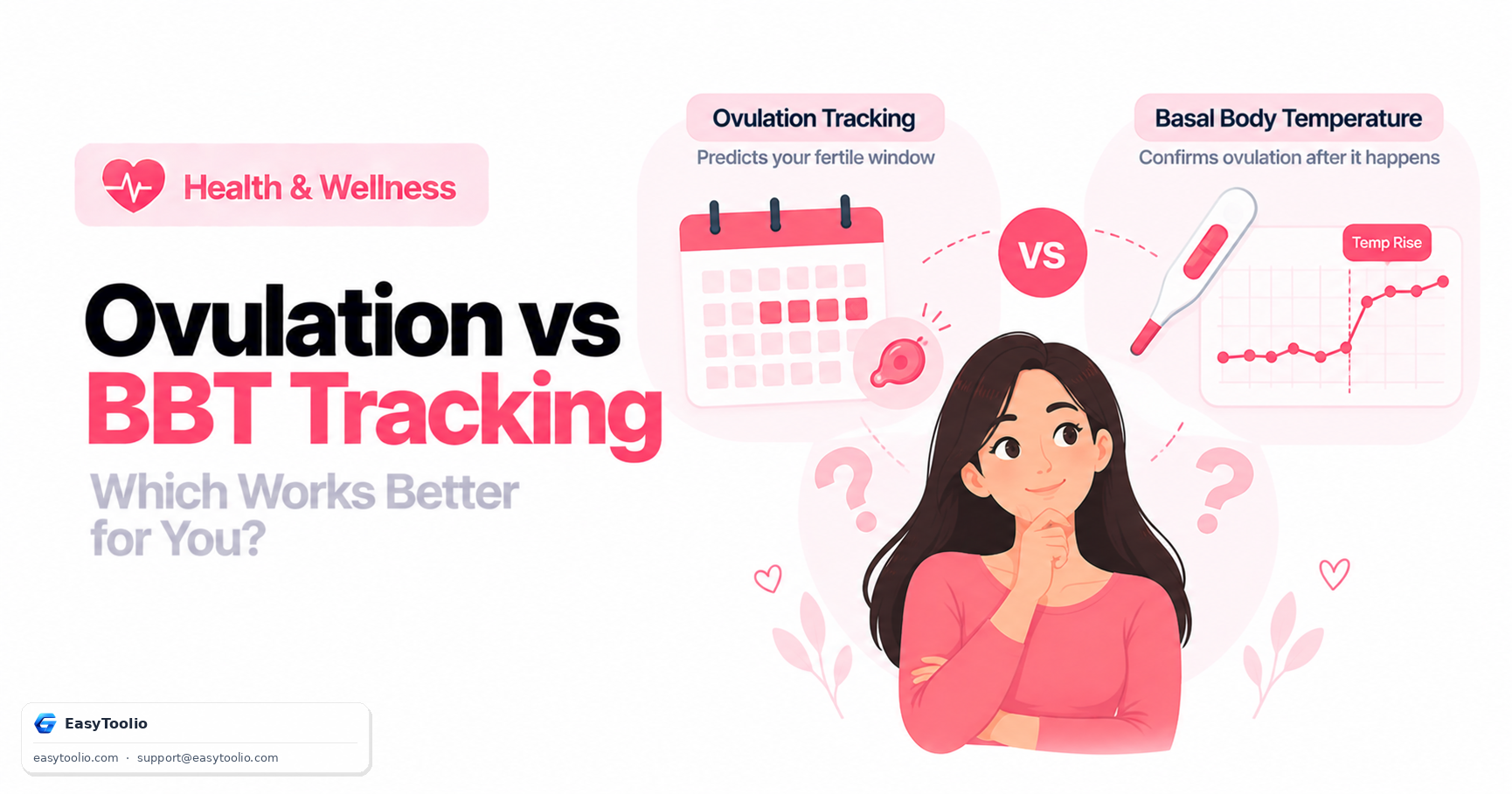
An egg survives roughly 12-24 hours after release, but sperm can survive in the reproductive tract for up to 5 days, which is why the fertile window extends well before ovulation day rather than being a single-day event. Charting basal body temperature, tracking cervical mucus changes, or using ovulation predictor kits (which detect the LH surge 24-36 hours before ovulation) all sharpen the estimate beyond a calendar-only calculation, but the calculator gives a useful starting window even without those extra data points.
How Due Date Calculation Actually Works
Once pregnancy is confirmed, the calculation flips to a forward-counting model. The most common method — Naegele's Rule — estimates 40 weeks (280 days) from the first day of the last menstrual period (LMP), which is a convention obstetricians have used for over a century:
Estimated Due Date = LMP date + 280 days
             (or)
Estimated Due Date = Conception date + 266 days
The "266 days from conception" version tends to be more precise for people using ovulation tracking, fertility treatment, or IVF, since the conception date is known rather than assumed — the LMP method assumes ovulation happened exactly 14 days after the period started, which isn't true for everyone, especially those with longer or shorter cycles.
Why the First-Trimester Ultrasound Matters More Than the Calculator
A calculated due date based on LMP or an assumed ovulation date is a starting estimate, not a final answer. A dating ultrasound performed between 8 and 13 weeks measures the fetus directly (typically crown-rump length) and is considered more accurate than menstrual dating alone, especially for people with irregular cycles. When the ultrasound estimate differs from the calculator's estimate by more than about 5-7 days in the first trimester, most clinicians will adjust the official due date to match the scan rather than the original calculation — this is standard practice, not a sign anything is wrong.
Why Couples Use Both Tools, In Sequence
For anyone actively trying to conceive, the realistic workflow looks like this:
- Every cycle before conception: use the ovulation calculator to identify the fertile window and time intercourse or fertility treatment accordingly.
- At the first missed period or positive home test: stop tracking ovulation for that cycle — it's no longer relevant.
- Immediately after a positive result: switch to the due date calculator using the LMP (or known conception date if tracked precisely) to get a working timeline for prenatal appointments, trimester milestones, and delivery planning.
- At the first ultrasound: let the scan refine or confirm the due date, since it's now more reliable than the original calendar-based estimate.
Treating this as one continuous tracking exercise rather than two distinct tools with a handoff point is where most of the confusion — and most of the wasted recalculating — happens.
Frequently Asked Questions
Can I use the due date calculator before I'm actually pregnant?
You can run the numbers, but the result is only meaningful once conception has actually occurred — running a due date calculation on a cycle where you haven't conceived just produces a hypothetical date tied to that cycle's LMP, not a real pregnancy timeline.
Is ovulation tracking useless once I'm pregnant?
Yes, effectively — once pregnancy is confirmed, there's no further fertile window to track for that pregnancy. Some people continue basal temperature charting for reassurance in very early pregnancy, but it has no bearing on due date calculation.
Why did my due date change after my ultrasound?
Ultrasound dating measures fetal size directly and is generally considered more accurate than LMP-based calculation alone, particularly for people with irregular or longer/shorter-than-28-day cycles. A shift of a few days to just over a week is common and not a cause for concern.
Does knowing my exact ovulation date make my due date calculation more accurate?
Yes — using a known or closely estimated conception date (266 days forward) tends to be more precise than the standard LMP method (280 days from period start), which assumes a textbook 28-day cycle with ovulation on day 14.
How many days is a full-term pregnancy actually considered?
Full term is generally defined as 39 weeks 0 days through 40 weeks 6 days from the LMP. Babies born from 37 weeks 0 days are considered "early term," and the range of normal delivery timing spans roughly two weeks before to two weeks after the calculated due date.
References: American College of Obstetricians and Gynecologists (ACOG) committee opinions on pregnancy dating; Mayo Clinic patient guidance on ovulation and conception; World Health Organization (WHO) reproductive health guidance.