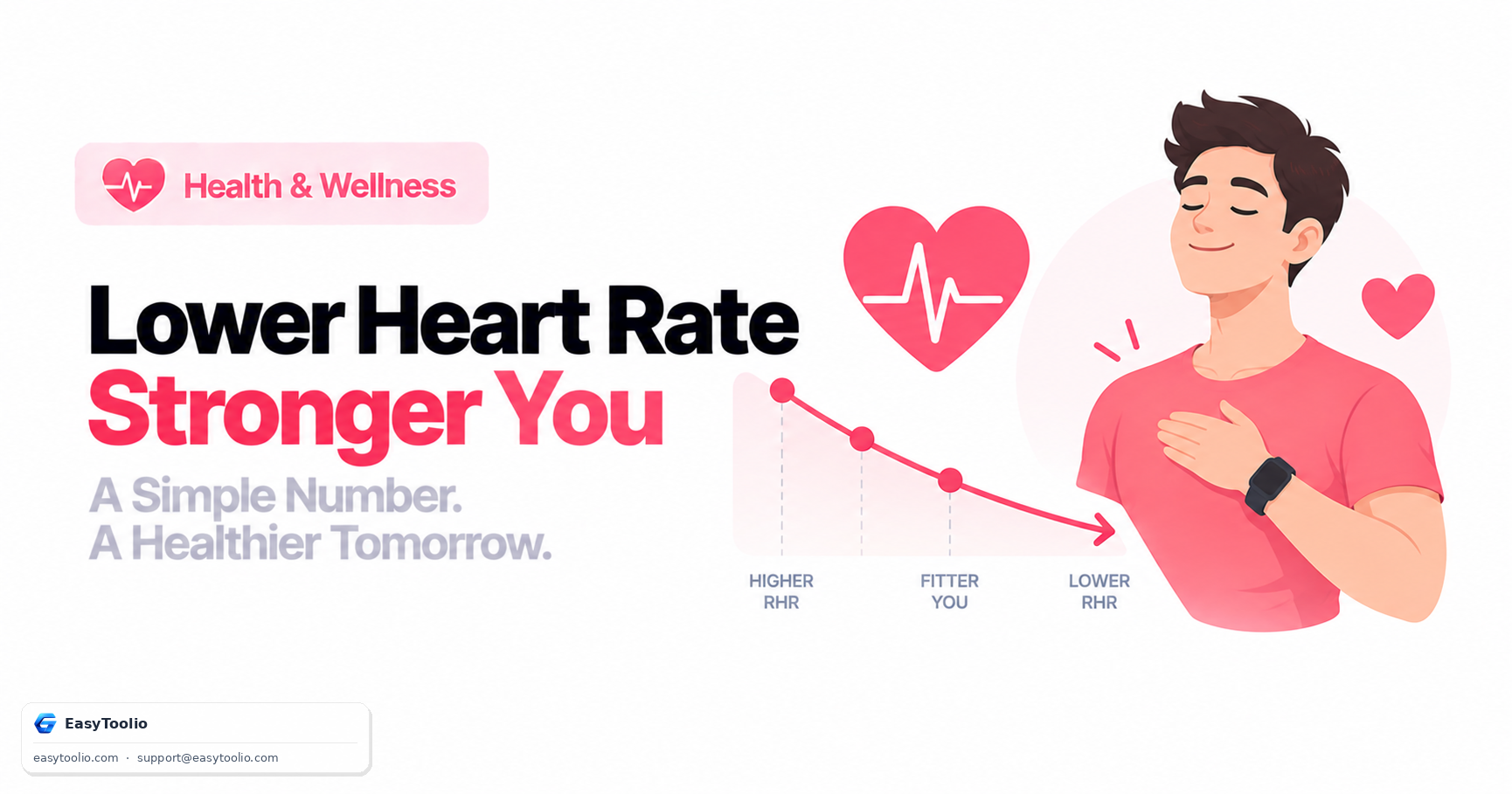
A dropping resting heart rate over months of training is one of the most reliable, boring, and easy-to-ignore signs that cardiovascular fitness is genuinely improving — no fancy metric required, just a number you can check with two fingers and a clock before you've even gotten out of bed.
Direct Answer: A normal adult resting heart rate (RHR) falls between 60-100 beats per minute (bpm), with well-conditioned athletes often measuring 40-60 bpm. A falling RHR over weeks or months of consistent training generally reflects improved cardiovascular efficiency — specifically, a stronger heart muscle pumping more blood per beat (higher stroke volume), so fewer beats per minute are needed to circulate the same amount of blood. RHR is measured most accurately first thing in the morning, before rising from bed. A heart rate calculator can help you track RHR trends and interpret them alongside training zones, though a sudden, unexplained rise in RHR is a distinct topic from target training zones and often signals illness, overtraining, dehydration, or acute stress rather than a fitness decline.
Normal RHR Ranges by Fitness Level
| Fitness Level | Typical Resting Heart Rate |
|---|---|
| Average untrained adult | 60-100 bpm |
| Regular recreational exerciser | 55-75 bpm |
| Well-trained recreational athlete | 50-65 bpm |
| Elite endurance athlete | 40-60 bpm |
These ranges are general references, not strict cutoffs — a healthy RHR also depends on age, medications (particularly beta-blockers, which intentionally lower heart rate), body size, and genetics, so comparing your own number against your own trend over time is more useful than comparing it to someone else's absolute number.
Why a Lower RHR Reflects Better Cardiovascular Efficiency
The heart's job is to circulate a certain volume of blood per minute (cardiac output) to meet the body's resting metabolic needs. Cardiac output is the product of two factors: heart rate (beats per minute) and stroke volume (blood pumped per beat). As cardiovascular fitness improves through consistent aerobic training, the heart's left ventricle typically becomes more efficient and can pump a larger volume of blood with each contraction — meaning fewer beats per minute are required to deliver the same total blood flow the body needs at rest.
This is why a trained endurance athlete's heart isn't working "less hard" at rest in some vague sense — it's mechanically pumping more blood per beat, so it simply doesn't need to beat as often to do the same job. A falling RHR over a period of consistent training (rather than a single measurement) is one of the more reliable low-cost signals that this adaptation is genuinely happening.
How to Measure Resting Heart Rate Accurately
RHR readings taken at random points during the day are heavily influenced by recent activity, caffeine, stress, and posture, which is why the most reliable measurement protocol is specific:
- Measure first thing in the morning, before getting out of bed — before any physical activity, caffeine, or even the act of standing up has a chance to elevate the number.
- Lie still and find your pulse (wrist or neck) or use a chest strap/wearable device.
- Count beats for a full 60 seconds (or count for 30 seconds and multiply by two) for accuracy.
- Repeat over several consecutive mornings and look at the average and trend rather than any single day's reading, for the same reason weekly averaging matters for body weight — a single morning's number carries noise from sleep quality, stress, and hydration the night before.
What a Sudden Spike in RHR Can Signal
A resting heart rate meaningfully higher than your normal baseline — even by 5-10 bpm — sustained over a day or more is a distinct topic from training zones, and worth paying attention to as an early signal of several possible issues:
- Illness onset — an elevated RHR is a well-documented early sign of incoming illness (including viral infections), often appearing before other symptoms are noticeable, which is why many wearable devices flag RHR spikes as an "early warning."
- Overtraining or inadequate recovery — a consistently elevated morning RHR across several days can indicate the body hasn't fully recovered from recent training load and needs a lighter day or rest.
- Dehydration — reduced blood volume from dehydration forces the heart to beat faster to maintain the same cardiac output.
- Acute stress or poor sleep — elevated cortisol and sympathetic nervous system activity from stress or insufficient sleep both tend to raise RHR temporarily.
- Fever — body temperature elevation directly increases heart rate as a physiological response.
A single elevated morning reading isn't necessarily meaningful on its own, but a sustained rise from your established baseline is worth treating as useful feedback rather than noise.
RHR vs. Training Zones: Two Different Topics
It's worth being clear that resting heart rate (what your heart does at rest, and how it trends over time as a fitness indicator) is a different concept from target heart rate training zones (which use age-based formulas to define effort zones during exercise). RHR tells you about baseline cardiovascular efficiency and recovery status; training zones tell you how hard you're working during a session. Both matter, but they answer different questions and shouldn't be conflated.
Frequently Asked Questions
What is considered a "good" resting heart rate?
There's no single universal number — 60-100 bpm is the broad normal range for adults, but lower values within that range (or below it, for trained athletes) generally reflect better cardiovascular conditioning. Tracking your own trend over months is more informative than comparing to a fixed target.
How long does it take for RHR to drop with regular exercise?
Meaningful RHR improvements typically become visible over several weeks to a few months of consistent aerobic training, though the exact timeline varies by starting fitness level and training consistency. Small week-to-week fluctuations are normal noise; the trend over 8-12 weeks is more telling.
Can medications affect resting heart rate?
Yes — beta-blockers and certain other cardiac or blood pressure medications intentionally lower heart rate as part of their mechanism, while stimulants (including excess caffeine) can raise it. Anyone on heart-rate-affecting medication should interpret RHR trends with their prescribing doctor's guidance in mind.
Should I be worried if my resting heart rate is below 60?
Not necessarily — a RHR below 60 (bradycardia by strict clinical definition) is common and healthy in physically fit individuals and athletes. It becomes a concern mainly when accompanied by symptoms like dizziness, fatigue, or fainting, in which case it's worth discussing with a doctor rather than self-diagnosing.
Is a rising resting heart rate always a bad sign?
Not always, but a sustained rise from your personal baseline is worth investigating rather than ignoring — common, often benign causes include poor sleep, dehydration, stress, or incomplete recovery from recent training, though a persistent unexplained elevation is reasonable to mention to a doctor.
References: American Heart Association guidance on target heart rate and resting heart rate; Mayo Clinic guidance on pulse and heart rate measurement.