"Am I gaining too much, or not enough?" is one of the most common worries during pregnancy, made harder by the fact that the honest answer depends heavily on the weight you started at, not a single universal number that applies to everyone. This tool is meant to give a general, informational reference — not a substitute for guidance from your own doctor or midwife, who can account for your specific health history.
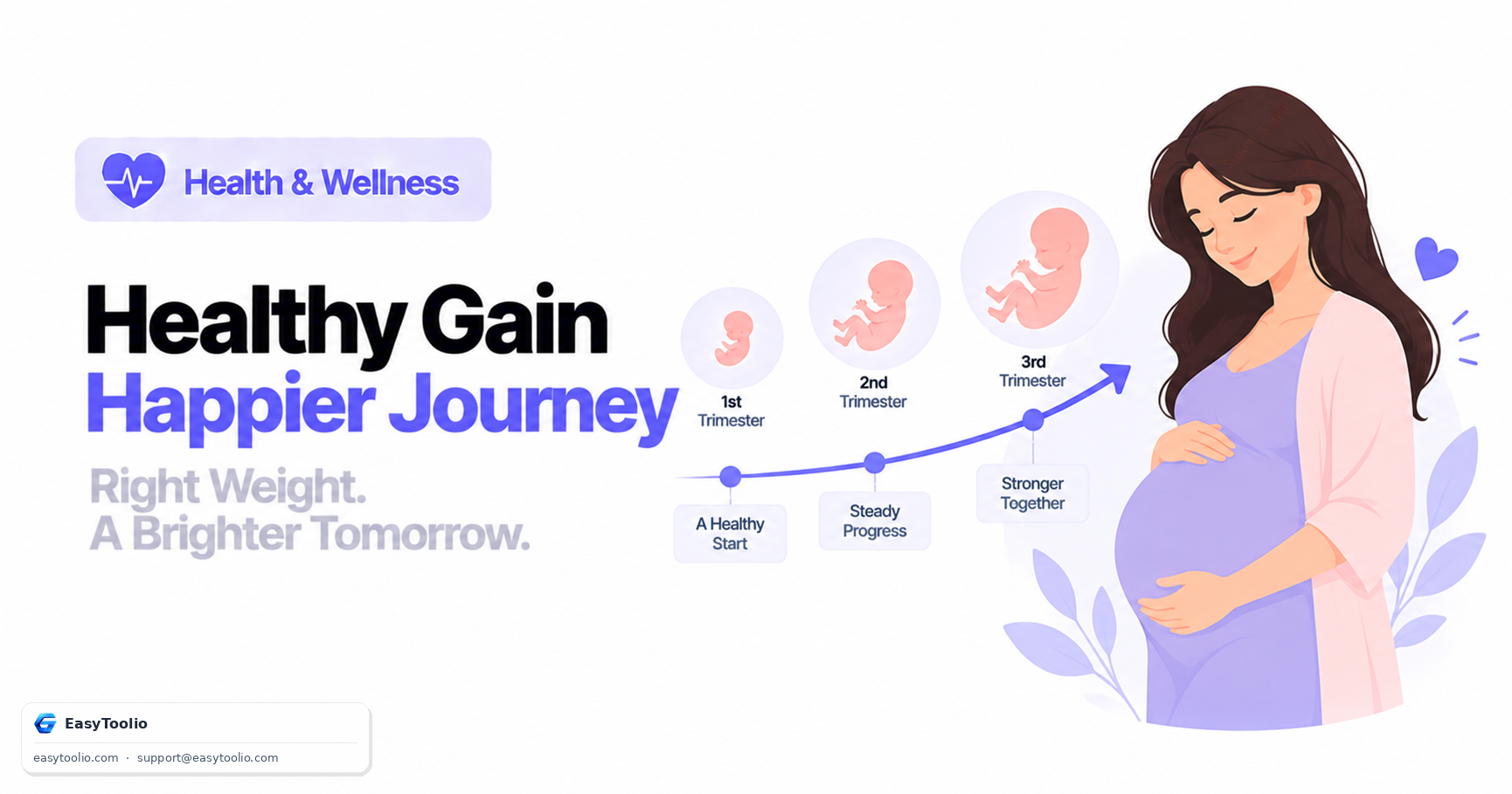
Direct Answer: The Institute of Medicine (IOM) recommends total pregnancy weight gain based on pre-pregnancy BMI: 12.5-18 kg for underweight (BMI under 18.5), 11.5-16 kg for normal weight (BMI 18.5-24.9), 7-11.5 kg for overweight (BMI 25-29.9), and 5-9 kg for obese (BMI 30+), for a singleton pregnancy. Gain is typically slow in the first trimester (around 0.5-2 kg total), then steadier through the second and third trimesters at roughly 0.3-0.5 kg per week for normal-weight individuals, adjusted proportionally up or down for other BMI categories.
IOM Recommended Total Weight Gain by Pre-Pregnancy BMI
| Pre-Pregnancy BMI Category | BMI Range | Recommended Total Gain (Singleton) |
|---|---|---|
| Underweight | Below 18.5 | 12.5 – 18 kg (28 – 40 lbs) |
| Normal weight | 18.5 – 24.9 | 11.5 – 16 kg (25 – 35 lbs) |
| Overweight | 25.0 – 29.9 | 7 – 11.5 kg (15 – 25 lbs) |
| Obese | 30.0 and above | 5 – 9 kg (11 – 20 lbs) |
These ranges reflect decades of outcome research balancing risks on both sides — insufficient gain is linked to higher risk of low birth weight, while excessive gain is linked to higher risk of gestational diabetes, cesarean delivery, and postpartum weight retention. Track your own progress against these bands with our free pregnancy weight gain calculator.
How Gain Is Typically Distributed Across Trimesters
Weight gain isn't linear across pregnancy — it's usually slow at first and steadier later:
- First trimester (weeks 1-13): Often minimal, sometimes 0.5-2 kg total for the entire trimester, and some people gain little or even lose a small amount due to nausea and reduced appetite. This is generally not a cause for concern if it resolves by the second trimester.
- Second trimester (weeks 14-27): Gain typically becomes steadier, averaging roughly 0.3-0.5 kg per week for someone in the normal pre-pregnancy BMI category, somewhat less for those starting overweight or obese, and somewhat more for those starting underweight.
- Third trimester (weeks 28-40): Gain generally continues at a similar steady pace as the second trimester, sometimes slowing slightly in the final few weeks as the due date approaches.
For a normal-weight individual gaining a total of roughly 14 kg, this might break down as approximately 1-2 kg in the first trimester and the remaining 12-13 kg spread fairly evenly across the second and third trimesters — but individual patterns vary meaningfully, and a single week or even a full month outside the "average" pace is not automatically a concern.
Adjusting for Twin or Multiple Pregnancies
The ranges above apply to singleton pregnancies. Carrying twins requires a higher total gain, since there are two babies, two placentas (or a shared one), and more amniotic fluid to account for:
| Pre-Pregnancy BMI Category | Recommended Total Gain (Twins) |
|---|---|
| Normal weight | 17 – 25 kg (37 – 54 lbs) |
| Overweight | 14 – 23 kg (31 – 50 lbs) |
| Obese | 11 – 19 kg (25 – 42 lbs) |
There isn't a well-established IOM range specifically for underweight individuals carrying twins, and this population should work closely with their obstetric care provider for individualized targets given the limited research base.
When to Flag Weight Gain Concerns With a Doctor
Some patterns are worth raising proactively rather than waiting for a routine check-in:
- Sudden, rapid weight gain in a short period (e.g., more than 1 kg in a single week during the second or third trimester), which can sometimes be an early sign of preeclampsia, especially if paired with swelling, headaches, or vision changes.
- No weight gain or weight loss persisting beyond the first trimester, when nausea would typically be expected to ease.
- Gain tracking significantly outside the recommended band for your BMI category for several consecutive weeks, in either direction.
- Any new symptoms alongside unusual weight changes — swelling in the face or hands, severe headache, or reduced fetal movement should always be discussed with a healthcare provider promptly, regardless of what the weight-gain chart shows.
This chart and any related calculator are meant as a general informational reference, not a diagnostic tool, and shouldn't replace guidance from your obstetrician or midwife who knows your full health history.
Frequently Asked Questions
What if I gained more than the recommended range in early pregnancy?
A single high-gain period, especially early on, is not automatically alarming — mention it at your next appointment so your care provider can review your overall pattern in context, since occasional fluctuation is common and total-pregnancy trends matter more than any single measurement.
Does the weight of the baby account for all the pregnancy weight gained?
No. A full-term baby typically weighs around 3-3.5 kg, but total pregnancy weight gain also includes the placenta, amniotic fluid, increased blood volume, breast tissue growth, and maternal fat stores built up partly to support breastfeeding after birth.
Is it normal to gain weight unevenly week to week?
Yes, week-to-week fluctuation is completely normal and expected — some weeks show more gain than others due to fluid retention, digestion, and normal biological variability. Total gain over several weeks or a full trimester is a more meaningful measure than any single week's number.
What happens if I gain less than recommended due to morning sickness?
Mention persistent low gain to your care provider, especially if it continues into the second trimester, since they can assess whether it reflects a temporary appetite issue or something requiring closer monitoring or nutritional support.
Do these weight gain ranges apply to teenage pregnancies?
The same IOM BMI-based framework is generally applied to adolescent pregnancies as well, though some clinicians recommend gain toward the higher end of the applicable range to support the teenager's own continued growth alongside the pregnancy — this is best individualized with a healthcare provider.
References: Institute of Medicine (IOM) Pregnancy Weight Gain Guidelines; American College of Obstetricians and Gynecologists (ACOG) patient guidance; World Health Organization (WHO) maternal health resources.