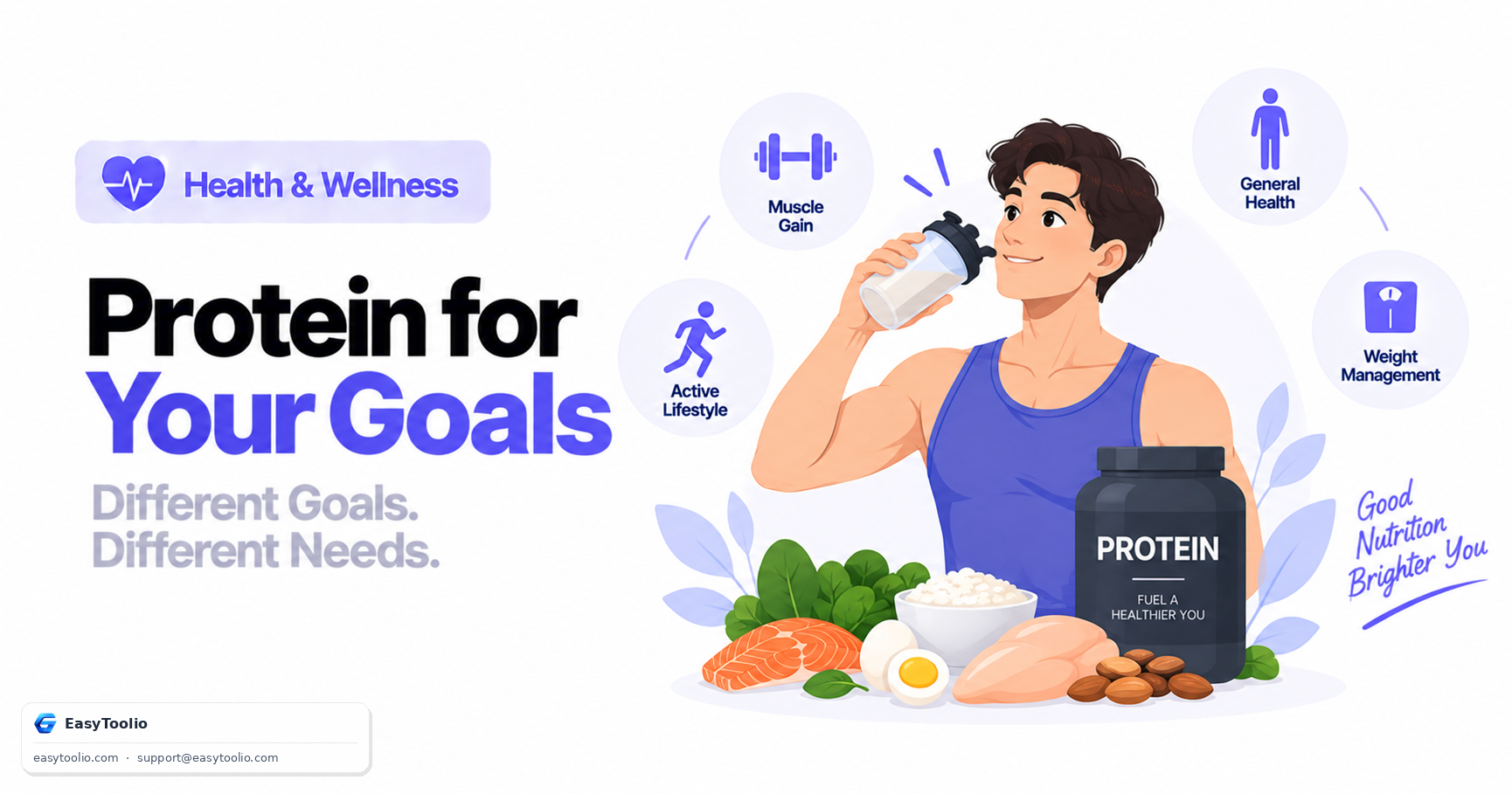
Walk into any gym or scroll any fitness forum and you'll hear wildly different protein numbers thrown around — some people swear by 1 gram per pound of bodyweight, others say the official RDA is plenty for anyone. Both can be technically true at once, because they're answering different questions: how much protein prevents deficiency versus how much protein supports active muscle building or repair.
Direct Answer: The RDA (Recommended Dietary Allowance) for protein is 0.8 grams per kilogram of body weight per day, which is the minimum to prevent deficiency in a sedentary adult — it is not an optimal target for anyone doing regular resistance training or endurance exercise. For muscle building and strength training, research generally supports 1.6 to 2.2 grams per kilogram of body weight per day. Endurance athletes typically need 1.2 to 1.6 g/kg, and individuals in a calorie deficit trying to preserve muscle while losing fat often benefit from the higher end of that range, around 2.0-2.4 g/kg, to offset the muscle-protective effect lost by being in a deficit.
Protein Needs by Goal: Reference Table
| Goal / Activity Level | Protein Target (g/kg body weight/day) | Example: 70kg person |
|---|---|---|
| Sedentary adult (RDA minimum) | 0.8 g/kg | 56g/day |
| General health, lightly active | 1.0-1.2 g/kg | 70-84g/day |
| Endurance athletes (running, cycling) | 1.2-1.6 g/kg | 84-112g/day |
| Strength/resistance training | 1.6-2.2 g/kg | 112-154g/day |
| Muscle building (hypertrophy focus) | 1.6-2.2 g/kg | 112-154g/day |
| Calorie deficit / cutting (muscle preservation) | 2.0-2.4 g/kg | 140-168g/day |
| Older adults (50+, sarcopenia prevention) | 1.0-1.5 g/kg | 70-105g/day |
These ranges reflect a synthesis of current sports nutrition research (including position stands from the International Society of Sports Nutrition), not a single universally agreed-upon number — individual response varies with training volume, total calorie intake, and genetics.
Why the RDA Is a Floor, Not a Target
The 0.8 g/kg RDA was established using nitrogen balance studies designed to identify the minimum intake that prevents progressive protein deficiency in a generally sedentary population — it was never intended to represent an optimal intake for athletic performance, muscle growth, or recovery from intense training. Multiple sports nutrition organizations, including the International Society of Sports Nutrition, have explicitly stated that the RDA underestimates the needs of people engaged in regular resistance or endurance training, sometimes by more than double.
Calculate your personalized daily protein target based on your weight and goal using our protein intake calculator rather than relying on a single generic number that doesn't account for your activity level.
Why Protein Needs Rise With a Calorie Deficit
This is one of the most commonly missed nuances: when you're eating fewer calories than you burn (a deficit, typically for fat loss), your protein needs actually go up, not down, relative to a maintenance-calorie scenario. This is because:
- A calorie deficit increases the risk of losing lean muscle mass alongside fat, since the body can break down muscle protein for energy when calories are scarce.
- Higher protein intake during a deficit has been consistently shown in research to help preserve lean mass better than lower protein intake at the same calorie deficit.
- Protein is also the most satiating macronutrient, meaning higher protein intake tends to reduce hunger during a deficit, making the diet easier to sustain.
This is why many evidence-based cutting protocols recommend protein intake toward the higher end of the athletic range (2.0-2.4 g/kg) specifically during a calorie deficit, even for people who wouldn't need quite that much at maintenance calories.
Protein Timing: What Actually Matters and What's a Myth
- The "anabolic window" myth: The idea that you must consume protein within 30-60 minutes after a workout or "miss the gains" has been substantially walked back by more recent research — total daily protein intake matters far more than precise post-workout timing for most people training with typical frequency (3-5x per week).
- Protein distribution across meals does matter somewhat: Spreading protein intake across 3-5 meals, with roughly 0.3-0.4 g/kg per meal, appears to support muscle protein synthesis slightly better than consuming the same daily total in one or two large meals, though this effect is modest compared to hitting the total daily target.
- Pre-sleep protein: Some research suggests a slow-digesting protein dose before sleep may modestly support overnight muscle protein synthesis in people training regularly, though this is a secondary consideration behind total daily intake.
Plant vs. Animal Protein: The Completeness Question
Animal proteins (meat, eggs, dairy) are "complete" proteins, containing all nine essential amino acids in reasonably well-balanced proportions. Most individual plant proteins are lower in one or more essential amino acids (commonly lysine in grains, methionine in legumes) — but this is easily solved by eating a variety of plant protein sources across the day (e.g., grains plus legumes), not necessarily in the same meal, since the body maintains an amino acid pool over the course of a day rather than requiring perfect balance at every single meal. Plant-based eaters targeting the same athletic protein ranges (1.6-2.2 g/kg) can absolutely meet their needs with adequate variety and slightly higher total protein intake to offset generally lower digestibility scores of some plant sources.
Frequently Asked Questions
Is too much protein bad for your kidneys?
For people with normal, healthy kidney function, current research does not show that higher protein intake (even at 2.0+ g/kg) causes kidney damage. People with pre-existing kidney disease should follow their doctor's specific protein guidance, since damaged kidneys do have a reduced capacity to process protein waste products.
Can you build muscle without eating extra protein?
Some muscle growth can occur with adequate protein intake even without a large surplus above baseline needs, provided total intake meets the athletic range and training stimulus is sufficient, but insufficient protein intake is one of the most common bottlenecks that limits muscle growth progress despite consistent training.
Do I need protein supplements to hit these targets?
Not necessarily — whole foods like chicken, fish, eggs, dairy, legumes, and tofu can meet most people's protein targets. Protein powder is simply a convenient, calorie-controlled way to close a gap when whole-food intake falls short, not a requirement.
Does protein intake need to be higher for older adults?
Yes — research increasingly supports higher protein intake (1.0-1.5 g/kg, sometimes higher) for adults over 50 to counteract age-related muscle loss (sarcopenia), since older adults have been shown to have a somewhat blunted muscle protein synthesis response to a given amount of protein compared to younger adults.
How do I know my protein target if I'm trying to lose weight and build muscle at the same time?
For body recomposition goals, the higher end of the strength-training range (1.8-2.2 g/kg) combined with a modest calorie deficit and consistent resistance training is generally the evidence-supported approach, since adequate protein is what allows muscle preservation or modest growth even while losing fat.
This information is provided for general educational purposes and is not a substitute for personalized advice from a registered dietitian or physician.
References: International Society of Sports Nutrition Position Stand on Protein and Exercise; National Academy of Medicine Dietary Reference Intakes for Macronutrients.