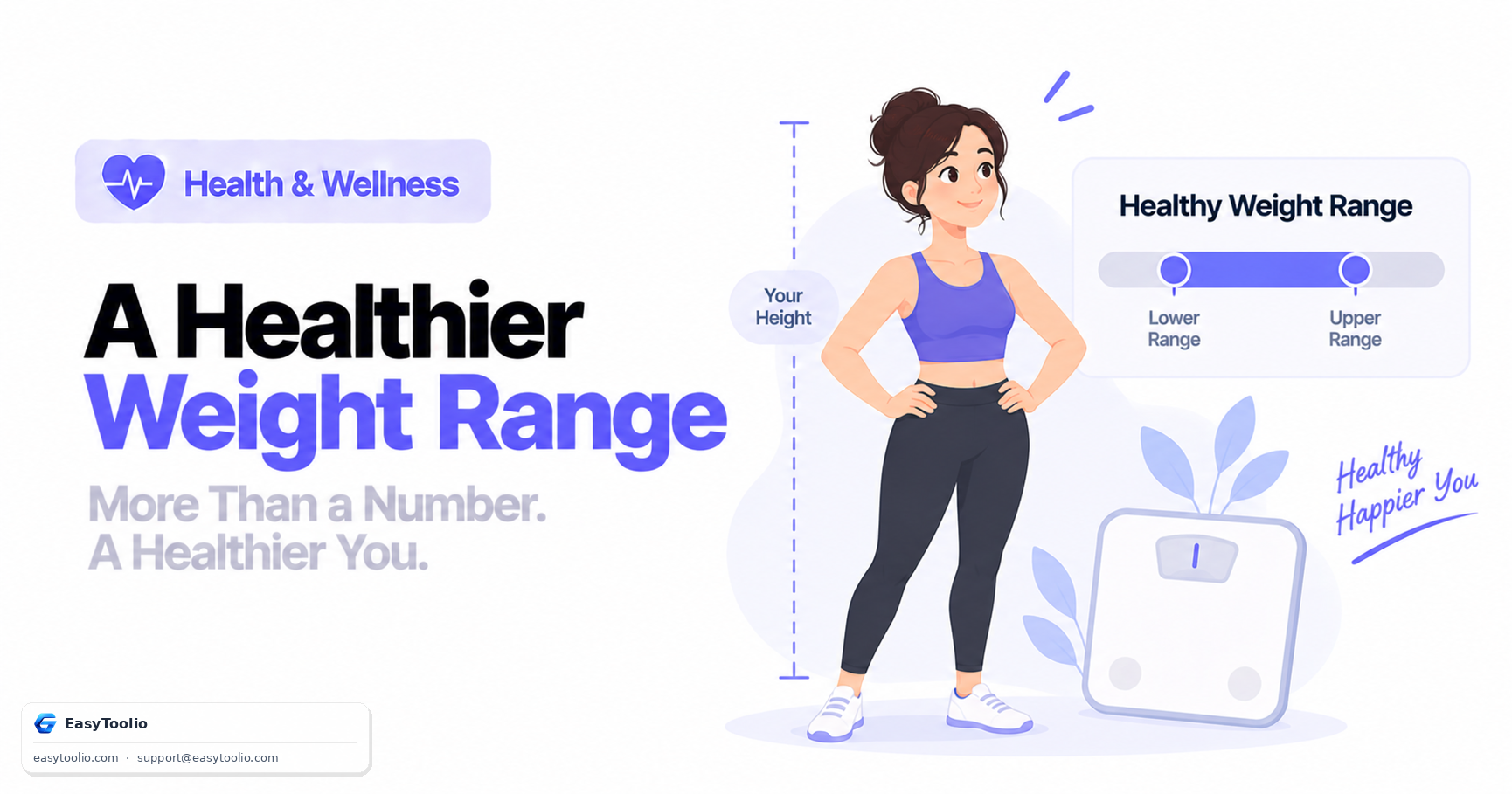
Search "ideal weight for my height" and you'll get a single confident number — as if every 165 cm adult should weigh exactly 60 kg regardless of frame, muscle mass, or age. A healthy weight range calculator gives a more honest answer: a band of weights, not a single target, because a single number was never medically justified in the first place.
Direct Answer: A healthy weight range for a given height is derived by applying the standard "normal" BMI band of 18.5-24.9 to that height using the formula Weight = BMI × Height² (in meters), calculated at both ends of the BMI range to produce a lower and upper bound. For example, at 170 cm (1.70 m), the healthy range is approximately 53.5 kg (BMI 18.5) to 71.9 kg (BMI 24.9) — a span of over 18 kg, illustrating why a single "ideal weight" figure oversimplifies what is genuinely a wide, individual-dependent range.
How the Range Is Calculated
The calculation runs the standard BMI formula in reverse, at the two boundary BMI values that define the "normal" weight category:
Weight (kg) = BMI × Height (m)²

Lower bound = 18.5 × Height²
Upper bound = 24.9 × Height²
For someone 1.70 m tall:
Lower bound = 18.5 × (1.70)² = 18.5 × 2.89 = 53.5 kg
Upper bound = 24.9 × (1.70)² = 24.9 × 2.89 = 71.9 kg
So the "healthy weight range" at 170 cm is roughly 53.5 kg to 71.9 kg — not a single number. Get this instantly for your own height with our free healthy weight range calculator.
Healthy Weight Range by Common Heights
| Height | Lower Bound (BMI 18.5) | Upper Bound (BMI 24.9) |
|---|---|---|
| 150 cm | 41.6 kg | 56.0 kg |
| 155 cm | 44.4 kg | 59.8 kg |
| 160 cm | 47.4 kg | 63.7 kg |
| 165 cm | 50.4 kg | 67.8 kg |
| 170 cm | 53.5 kg | 71.9 kg |
| 175 cm | 56.7 kg | 76.3 kg |
| 180 cm | 59.9 kg | 80.7 kg |
Notice the range widens as height increases — a taller person's healthy range spans more kilograms in absolute terms, even though the underlying BMI band (18.5-24.9) is identical for every height.
Why a Range Beats a Single "Ideal Weight" Number
Older formulas like the Devine formula or the Broca index were designed to output one specific number (e.g., "ideal weight = height in cm minus 100, adjusted for sex"), largely because they predate the widespread use of BMI and were originally developed for drug-dosing estimates in clinical settings, not general wellness guidance. Presenting a single number creates two problems a range avoids:
- False precision — implying that 71 kg is "healthy" while 72 kg is not, when both fall well within a legitimately healthy range for most people at that height.
- Ignoring individual variation — frame size, muscle mass, and typical body composition vary enough between individuals of the same height that no single number can be correct for everyone.
A range communicates the more honest reality: many different weights can be equally healthy for the same height, and where you personally sit within that range depends on factors a height-only formula can't capture.
Limitations of Height-Based Ranges
- Doesn't account for muscle mass — a muscular athlete can weigh above the upper bound of their "healthy" range while carrying very low body fat, because BMI-derived ranges can't distinguish muscle from fat.
- Doesn't account for age-related changes — older adults often carry a healthy weight slightly above the standard BMI-derived upper bound, and some geriatric research suggests a modestly higher BMI may be protective in advanced age, contrary to the standard "normal" band.
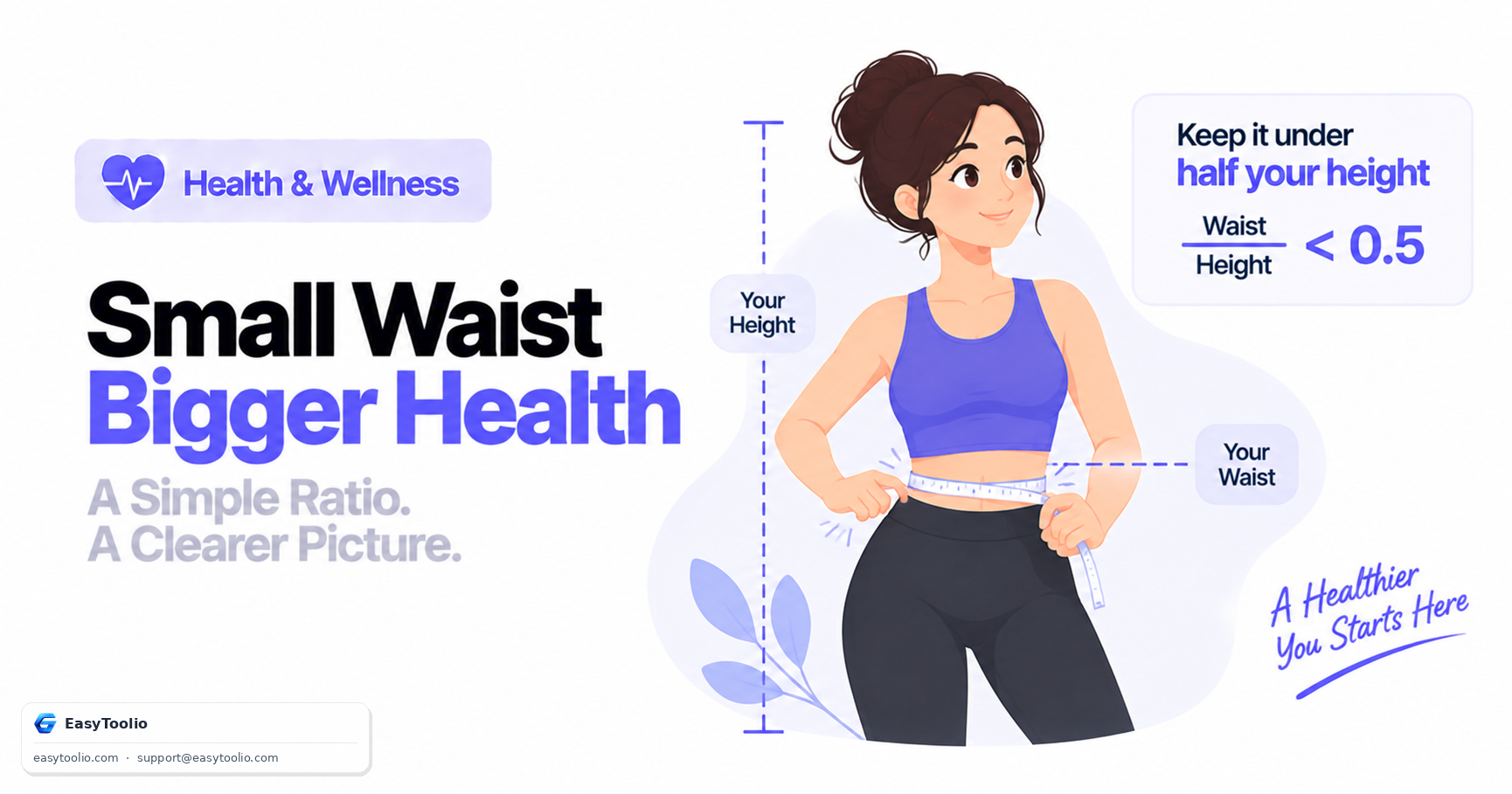
- Doesn't account for fat distribution — two people at the same weight and height can have very different health risk depending on whether fat is stored abdominally or elsewhere; pairing this with a waist-to-height ratio calculator gives a fuller picture.
- Ethnicity-specific considerations — some health organizations recommend lower BMI cutoffs for certain South Asian and East Asian populations, given evidence of elevated metabolic risk at lower BMI thresholds than the standard 25 cutoff for "overweight."
Frequently Asked Questions
Is a healthy weight range the same for men and women at the same height?
The standard BMI-derived formula applies the same 18.5-24.9 band regardless of sex, though body composition differences mean two people of the same height and weight but different sexes may have different body fat percentages within that same "healthy" weight number.
Why does my healthy weight range feel too wide to be useful?
The range is intentionally wide because it reflects genuine biological variation — frame size, muscle mass, and build all affect where a healthy individual naturally falls within the range. Use it as a general band to stay within, not a target to hit a specific number inside it.
Should athletes use a healthy weight range calculator?
Athletes and heavily muscled individuals should treat height-based weight ranges cautiously, since muscle mass can push them above the calculated upper bound while their actual body fat percentage remains low and healthy — a body composition or waist-based measure is more informative for this group.
Does this calculator account for bone structure or frame size?
No, standard height-based weight range calculators use only height, not frame size, wrist circumference, or other proxies for skeletal build, which is one reason the output is presented as a range rather than a single number.
Is being at the lower end of the range always better than the upper end?
Not necessarily — both ends of the standard range are considered within normal, healthy limits, and where you sit depends on factors like muscle mass, personal health history, and how you feel functionally, not simply which end is numerically lower.
References: World Health Organization (WHO) BMI classification standards; Centers for Disease Control and Prevention (CDC) healthy weight guidance.